
William Gibson Books in Order
Browse William Gibson's books in order, with quick summaries, trilogy overviews, and tips on where to start reading his cyberpunk and speculative fiction.
Last updated:
As an Amazon Associate, we earn from qualifying purchases (at no extra cost to you).
William Gibson books in publication order
17 books
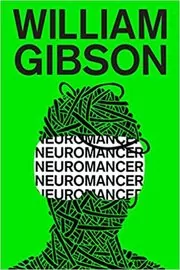
Neuromancer
by William Gibson
1984
Washed-up hacker Case has been locked out of cyberspace, the matrix he once lived for. A mysterious employer offers to repair his nervous system if he'll join a crew led by razor-girl Molly on an impossible run against a powerful artificial intelligence.
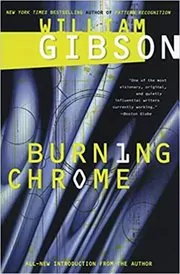
Burning Chrome
by William Gibson
1986
This collection gathers Gibson’s early short fiction, including Johnny Mnemonic, New Rose Hotel, and the title story about console cowboys hacking a crime boss. The pieces sketch neon-soaked streets, virtual realities, and hustlers whose schemes helped define the feel of early cyberpunk.
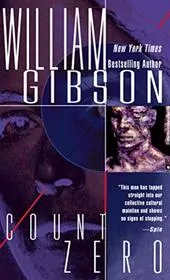
Count Zero
by William Gibson
1986
A corporate extraction gone wrong leaves mercenary Turner protecting a biotech researcher’s gifted daughter instead of his client. Elsewhere a novice hacker nearly dies on his first big run and an art dealer hunts impossible sculptures, as all three stories converge inside a changing cyberspace.
Recommended by
1 person Adam Sessler recommended this book
Adam Sessler
Adam Sessler recommended this book on Twitter.
Adam Sessler's recommendation of this book
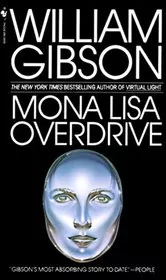
Mona Lisa Overdrive
by William Gibson
1988
Years after Neuromancer, a teen sex worker who resembles simstim star Angie Mitchell is hired for a dangerous job, a yakuza heiress is sent to London for safety, and a junkyard artist shelters a comatose cowboy. Their intersecting lives reveal how the matrix has evolved.
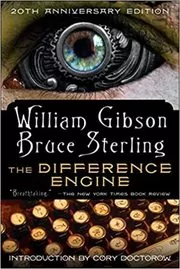
The Difference Engine
by William Gibson
1990
In an alternate 1850s Britain where Charles Babbage’s mechanical computers have reshaped society, radicals, scientists, and spies chase a cryptic set of punch cards that could shift the balance of power. Steam, early networks, and political intrigue combine in a landmark steampunk novel.
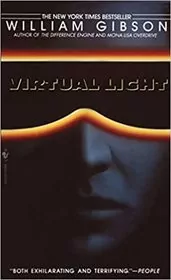
Virtual Light
by William Gibson
1993
In fractured near-future California, bike courier Chevette Washington impulsively steals a pair of high-tech sunglasses from a party guest. The glasses hide sensitive plans for remaking San Francisco, putting Chevette and down-on-his-luck ex-cop Berry Rydell on the run through the Bay Bridge community.
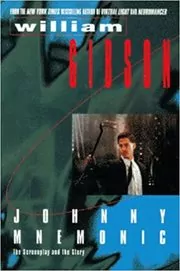
Johnny Mnemonic
by William Gibson
1995
Data courier Johnny carries forbidden information in a brain implant that has overwritten his childhood memories. When he agrees to store more data than his system can safely hold, he becomes the target of crime syndicates and corporate killers in a grim, wired future.
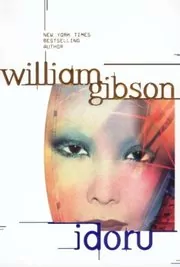
Idoru
by William Gibson
1996
Data analyst Colin Laney is hired to investigate why rock star Rez plans to marry Rei Toei, a virtual pop idol. At the same time, teen fan Chia McKenzie is sent to Tokyo, stumbling into nanotech smuggling and media manipulation around the mysterious idoru.
Recommended by
2 people Jason Calacanis recommended this book
Jason Calacanis
"I love [this book]." - Jason Calacanis
Jason Calacanis's recommendation of this book - Adam Sessler recommended this book
Adam Sessler
Adam Sessler recommended this book on Twitter.
Adam Sessler's recommendation of this book
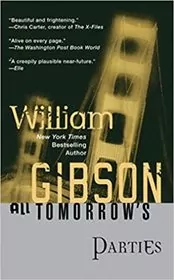
All Tomorrow's Parties
by William Gibson
1999
On a shantytown built along the Bay Bridge, drifter Berry Rydell, ex-messenger Chevette Washington, and a mysterious assassin converge on a coming nodal point in history. As nanotechnology, media empires, and street-level hustlers collide, the future threatens to pivot around the bridge.
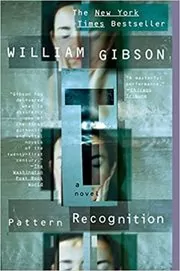
Pattern Recognition
by William Gibson
2003
Cayce Pollard is a trend-sensitive consultant who reacts physically to logos yet makes a living decoding them. Hired by marketing titan Hubertus Bigend, she chases the anonymous creator of haunting online film fragments through London, Tokyo, and post–Cold War Moscow.
Recommended by
2 people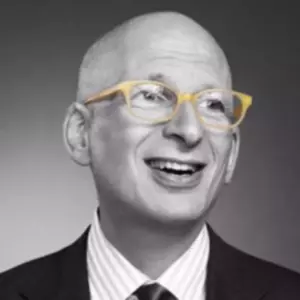 Seth Godin recommended this book
Seth Godin
"You don’t even have to finish it; just read the first five chapters and suddenly, you will now understand what a brand is." - Seth Godin
Seth Godin's recommendation of this book - Adam Sessler recommended this book
Adam Sessler
Adam Sessler recommended this book on Twitter.
Adam Sessler's recommendation of this book
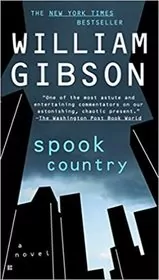
Spook Country
by William Gibson
2007
Journalist Hollis Henry is hired to profile artists using locative technology, but her assignment drags her into a covert operation involving a Cuban-Chinese family of smugglers, a drug-dependent translator, and a mysterious shipping container. It’s a contemporary spy story about money, data, and invisible wars.
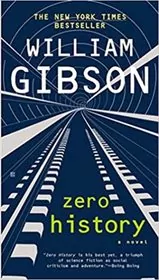
Zero History
by William Gibson
2010
Recovering addict Milgrim and journalist Hollis Henry are pulled back into the orbit of marketing kingpin Hubertus Bigend. Tasked with tracking an anonymous high-end streetwear label linked to military contracts, they stumble into security services, mercenaries, and office politics inside Blue Ant.

Distrust That Particular Flavor
by William Gibson
2012
This nonfiction collection gathers decades of Gibson’s essays, reviews, and talks on technology, media, cities, and culture. Pieces range from reflections on early cyberspace to portraits of artists and personal memories that illuminate the concerns behind his fiction.
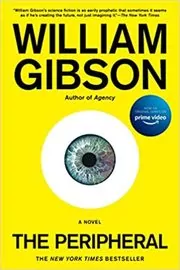
The Peripheral
by William Gibson
2014
In a near-future America hollowed out by automation, Flynne Fisher takes over her brother’s security shift inside what she thinks is a game and witnesses a murder. The job links her small town to a far-future London rebuilt after a slow-motion catastrophe known as the Jackpot.

Archangel
by William Gibson
2017
Archangel is a time-travel thriller in which a ruthless American vice president from a devastated 2016 uses experimental technology to rewrite history in 1945 Berlin. An RAF officer, a skeptical U.S. intelligence agent, and a mysterious pilot race to stop his nuclear grab for power.

Alien III: An Audible Original Drama
by William Gibson
2019
This full-cast audio drama brings Gibson’s unused Alien 3 screenplay to life, centering on Hicks and Bishop as they confront a new xenomorph outbreak on a vast space station. Political rivalries and bioweapon research turn the aftermath of Aliens into a fresh Cold War nightmare.
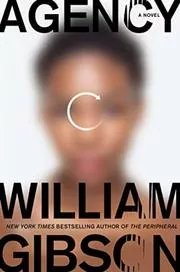
Agency
by William Gibson
2020
App tester Verity Jane is hired to evaluate an experimental AI assistant nicknamed Eunice in an alternate 2017 where recent elections went differently. As Eunice reveals startling abilities, Verity is drawn into global brinkmanship while shadowy figures from a post-Jackpot future try to steer her timeline.
Where to start with William Gibson
If you want classic cyberpunk: Neuromancer → Count Zero → Mona Lisa Overdrive
If you like street-level near futures: Virtual Light → Idoru → All Tomorrow's Parties
If you prefer contemporary thrillers: Pattern Recognition → Spook Country → Zero History
If you're curious about his latest timelines: The Peripheral → Agency
If you want a quick sampler first: Burning Chrome → Neuromancer
William Gibson sub-series and character series
Bruce Sterling (William Gibson) books in order
Explore this seriesWilliam Gibson collections, short stories, and related book types
Short Story Collections
Non-Fiction
Graphic Novels
Audible Originals
Standalone William Gibson books
Author bio
William Gibson was born in Conway, South Carolina, in 1948 and grew up mostly in the small town of Wytheville, Virginia. As a shy kid who lost his father young, he disappeared into science fiction paperbacks and daydreams about other worlds.
His teenage years were restless. After his mother died, he left a boarding school in Arizona without graduating, drifted through California and Europe, and eventually headed north to Canada in the late 1960s, more interested in the counterculture than in fighting in Vietnam.
He settled first in Toronto, working odd jobs and living among American draft resisters, then moved to Vancouver with his future wife in 1972. There he enrolled at the University of British Columbia, studied English literature, and discovered that it was easier to survive on student loans than on low-wage work.
A science fiction class at UBC gave him his way in. For the final assignment he wrote a short story called Fragments of a Hologram Rose, which sold to a small magazine in 1977. It was the start of a steady run of short fiction, including pieces like Johnny Mnemonic and Burning Chrome that mixed noir atmosphere, street slang, and near-future tech.
Those stories caught the eye of other young writers such as Bruce Sterling and John Shirley, and together they helped shape what critics started calling cyberpunk. Gibson’s coinage of the word 'cyberspace', and his focus on hackers, megacorporations, and virtual streetscapes, gave readers a new language for thinking about computers long before most people had touched a modem.
In 1984 he published Neuromancer, the novel that became a touchstone for the genre. The book won the Hugo, Nebula, and Philip K. Dick awards, introduced the console cowboy Case and razor-girl Molly, and lit up a burned-out future in which AIs and street kids share the same bad dreams. He followed it with Count Zero and Mona Lisa Overdrive, plus the near-future Bridge trilogy of Virtual Light, Idoru, and All Tomorrow's Parties.
Over time Gibson’s work moved closer to the present. The Blue Ant novels—Pattern Recognition, Spook Country, and Zero History—take place in a recognisable early‑twenty‑first‑century world of brands, surveillance, and uneasy geopolitics, where marketing guru Hubertus Bigend and a rotating cast of journalists, coolhunters, and ex-spies chase information instead of aliens.
More recently, with The Peripheral and Agency, he returned to stranger futures: a rural America on the edge of collapse, a post‑apocalyptic London rebuilt by oligarchs, and branching timelines connected by mysterious quantum servers. These books introduce ideas like the 'Jackpot,' a long, messy global crisis rather than a single disaster, and ask what ordinary people can still do inside systems that huge.
Alongside the novels, Gibson has written film scripts, comics, and essays. His nonfiction collection Distrust That Particular Flavor gathers pieces on music, architecture, technology, and memory, and shows the same eye for telling detail that runs through his fiction.
He has lived in Vancouver, British Columbia, for decades, and still describes himself less as a prophet of tomorrow than as someone trying to pay close attention to today. Read in order or dipped into at random, his books share one through line: the future feels strange, but it is always built out of things we already know.
Edited by
Software engineer whose passion for tracking book recommendations from podcasts inspired the creation of MRB.
Lead investor at 3one4 Capital whose startup expertise and love for books helped shape MRB and its growth.
Comments
Did we miss something? Have feedback?
Help us improve this page by sharing your thoughts