
Sprawl Books in Order
Part ofWilliam Gibson Books in OrderSee William Gibson's Sprawl trilogy in order, with book summaries, world background, and guidance on how Neuromancer, Count Zero, and Mona Lisa Overdrive connect.
Last updated:
As an Amazon Associate, we earn from qualifying purchases (at no extra cost to you).
This series has 4 recommenders.




Sprawl books in publication order
3 books
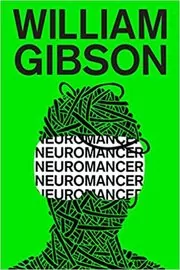
Neuromancer
by William Gibson
1984
Washed-up hacker Case has been locked out of cyberspace, the matrix he once lived for. A mysterious employer offers to repair his nervous system if he'll join a crew led by razor-girl Molly on an impossible run against a powerful artificial intelligence.
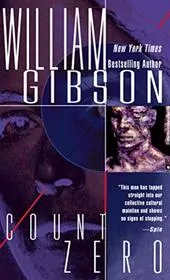
Count Zero
by William Gibson
1986
A corporate extraction gone wrong leaves mercenary Turner protecting a biotech researcher’s gifted daughter instead of his client. Elsewhere a novice hacker nearly dies on his first big run and an art dealer hunts impossible sculptures, as all three stories converge inside a changing cyberspace.
Recommended by
1 person Adam Sessler recommended this book
Adam Sessler
Adam Sessler recommended this book on Twitter.
Adam Sessler's recommendation of this book
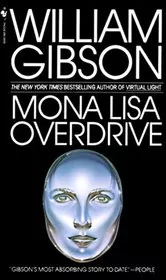
Mona Lisa Overdrive
by William Gibson
1988
Years after Neuromancer, a teen sex worker who resembles simstim star Angie Mitchell is hired for a dangerous job, a yakuza heiress is sent to London for safety, and a junkyard artist shelters a comatose cowboy. Their intersecting lives reveal how the matrix has evolved.
Sprawl books in chronological order
Series background & context
The Sprawl books drop you into Gibson's first fully realised future, a world where multinational corporations and street hustlers share the same polluted skyline. The trilogy—Neuromancer, Count Zero, and Mona Lisa Overdrive—anchors what many readers think of as classic cyberpunk.
Much of the action happens in and around the Boston‑Atlanta Metropolitan Axis, nicknamed the Sprawl, a continuous urban corridor spilling down the American East Coast. Above and through it runs the matrix, a vivid consensus hallucination of data where console cowboys risk their minds for money.
In Neuromancer, burned‑out hacker Case gets one last chance to jack into cyberspace when he's hired for a dangerous run against an artificial intelligence owned by the eccentric Tessier‑Ashpool family. At his side is Molly, a razor‑fingered street mercenary whose past touches other parts of the series.
Count Zero jumps ahead and splinters into three storylines: a corporate extraction specialist trying to move a star researcher between rival firms, a teenage hacker who almost dies on his first serious run, and a disgraced art dealer sent to track down mysterious box‑assemblages. Their paths cross around new 'biosoft' technology and a matrix that has started to wear strange, mythic faces.
By Mona Lisa Overdrive, the world has changed again. We follow a young sex worker who resembles simstim celebrity Angie Mitchell, the teenage daughter of a yakuza boss sent to London for her own safety, and a sculptor building huge junkyard machines. Threads from the earlier books weave through their lives as machine intelligence pushes further beyond human control.
Short stories such as Johnny Mnemonic, Burning Chrome, and New Rose Hotel share the same setting, filling in side alleys and earlier episodes. You don't need to read them to follow the trilogy, but they deepen the sense that this is a lived‑in, continuous world.
Taken together, the Sprawl stories focus less on shiny gadgets and more on how people adapt: hackers, mercenaries, artists, and criminals all trying to survive among code, crime, and corporations. If you want the flavour of Gibson’s early work—fast, dense, and neon‑lit—this is where to stay a while.



Edited by
Software engineer whose passion for tracking book recommendations from podcasts inspired the creation of MRB.
Lead investor at 3one4 Capital whose startup expertise and love for books helped shape MRB and its growth.
Comments
Did we miss something? Have feedback?
Help us improve this page by sharing your thoughts