
Michael Lewis Books in Order
Browse all Michael Lewis books in order, with quick summaries, background on his nonfiction bestsellers, and clear guidance on where to start reading.
Last updated:
As an Amazon Associate, we earn from qualifying purchases (at no extra cost to you).
Michael Lewis books in publication order
24 books
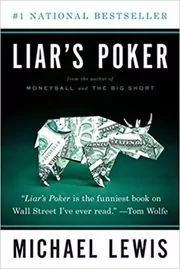
Liar's Poker
by Michael Lewis
1989
Part memoir, part exposé, this book describes Lewis’s years as a young bond salesman at Salomon Brothers, capturing the swagger, fear, and excess of 1980s Wall Street and the birth of the mortgage-backed securities boom.
Recommended by
4 people Tim Ferriss recommended this book
Tim Ferriss
"A very exciting book." - Tim Ferriss
Tim Ferriss's recommendation of this book  Tim O’Reilly recommended this book
Tim O’Reilly
"A time machine into this place when our financial economy went crazily wrong." - Tim O’Reilly
Tim O’Reilly's recommendation of this book  Chamath Palihapitiya recommended this book
Chamath Palihapitiya
"Probably my favorite book." - Chamath Palihapitiya
Chamath Palihapitiya's recommendation of this book  Trung Phan recommended this book
Trung Phan
"About the Trading industry." - Trung Phan
Trung Phan's recommendation of this book
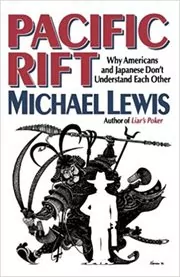
Pacific Rift
by Michael Lewis
1991
Uses the story of two businessmen, one American and one Japanese, to explore the cultural misunderstandings and conflicting expectations that shape U.S.-Japan trade, showing how different views of loyalty, risk, and success ripple through global business.
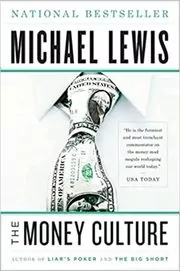
The Money Culture
by Michael Lewis
1991
A collection of essays from the late 1980s and early 1990s, this book skewers Wall Street deal-making, junk bonds, and celebrity financiers, capturing the swagger and absurdity of an era when the pursuit of money drowned out almost everything else.
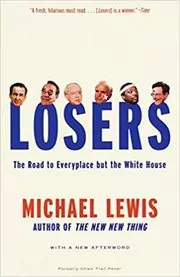
Losers
by Michael Lewis
1997
Lewis hits the 1996 presidential campaign trail to follow the also-rans and long-shots, offering a darkly funny, ground-level view of American politics that asks why anyone would run for president and what the process does to everyone involved.
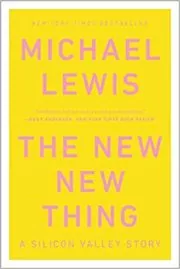
The New New Thing
by Michael Lewis
1999
Follows Silicon Valley billionaire Jim Clark across startups, sailing adventures, and the 1990s internet boom, using his restless drive to show how venture capital, code, and hype combined to create a new, wildly speculative kind of capitalism.
Recommended by
4 people Ryan Holiday recommended this book
Ryan Holiday
Ryan Holiday recommended this book on his blog.
Ryan Holiday's recommendation of this book  Keith Rabois recommended this book
Keith Rabois
"[One of three] classic books to read, albeit perhaps with less immediate/practical relevance today." - Keith Rabois
Keith Rabois's recommendation of this book  Austen Allred recommended this book
Austen Allred
"[One of] my favorite books for understanding the history of Silicon Valley." - Austen Allred
Austen Allred's recommendation of this book  Kevin Systrom recommended this book
Kevin Systrom
"I read [this book] and I said to myself this feels like an area of the world I can come to and be myself.'" - Kevin Systrom
Kevin Systrom's recommendation of this book

Teaching Collocation. Further Devolpments in the Lexical Approach.
by Michael Lewis
2000
A practical resource for language teachers, this collection explains the lexical approach and offers classroom activities, examples, and theory to help students notice and practice collocations, multi-word chunks, and other patterns that build real-world fluency.
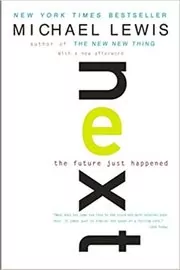
Next
by Michael Lewis
2001
Through teenage stock traders, online legal whizzes, and early fan-funded bands, this book shows how the internet scrambles old hierarchies, pushing power toward people with information and nerve rather than age, credentials, or traditional gatekeepers.
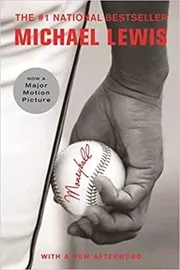
Moneyball
by Michael Lewis
2003
Lewis shows how Oakland A’s general manager Billy Beane used statistics and undervalued players to build a winning baseball team on a shoestring budget, challenging decades of scouting wisdom and changing how fans, front offices, and players think about the game.
Recommended by
1 person Ev Williams recommended this book
Ev Williams
On the "books read" section of Ev Williams' GoodReads profile.
Ev Williams's recommendation of this book
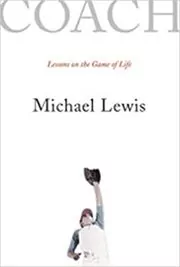
Coach
by Michael Lewis
2005
A slim, emotional portrait of Billy Fitzgerald, the demanding high-school baseball coach who shaped Lewis’s teenage years, exploring how tough practices, hard truths, and unwavering expectations can leave a deeper mark than any trophy or final score.
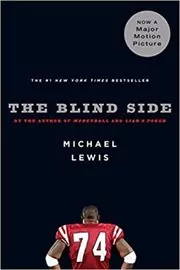
The Blind Side
by Michael Lewis
2006
Blending the evolution of modern football strategy with the true story of Michael Oher, a homeless teenager taken in by the Tuohy family, this book shows how his size and talent at left tackle reshape his life and the meaning of opportunity.
Recommended by
1 person- Ev Williams recommended this book
Ev Williams
On the "books read" section of Ev Williams' GoodReads profile.
Ev Williams's recommendation of this book
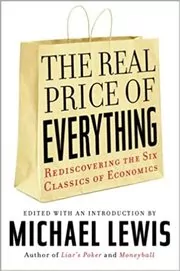
The Real Price of Everything
by Michael Lewis
2007
Curates classic works of economic thought, from Adam Smith to John Maynard Keynes, into one volume, framing them with Lewis’s commentary so readers can see how big ideas about markets, government, and inequality developed long before modern finance.
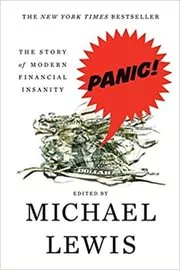
Panic
by Michael Lewis
2008
An anthology of reporting and essays on recent financial crises—from the 1987 crash to the subprime meltdown—selected and introduced by Lewis to show how fear, leverage, and wishful thinking repeatedly push markets to the edge.

Home Game
by Michael Lewis
2009
Collects funny, sharp snapshots from Lewis’s first years as a father, charting sleepless nights, small disasters, and unexpected joys as he tries to understand what modern parenting really asks of him and how family life actually feels.
Recommended by
1 person Sheryl Sandberg recommended this book
Sheryl Sandberg
"[The author takes on] parenting." - Sheryl Sandberg
Sheryl Sandberg's recommendation of this book
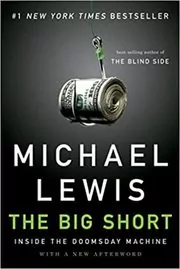
The Big Short
by Michael Lewis
2010
This book follows a handful of outsiders who realized the subprime mortgage market was doomed, used credit default swaps to bet against it, and watched as the 2008 financial crisis exposed how fragile and reckless Wall Street had become.
Recommended by
3 people David Heinemeier Hansson recommended this book
David Heinemeier Hansson
"A good one." - DHH
David Heinemeier Hansson's recommendation of this book  Malcolm Gladwell recommended this book
Malcolm Gladwell
Malcolm Gladwell recommended this book in the "Tools of Titans" book.
Malcolm Gladwell's recommendation of this book - Sheryl Sandberg recommended this book
Sheryl Sandberg
"[The author takes on] the 2008 Wall Street crash." - Sheryl Sandberg
Sheryl Sandberg's recommendation of this book
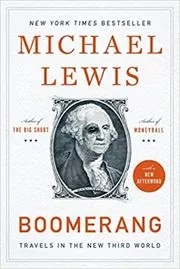
Boomerang
by Michael Lewis
2011
Expands the story of the global financial crisis by traveling through countries like Iceland, Greece, and Ireland, revealing how cheap credit, local culture, and political choices combined to create booms, busts, and long-lasting economic pain.

How a Tokyo Earthquake Could Devastate Wall Street
by Michael Lewis
2011
An extended essay that imagines a major Tokyo earthquake and traces how Japan’s selling of overseas assets could ripple through global markets, revealing surprising vulnerabilities in the U.S. financial system decades before they were widely discussed.
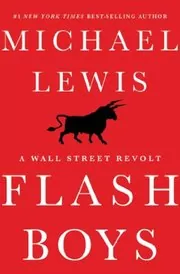
Flash Boys
by Michael Lewis
2014
Follows a group of traders and technologists who uncover how high-frequency trading skims fractions of a cent from everyday orders, then race to build a fairer stock exchange that slows markets down just enough to protect ordinary investors.
Recommended by
1 person Brian Armstrong recommended this book
Brian Armstrong
"An interesting book." - Brian Armstrong
Brian Armstrong's recommendation of this book
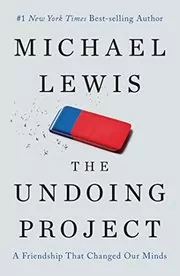
The Undoing Project
by Michael Lewis
2016
Tells the intertwined story of psychologists Daniel Kahneman and Amos Tversky, whose research on judgment, bias, and decision-making reshaped economics, medicine, and politics, and of the intense friendship that powered, and eventually strained, their work together.
Recommended by
4 people Anthony Pompliano recommended this book
Anthony Pompliano
"[One of the] best books I read in 2017." - Anthony Pompliano
Anthony Pompliano's recommendation of this book  Mark Cuban recommended this book
Mark Cuban
Mark Cuban's "books he's reading summer 2018" list.
Mark Cuban's recommendation of this book  Ray Dalio recommended this book
Ray Dalio
Ray Dalio mentioned this book on "The Tim Ferriss Show" podcast.
Ray Dalio's recommendation of this book  Raoul Pal recommended this book
Raoul Pal
Raoul Pal recommended this book on Twitter.
Raoul Pal's recommendation of this book

Has Anyone Seen the President?
by Michael Lewis
2018
In this audio report turned standalone piece, Lewis roams Washington during the Trump era, from the White House press room to the Trump International Hotel, capturing the mood, the players, and the uneasy sense of a government running on spectacle.

The Coming Storm
by Michael Lewis
2018
Centers on the people who collect and interpret America’s weather and climate data, examining how public information, private companies, and political appointees collide—and what it could mean when lifesaving forecasts are treated as a profit opportunity.
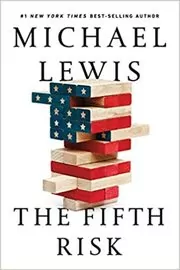
The Fifth Risk
by Michael Lewis
2018
Explores what happens when new political leaders ignore the expertise inside key U.S. agencies, profiling the quiet civil servants at Energy, Agriculture, and Commerce who manage nuclear safety, food programs, and weather data that most citizens never see.

Playing to Win
by Michael Lewis
2020
Through his daughters’ travel-softball journey, Lewis digs into the booming youth-sports industry, showing how families, coaches, and businesses turn kids’ games into high-stakes projects that eat money and time while raising hard questions about winning and joy.
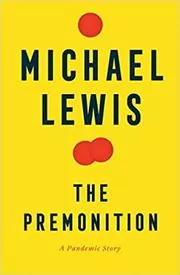
The Premonition
by Michael Lewis
2021
Follows a small group of doctors, scientists, and local health officials who saw the danger of a fast-moving virus long before COVID-19 hit, and shows how bureaucratic hesitation left the United States vulnerable to a preventable catastrophe.
Recommended by
1 person Arnold Schwarzenegger recommended this book
Arnold Schwarzenegger
"A great lesson in preparedness." - Arnold Schwarzenegger
Arnold Schwarzenegger's recommendation of this book

Going Infinite
by Michael Lewis
2023
Draws on close access to Sam Bankman-Fried to tell the story of FTX’s dizzying rise and collapse, tracing how a crypto exchange built on big promises and effective-altruism branding ended in bankruptcy, criminal charges, and huge losses for customers.
Where to start with Michael Lewis
If you want Wall Street and financial crises: Liar's Poker → The Money Culture → The Big Short → Flash Boys.
If you love sports and underdogs: Moneyball → The Blind Side → Coach → Playing to Win.
If you're interested in government and public service: The Fifth Risk → Has Anyone Seen the President? → The Premonition.
If you enjoy big ideas, psychology, and technology: Next → The New New Thing → The Undoing Project.
If you want his most recent stories of global risk and collapse: Boomerang → The Fifth Risk → Going Infinite.
Michael Lewis collections, short stories, and related book types
Non-Fiction
Author bio
Michael Lewis grew up in New Orleans, Louisiana, the only child of a corporate lawyer and a community activist. He went to the Isidore Newman School, soaking up the city’s odd mix of privilege, politics, and everyday drama.
At Princeton University he studied art and archaeology, writing a long senior thesis on Donatello and imagining a life as an art historian. Professors warned him there were few jobs in the field and hinted that making a living as a writer wasn’t a smart bet either.
After college he drifted through a few early jobs, including carrying paintings for an art dealer in New York and doing hands-on work as a woodworker. Eventually he headed to the London School of Economics, where he earned a master’s degree in economics and found himself pulled toward the world of finance.
That path led to Salomon Brothers in the 1980s, first in New York and then in London, where he worked as a bond salesman in the middle of Wall Street’s go-go era. The experience was thrilling, absurd, and a little horrifying, and it gave him the material for his first book, Liar's Poker — a sharp, funny inside look at a culture built on risk and bravado.
When Liar’s Poker took off, Lewis left the trading floor for good. He turned his attention to stories where complicated systems meet real people: the rise of Silicon Valley in The New New Thing, the data-driven revolution in baseball in Moneyball, the evolution of modern football and Michael Oher’s journey in The Blind Side, and the small group of investors who saw the housing bubble coming in The Big Short.
Across these books, readers come for the big topics — finance, technology, sports — but stay for the characters. Lewis likes to find the person on the edge of a system: a general manager pushing numbers over gut instinct, a left tackle protecting a quarterback’s blind side, or a trader who bets against a booming market because the math says it’s broken.
In later work he widened the lens to government, psychology, and public health. The Fifth Risk follows the quiet public servants who keep complex federal agencies running. The Undoing Project traces the friendship between psychologists Daniel Kahneman and Amos Tversky, whose research reshaped how we think about judgment and decision-making. The Premonition drops readers into the early days of COVID-19, following doctors and local officials who tried to act while national systems stalled.
Lewis has also written more personal pieces. Coach is a short, affectionate portrait of his demanding high-school baseball coach, and Home Game collects wry dispatches from life as a father of three. In audio originals like The Coming Storm, Playing to Win, and Has Anyone Seen the President?, he experiments with telling long-form stories directly to listeners.
Alongside his books, he has spent years as a journalist, writing for magazines and newspapers about markets, politics, and the strange incentives that drive both. His work often returns to the same question: what happens when a big, abstract system meets the messy choices of actual people.
Today Lewis lives in the Berkeley area of California with his wife, photographer and former broadcaster Tabitha Soren. He remains closely linked to New Orleans, returns often, and continues to look for stories where hidden risks, mismatched incentives, and human quirks collide.


%20-%20A%20Miscellany%20of%20Advice%20and%20Opinions.jpg)







Edited by
Software engineer whose passion for tracking book recommendations from podcasts inspired the creation of MRB.
Lead investor at 3one4 Capital whose startup expertise and love for books helped shape MRB and its growth.
Comments
Did we miss something? Have feedback?
Help us improve this page by sharing your thoughts