
Jurassic Park Books in Order
Part ofMichael Crichton Books in OrderThis page shows the Jurassic Park books in order by Michael Crichton, with short summaries, series background, and a starting point for new readers.
Last updated:
As an Amazon Associate, we earn from qualifying purchases (at no extra cost to you).
Jurassic Park books in publication order
2 books
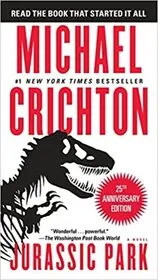
Jurassic Park
by Michael Crichton
1990
A billionaire’s dinosaur theme park on Isla Nublar is almost ready for guests, so he invites a few experts to sign off on the science. Then systems fail, predators break free, and the visitors learn how thin the line is between control and chaos.
Recommended by
1 person Richard Branson recommended this book
Richard Branson
Richard Branson recommended this book on his "70 must-read books" blog post.
Richard Branson's recommendation of this book
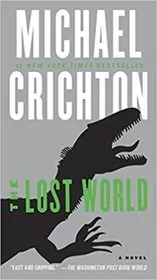
The Lost World
by Michael Crichton
1995
Rumors of dinosaurs still living in the wild draw Ian Malcolm toward Isla Sorna, the island where they were bred. A rescue-and-research expedition turns into a survival test as rival agendas collide and the animals prove they don’t need fences.
Jurassic Park books in chronological order
Series background & context
The Jurassic Park books take a simple, irresistible idea—bring dinosaurs back with modern genetics—and then stress-test every assumption behind it. Crichton mixes scientific “how could this work?” detail with thriller pacing, and he’s always watching for the moment a shiny invention turns into a chain reaction.
In Jurassic Park, billionaire John Hammond invites a small group of experts to Isla Nublar, a remote island off Costa Rica, to approve his new attraction: a theme park filled with cloned dinosaurs. The park belongs to Hammond’s company InGen, and the visit is staged to prove that the animals are contained and the technology is under control. Paleontologist Alan Grant, paleobotanist Ellie Sattler, chaos theorist Ian Malcolm, and Hammond’s two grandchildren are walked through glossy presentations and behind-the-scenes tours of labs, control rooms, and electrified fences. The whole operation depends on computers and tight procedures, which is exactly what makes the failure so terrifying.
Nothing stays in its pen for long.
The tension comes from cascading failures: power, security, communication, and the very human habit of cutting corners. Crichton digs into genetics, animal behavior, and the business incentives behind biotech, but he’s just as interested in corporate secrecy and the way organizations talk themselves into risk. Malcolm’s chaos-theory arguments aren’t decoration; they’re warnings about how unpredictable complex systems become once you add time pressure, money, and human error. Even when characters are running for their lives, the book keeps pointing back to design choices and incentives that made disaster possible.
The Lost World starts with a new mystery: reports of strange animal carcasses washing up on Costa Rican shores. Malcolm is pulled toward the truth of Site B—Isla Sorna, the island where InGen bred and raised the dinosaurs before shipping them to the main park. A search for a missing scientist turns into a tense expedition, with multiple groups arriving on the island for very different reasons.
The second book leans harder into ecology. You get herd behavior, predator territory, and the feeling of a place that has been running without supervision. It’s still an action-packed survival story, but it also asks what “natural” even means when humans engineered the starting conditions.
Across the two novels, the through-line is less “dinosaurs are scary” and more “big ideas have consequences.” Read them in order—Jurassic Park first, then The Lost World—and don’t assume you already know the plot from the films; the books take their own paths, and the details are half the fun.






Edited by
Software engineer whose passion for tracking book recommendations from podcasts inspired the creation of MRB.
Lead investor at 3one4 Capital whose startup expertise and love for books helped shape MRB and its growth.
Comments
Did we miss something? Have feedback?
Help us improve this page by sharing your thoughts