
James Wesley Rawles Books in Order
Browse James Wesley Rawles books in order, from the Coming Collapse novels to his survival guides, with summaries, series background, and where-to-start tips.
Last updated:
As an Amazon Associate, we earn from qualifying purchases (at no extra cost to you).
James Wesley Rawles books in publication order
10 books
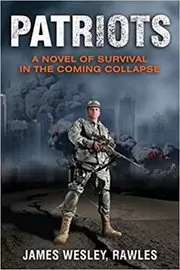
Patriots
by James Wesley Rawles
1998
When a sudden economic crash shatters the United States, a tight-knit group of Midwestern friends races to reach their carefully prepared Idaho retreat, battling riots, looters, and a collapsing government in a survival thriller packed with real-world preparedness detail.
How to Survive the End of the World as We Know It
by James Wesley Rawles
2009
This practical handbook distills Rawles’s survivalist philosophy into clear checklists on food storage, water, medical care, security, communications, and retreat planning, aimed at helping families stay fed, safe, and organized during anything from local disasters to long-term collapse.
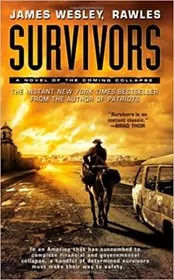
Survivors
by James Wesley Rawles
2011
Set during the same economic meltdown as Patriots, Survivors follows Army officer Andrew Laine’s dangerous journey home from Afghanistan, an Air Force family split by riots, and orphans and outlaws struggling across the Southwest as law, money, and infrastructure unravel.
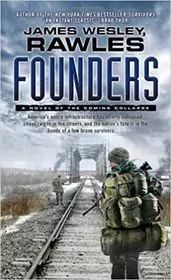
Founders
by James Wesley Rawles
2012
Founders returns to the era of the Crunch as Captain Andy Laine infiltrates a provisional regime’s new army, while Ken and Terry Layton flee debt and chaos in Chicago, testing their faith and meticulous preparedness on a dangerous overland trek toward the American West.
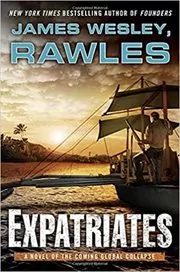
Expatriates
by James Wesley Rawles
2013
After America’s collapse triggers a global power shift, a radical Indonesian government pushes across Southeast Asia and toward Australia, forcing American missionaries Peter and Rhiannon Jeffords and Texan engineer Chuck Nolan to fight, flee, and improvise to keep their families alive.
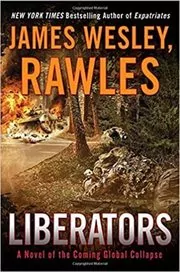
Liberators
by James Wesley Rawles
2014
When riots and hyperinflation tear apart the United States, Afghanistan veteran Ray McGregor and intelligence officer Phil Adams retreat to a family ranch in remote western Canada, then join a grassroots resistance against the occupying army that claims to be restoring order.
Tools for Survival
by James Wesley Rawles
2014
This reference volume focuses on the hardware side of preparedness, walking readers through the tools, workshops, and stockpiles needed for off-grid living, from hand tools and generators to welding gear, fire protection, and organizing long-term repair supplies.
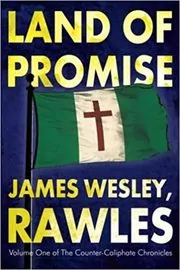
Land of Promise
by James Wesley Rawles
2015
Set in the late twenty-second century, Land of Promise imagines a world dominated by a global Islamic caliphate and follows the daring founders and settlers of the Ilemi Republic, a minimalist Christian refuge in East Africa built on hard money and radical self-rule.
Survival Retreats & Relocation
by James Wesley Rawles
2020
Survival Retreats & Relocation is a planning manual for choosing and developing a secure homestead, covering threat assessment, regional and state-by-state analysis, property search tips, and practical steps for turning raw land or a rural house into a resilient retreat.
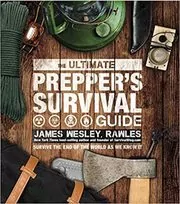
The Ultimate Prepper's Survival Guide
by James Wesley Rawles
2020
A later-career overview of Rawles’s philosophy, this large-format guide blends checklists, illustrations, and how-to advice on food, water, shelter, security, and mindset to help new and experienced preppers plan for both short disruptions and full societal breakdowns.
Where to start with James Wesley Rawles
If you want the core post-collapse saga: Patriots → Survivors → Founders → Expatriates → Liberators.
If you prefer to start with practical preparedness advice: How to Survive the End of the World as We Know It → Tools for Survival → The Ultimate Prepper's Survival Guide.
If you're focused on choosing a safe place to live: Survival Retreats & Relocation.
If you like speculative geopolitical science fiction: Land of Promise.
James Wesley Rawles sub-series and character series
Counter-Caliphate Chronicles books in order
Explore this seriesCounter-Caliphate Chronicles books in chronological order
James Wesley Rawles collections, short stories, and related book types
Non-Fiction
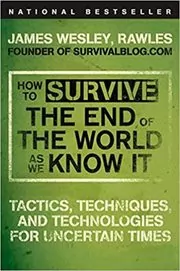
How to Survive the End of the World as We Know It
by James Wesley Rawles
2009Tactics, Techniques, and Technologies for Uncertain Times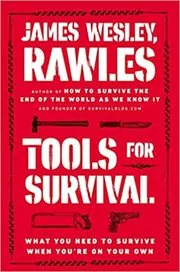

Author bio
James Wesley Rawles grew up in California in the 1960s and 70s, in a time when civil-defense drills, talk of fallout shelters, and worries about war were part of everyday life. That atmosphere, plus a love of the outdoors, nudged him early toward thinking about preparedness.
By college he had decided to pair writing with military training.
Rawles studied journalism at San Jose State University, earning a Bachelor of Arts along with minors in military science, history, and military history. Through ROTC he commissioned into the U.S. Army, choosing military intelligence, which let him combine analytical work with field skills.
From 1984 to 1993 he served as an Army Intelligence Corps officer, eventually reaching the rank of captain. His career included specialized training in nuclear, biological, and chemical defense and a short course at the Northern Warfare School in Alaska, experiences that deepened his respect for planning and logistics under harsh conditions.
After leaving the Army in the early 1990s, Rawles moved into technical and trade journalism. He worked as an editor on defense‑electronics publications and as managing editor of a countermeasures handbook, then spent much of the decade as a technical writer for electronics and software firms. The work sharpened his habit of explaining complex, gear‑heavy topics in plain language.
That mix of reporting, soldiering, and hands‑on tinkering with gear runs through almost everything he writes and teaches.
At the same time, he kept refining his own survival plans. A self‑described lifelong survivalist, he experimented with food storage, radios, firearms, and off‑grid power, and began sketching out fictional scenarios based on what a real economic collapse might look like for ordinary families.
Those sketches eventually grew into Patriots: A Novel of Survival in the Coming Collapse, which he first shared online in the 1990s and later expanded into a published novel. Four more books in the same universe—Survivors, Founders, Expatriates, and Liberators—follow different characters through the same global crisis, weaving practical survival details into fast‑moving stories.
Alongside the fiction he has written several non‑fiction guides, including How to Survive the End of the World as We Know It, Tools for Survival, The Ultimate Prepper’s Survival Guide, and a relocation manual focused on finding defensible rural property. These books lay out his core themes: deep pantries, resilient communities, rural retreats, self‑defense, and a habit of quiet charity even in hard times. Rawles is also known for advocating an American redoubt in the rural inland Northwest and for his long‑running preparedness blog, where he comments on economics, security, and day‑to‑day homesteading through a strongly Christian, small‑government lens.
Today he lives with his family on a largely self‑reliant ranch at an undisclosed location somewhere west of the Rocky Mountains, near national‑forest land. Between writing, consulting on survival retreats, tending livestock, and maintaining long‑term supplies, he continues to test the same skills and systems that appear in his novels and handbooks.












Edited by
Software engineer whose passion for tracking book recommendations from podcasts inspired the creation of MRB.
Lead investor at 3one4 Capital whose startup expertise and love for books helped shape MRB and its growth.
Comments
Did we miss something? Have feedback?
Help us improve this page by sharing your thoughts