
Herman Melville Books in Order
Explore Herman Melville's books in order, with summaries, reading guides, and background on his life at sea to help you decide where to start.
Last updated:
As an Amazon Associate, we earn from qualifying purchases (at no extra cost to you).
Herman Melville books in publication order
16 books

Typee
by Herman Melville
1846
A restless sailor deserts a whaling ship in the South Pacific and finds refuge among the Typee people in a lush Marquesan valley. His seemingly idyllic stay is shadowed by rumors of cannibalism and cultural clash, forcing him to question both island life and his own society.
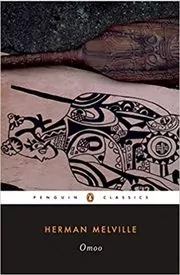
Omoo
by Herman Melville
1847
Continuing the South Seas story, the narrator joins a whaling crew bound for Tahiti, drifts into mutiny, and ends up jailed with his shipmates before roaming the islands on foot. The book blends vivid travel writing with sharp sketches of missionaries, sailors, and colonial rule.
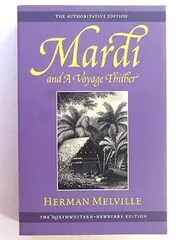
Mardi
by Herman Melville
1849
This sprawling tale begins as a Pacific escape and turns into a roaming journey through an imagined archipelago, where the hero chases a mysterious woman and debates politics, faith, and truth with his companions. Expect allegory, satire, and philosophical digressions more than straightforward adventure.
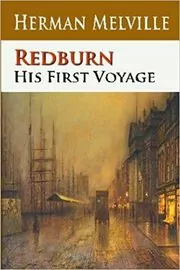
Redburn
by Herman Melville
1849
Young Wellingborough Redburn leaves New York on his first merchant voyage to Liverpool, expecting romance at sea and finding brutal work, bullying shipmates, and grim poverty ashore. Melville turns the boy's hard education into a sharp portrait of class, cruelty, and endurance.
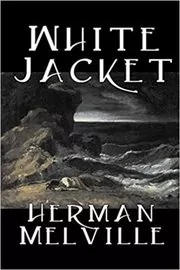
White-Jacket
by Herman Melville
1850
An inexperienced seaman known as White Jacket serves aboard a United States Navy frigate rounding Cape Horn and discovers a floating world of rigid hierarchy, harsh discipline, and sudden camaraderie. His episodic tale exposes the brutality of flogging and the cramped, anxious life of common sailors.
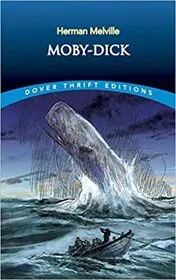
Moby Dick
by Herman Melville
1851
Sailor Ishmael ships aboard the whaling vessel Pequod and watches Captain Ahab drive his crew on a relentless hunt for the white whale that maimed him. Part sea adventure, part meditation on fate and obsession, this novel rewards slow, immersive reading.
Recommended by
6 people Steve Jobs recommended this book
Steve Jobs
Walter Isaacson said this was one of Steve Jobs' favorite books growing up.
Steve Jobs's recommendation of this book  Barack Obama recommended this book
Barack Obama
On the "favorite books" section of Barack Obama's Facebook profile.
Barack Obama's recommendation of this book  PewDiePie recommended this book
PewDiePie
"I'm probably not really ready for it yet, but I'm really glad I read it." - PewDiePie
PewDiePie's recommendation of this book  Chimamanda Ngozi Adichie recommended this book
Chimamanda Ngozi Adichie
"The classic I am supposed to have read but have had difficulty getting past the first page." - Chimamanda Ngozi Adichie
Chimamanda Ngozi Adichie's recommendation of this book  Penn Jillette recommended this book
Penn Jillette
"My favorite book." - Penn Jillette
Penn Jillette's recommendation of this book  Jack Edwards recommended this book
Jack Edwards
"Classic." - Jack Edwards
Jack Edwards's recommendation of this book
Pierre
by Herman Melville
1852
In this dark psychological novel, young aristocrat Pierre Glendinning abandons his comfortable life to support a woman who may be his father's secret daughter. His attempt to live by absolute ideals pulls him into scandal, poverty, and troubling questions about family, desire, and duty.

Bartleby
by Herman Melville
1853
A cautious Wall Street lawyer hires a quiet new copyist whose polite refusals to work, summed up in the phrase I would prefer not to, slowly unravel the office. The story traces the clerk's passive resistance and the narrator's baffled attempts at charity and control.

The Encantadas and Other Stories
by Herman Melville
1854
Centered on Melville's ten sketches of the Galapagos, this volume drifts among desolate volcanic islands, ancient tortoises, and castaway lives. The pieces blend travel writing, folklore, and fable to portray the Enchanted Isles as a harsh, haunted mirror of human isolation.

Benito Cereno
by Herman Melville
1855
An American sea captain boards a distressed Spanish slave ship off the coast of Chile and slowly senses that something is deeply wrong in the way sailors and enslaved people move around him. The tale reveals a carefully staged deception and probes willful blindness about slavery and power.

Israel Potter
by Herman Melville
1855
Based on a real Revolutionary War veteran, this novel follows farmhand Israel Potter from the Battle of Bunker Hill through capture, escape, and years of wandering in England and Europe. He meets famous figures yet remains a forgotten common soldier, always straining toward a home he may never regain.

The Piazza Tales
by Herman Melville
1856
This collection gathers six of Melville's finest shorter works, from office drama and ghostly sketches to sea narratives and Galapagos legends. Together they range from the enigmatic clerk of Bartleby to the slave ship mystery of Benito Cereno and the stark island visions of The Encantadas.
The Confidence-Man
by Herman Melville
1857
Set on a Mississippi River steamboat on April Fools Day, this novel follows a shape shifting stranger who tests each passenger's trust with a new scheme. Through his shifting disguises, Melville explores belief, charity, greed, and how easily people talk themselves into comforting illusions.
Recommended by
1 person Rian Johnson recommended this book
Rian Johnson
"Love this book. And it’s insanely post-modern, almost feels like something Pynchon could have written." - Rian Johnson
Rian Johnson's recommendation of this book

The Apple-Tree Table
by Herman Melville
1922
In the title piece, a discarded apple tree table brought down from the attic starts to tick like something alive, unsettling a rational household that refuses to believe in ghosts. The surrounding sketches mix domestic comedy, superstition, and gently satirical portraits of nineteenth century American life.
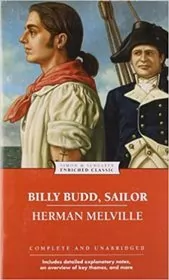
Billy Budd, Sailor
by Herman Melville
1924
A charismatic young sailor is taken from a merchant ship into the British Navy and soon collides with the ship's cruel master at arms. When a moment of provoked violence has fatal consequences, Captain Vere must weigh strict martial law against his own sense of justice.
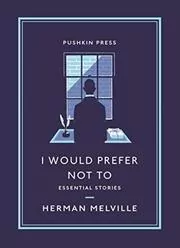
I Would Prefer Not To
by Herman Melville
2021
This modern collection brings together several of Melville's most unsettling shorter works, including Bartleby, Benito Cereno, and The Lightning-Rod Man. It offers an accessible gateway into his fiction about work, authority, rebellion, and the strange undercurrents beneath ordinary life.
Where to start with Herman Melville
If you want the iconic epic: Moby-Dick.
If you like adventure and travel writing: Typee → Omoo → Mardi.
If you prefer autobiographical sea novels: Redburn → White-Jacket → Moby-Dick.
If you want his shorter, darker tales: Bartleby → Benito Cereno → Billy Budd, Sailor.
Herman Melville collections, short stories, and related book types
Short Stories/Novellas
Short Story Collections
Standalone Herman Melville books
Author bio
Herman Melville was born in New York City in 1819, the third of eight children in a merchant family that suddenly fell on hard times when his father died and the business collapsed. His schooling ended early, and as a teenager he bounced between clerking, farm work, and brief stints as a schoolteacher, never quite finding a stable path.
Restless and short of prospects, Melville signed on as a cabin boy on the merchant ship St. Lawrence in 1839 and crossed the Atlantic to Liverpool. The voyage gave him his first serious taste of the sea, with its boredom, hard labor, and glimpses of foreign ports, and it later became the seed for his novel Redburn.
In 1841 he went back to sea on the whaler Acushnet, leaving from the New Bedford area for what was meant to be a long Pacific voyage. After months in the whaling grounds he deserted the ship in the Marquesas, lived for a time among islanders, shipped on other vessels through Tahiti and Hawaii, and eventually returned to Boston as a common sailor in the United States Navy. Those years gave him the raw material for the South Seas narratives Typee and Omoo and for much of his later sea writing.
Back home in the mid 1840s, Melville turned those experiences into books. Typee, published in 1846, and its follow up Omoo were lively first person tales of Polynesian life that found a wide English and American audience and briefly made him a literary celebrity. Their success helped him marry Elizabeth Shaw, the daughter of Massachusetts judge Lemuel Shaw, and in 1850 he moved his growing family to a farmhouse in Pittsfield, Massachusetts, which he named Arrowhead.
Arrowhead mattered. There Melville wrote the sea novels Redburn and White-Jacket and then poured his whaling memories, wide reading, and friendship with neighbor Nathaniel Hawthorne into Moby-Dick around 1850 and 1851. The book baffled many contemporary reviewers and sold poorly, and the experimental works that followed, including the dark family saga Pierre, the wandering historical novel Israel Potter, the story collection The Piazza Tales, and the strange riverboat book The Confidence-Man, only deepened his reputation as difficult and unfashionable.
By the late 1850s Melville had largely turned from prose to poetry, wrestling in verse with travel, faith, and the politics of his time. During and after the United States Civil War he wrote the collection Battle-Pieces and Aspects of the War and later the long Holy Land poem Clarel, ambitious projects that reached only a small readership in his lifetime.
Money remained tight, and in 1863 the family left Pittsfield and returned to New York City. In 1866 Melville took a job as a customs inspector on the New York docks, a demanding post he kept for almost two decades while quietly supporting his family and continuing to write in the margins of his days. Personal tragedy marked these years as well, including the death of his elder son from a gunshot wound at home.
Even in relative obscurity he kept experimenting, issuing small volumes of sea poems and finally returning to prose with the short novel Billy Budd, Sailor, which he left unpublished and unfinished when he died in New York in 1891.
For decades after his death he was remembered, if at all, as the author of the early travel books and as a notably honest customs officer rather than as a major novelist. Around the centennial of his birth in 1919, however, critics and scholars began to champion Moby-Dick and the later fiction, sparking the Melville Revival that brought his work back to the center of American literature.
Today readers come to Melville for different things, from the salt stained detail of his sea writing to the restless questioning of books like Moby-Dick and Pierre, the compact intensity of stories such as Bartleby and Benito Cereno, and the reflective weight of his Civil War and religious poetry. What ties it all together is a stubborn curiosity about how people behave under pressure and what meaning, if any, can be wrestled from a world that often feels vast, violent, and obscure.










Edited by
Software engineer whose passion for tracking book recommendations from podcasts inspired the creation of MRB.
Lead investor at 3one4 Capital whose startup expertise and love for books helped shape MRB and its growth.
Comments
Did we miss something? Have feedback?
Help us improve this page by sharing your thoughts