
Graham Hancock Books in Order
The complete bibliography of Graham Hancock, featuring his bestselling alternative history investigations, early journalism, and historical fantasy novels.
Last updated:
As an Amazon Associate, we earn from qualifying purchases (at no extra cost to you).
Graham Hancock books in publication order
27 books
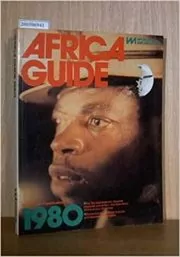
Africa Guide 1980
by Graham Hancock
1979
A comprehensive reference yearbook providing economic, political, and travel information for the African continent. Written during Hancock's time as a journalist specializing in African affairs, it offers a snapshot of the region at the start of the decade.
Gulf Guide and Diary 1981
by Graham Hancock
1980
A practical guide and diary designed for travelers and business professionals operating in the Gulf region. It combines logistical advice with economic overviews of the Gulf states during the early 1980s.
Journey Through Pakistan
by Mohamed Amin & Graham Hancock
1982
A vivid travelogue and photographic journey that captures the diverse landscapes and cultures of Pakistan. Hancock explores the country's mountains, cities, and historical sites, offering a colorful portrait of the nation and its people.
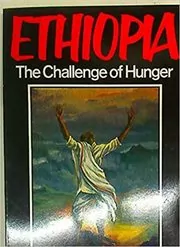
Ethiopia
by Graham Hancock
1985
Drawing on his experience as an East Africa correspondent, Hancock examines the famine, conflict, and politics of Ethiopia in the mid-1980s. The book provides a hard-hitting look at the challenges facing the nation during a tumultuous era.
AIDS
by Graham Hancock
1986
Subtitled *The Deadly Epidemic*, this early work of investigative journalism explores the emergence and spread of the AIDS virus. Hancock and co-author Enver Carim analyze the social and political reactions to the crisis in the 1980s.
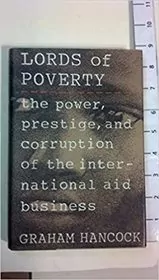
Lords of Poverty
by Graham Hancock
1989
A controversial and acclaimed critique of the foreign aid industry. Hancock argues that despite billions of dollars in spending, international aid organizations are often corrupt, inefficient, and damaging to the very people they claim to help.
African Ark
by Carol Beckwith & Graham Hancock
1990
A stunning photographic book that documents the diverse peoples and cultures of the Horn of Africa. Hancock provides the text to accompany images of the region's ancient traditions, landscapes, and ethnic groups.
The Sign and the Seal
by Graham Hancock
1992
Part history, part travel adventure, this book chronicles Hancock's real-life quest to track down the Ark of the Covenant. His journey leads him through ancient texts and dangerous territories, ultimately suggesting the holy relic rests in a remote chapel in Ethiopia.
Recommended by
1 person Dan Carlin recommended this book
Dan Carlin
"97% of it is bunk. But what's interesting is the part that might not be." - Dan Carlin
Dan Carlin's recommendation of this book
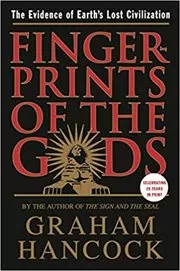
Fingerprints of the Gods
by Graham Hancock
1995
Hancock's breakout bestseller proposes that a sophisticated civilization flourished during the Ice Age before being destroyed by a natural disaster. He takes readers on a global tour of ancient sites, from the Andes to Egypt, pointing to anomalies that suggest our history is older than we think.
Recommended by
2 people Joe Rogan recommended this book
Joe Rogan
"Best book on the subject [of ancient civilizations]." - Joe Rogan
Joe Rogan's recommendation of this book  Randall Carlson recommended this book
Randall Carlson
"Devotes several chapters to the story of 20th century heretic J Harlen Bretz." - Randall Carlson
Randall Carlson's recommendation of this book
The Beauty of Historic Ethiopia
by Graham Hancock
1995
A visual celebration of Ethiopia's rich historical heritage, from the rock-hewn churches of Lalibela to the castles of Gondar. This coffee-table book combines evocative photography with Hancock's commentary on the country's architectural wonders.
The Mars Mystery
by Graham Hancock
1997
Hancock investigates the anomalies found in NASA photographs of the Cydonia region on Mars. He questions whether the 'Face on Mars' and nearby pyramid-like structures could be evidence of a past extraterrestrial civilization that met a catastrophic end.
The Message of the Sphinx
by Graham Hancock & Robert Bauval
1997
Co-authored with Robert Bauval, this book argues that the Great Sphinx and the Pyramids of Giza are far older than Egyptologists claim. The authors propose that the monuments form an astronomical map of the stars as they appeared in 10,500 BC.
Heaven's Mirror
by Graham Hancock & Santha Faiia
1998
A beautifully illustrated exploration of sacred sites around the world, including Angkor Wat and Easter Island. Hancock argues that these ancient monuments were positioned to mirror specific constellations, pointing to a shared spiritual legacy.
Underworld
by Graham Hancock
2002
Using marine archaeology, Hancock searches for the ruins of lost civilizations submerged by rising sea levels at the end of the last Ice Age. He dives off the coasts of India, Japan, and the Mediterranean to find evidence of these flooded kingdoms.
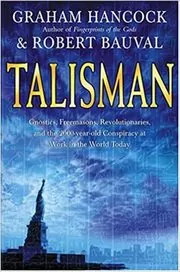
Talisman
by Graham Hancock & Robert Bauval
2004
Written with Robert Bauval, this book traces a secret intellectual tradition from ancient times to the modern day. The authors argue that a hidden Gnostic faith has influenced the architecture and layout of major cities like Paris and Washington, D.C.
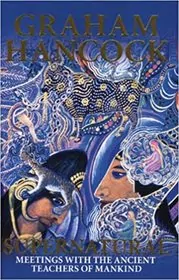
Supernatural
by Graham Hancock
2005
Hancock explores the origins of religion and art by examining the role of altered states of consciousness. He suggests that cave art and fairy lore may document genuine encounters with other realities, accessed through shamanic practices and hallucinogens.
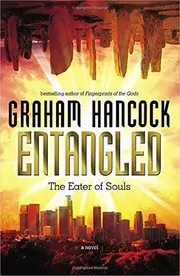
Entangled
by Graham Hancock
2010
A time-slip thriller that weaves together the lives of a modern Los Angeles teenager and a young woman in Stone Age Spain. They must unite across time to fight a demon determined to destroy humanity in this novel of supernatural suspense.
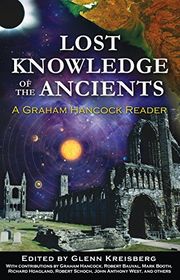
Lost Knowledge of the Ancients
by Glenn Kreisberg & Graham Hancock
2010
Edited by Glenn Kreisberg and commissioned by Graham Hancock, this anthology assembles alternative-history and consciousness essays. Contributors explore disputed ideas about ancient civilizations, archaeology, technology, paranormal phenomena, and humanity’s place in the wider history of knowledge.
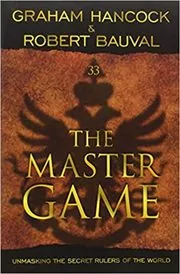
The Master Game
by Graham Hancock & Robert Bauval
2011
Co-authored with Robert Bauval, this book investigates the influence of secret societies like the Freemasons on history. It proposes that certain historical events were driven by a long-term plan to implement a specific spiritual and political agenda.
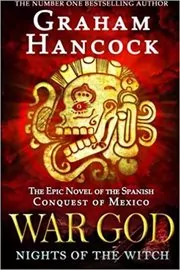
Nights Of The Witch
by Graham Hancock
2013
The first book in the War God series, set during the Spanish conquest of Mexico. As Cortés arrives, a young native healer named Tozi and a Spanish page boy are caught in a brutal conflict between empires and gods.
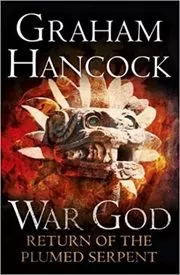
Return of the Plumed Serpent
by Graham Hancock
2014
The second volume of the War God saga follows Cortés as he marches on Tenochtitlan. Amidst the slaughter, Tozi must master her powers to survive the wrath of Moctezuma and the darker spiritual forces fueling the war.
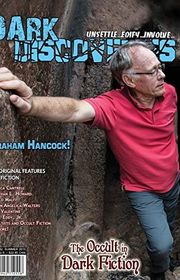
Dark Discoveries - Issue #32
by Graham Hancock
2015
This occult-themed issue of the dark-fiction magazine includes a War God excerpt by Graham Hancock and an interview with him. New stories, features on C. M. Eddy Jr. and Arthur Machen, and columns on horror and occult fiction round out the issue.
Magicians of the Gods
by Graham Hancock
2015
In this sequel to *Fingerprints of the Gods*, Hancock presents new evidence of a global cataclysm at the end of the last Ice Age. He argues that survivors of this disaster settled in key locations like Göbekli Tepe, passing on the seeds of civilization to hunter-gatherers.
Recommended by
1 person Aubrey Marcus recommended this book
Aubrey Marcus
"An important book not only for you and I, but humanity as a whole." - Aubrey Marcus
Aubrey Marcus's recommendation of this book
The Divine Spark
by Graham Hancock
2015
An anthology edited by Hancock that gathers essays on psychedelics and consciousness. Contributors explore how altered states might help us understand the mind, creativity, and the potential for contact with other dimensions.
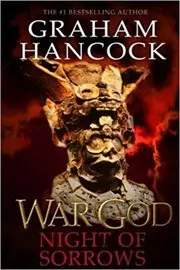
Night of Sorrows
by Graham Hancock
2017
The final chapter of the War God trilogy depicts the desperate Spanish retreat from Tenochtitlan. Tozi and her allies face the ultimate test as the Aztec capital descends into blood and chaos during the Noche Triste.
America Before
by Graham Hancock
2019
Hancock turns his attention to the Americas, arguing that the New World was home to an advanced lost civilization. He combines genetic evidence and archaeology to suggest ancient connections between the Americas and the rest of the world.
Visionary
by Graham Hancock
2022
The definitive edition of *Supernatural*, presenting Hancock's investigation into shamanism and the origins of human consciousness. It argues that interactions with spirit entities in altered states have played a crucial role in human evolution.
Where to start with Graham Hancock
If you want the definitive alternative history theory:
Fingerprints of the Gods → Magicians of the Gods → America Before
If you prefer an adventure-style mystery:
The Sign and the Seal
If you enjoy gritty historical fiction:
Nights of the Witch → Return of the Plumed Serpent → Night of Sorrows
Graham Hancock sub-series and character series
War God (Graham Hancock) books in order
Explore this seriesWar God (Graham Hancock) books in chronological order
Graham Hancock collections, short stories, and related book types
Non-Fiction



by Graham Hancock
1989The Power, Prestige, and Corruption of the International Aid Business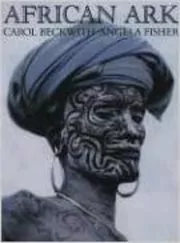
by Carol Beckwith & Graham Hancock
1990People and Ancient Cultures of Ethiopia and the Horn of Africa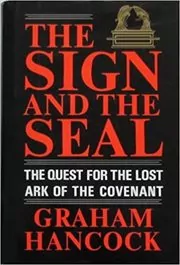
The Message of the Sphinx / Keeper Of Genesis
by Graham Hancock & Robert Bauval
1997A Quest for the Hidden Legacy of Mankind
by Graham Hancock
2015Sequel to the International Bestseller Fingerprints of the Gods
Visionary: The Mysterious Origins of Human Consciousness
by Graham Hancock
2022The Mysterious Origins of Human Consciousness
Anthologies
Standalone Graham Hancock books
Author bio
Graham Hancock didn’t start out as the man who challenges history books. Born in Edinburgh, Scotland, his early life followed a fairly traditional path for a writer. He attended Durham University to study sociology and soon found his footing in the world of serious journalism.
For years, Hancock was the guy on the ground reporting the hard facts. He wrote for New Internationalist and served as the East Africa correspondent for The Economist. During this time, he covered heavy, gritty topics like wars, political upheaval, and the complexities of international aid in the Horn of Africa.
It was a career built on reality, focusing entirely on the here and now.
But in the early 1990s, his writing took a sharp turn. Hancock began to look backward instead of forward. His curiosity led him to Ethiopia and a fascination with the Ark of the Covenant. The result was The Sign and the Seal, published in 1992. This book wasn't just a dry history lesson; it was a personal adventure that read more like a detective story than a textbook. It became an international bestseller and signaled a massive shift in his life.
He was no longer just reporting the news. He was hunting for secrets.
Then came the book that truly defined his career. In 1995, he published Fingerprints of the Gods, a work that became a global phenomenon. In it, Hancock asked a massive, unsettling question: What if we have forgotten a huge chunk of our own history?
He proposed that a highly advanced civilization existed long before ancient Egypt or Mesopotamia. He argued that this "mother culture" was wiped out by a massive global cataclysm—likely a comet impact—at the end of the last Ice Age. To prove it, he pointed to geological evidence, confusing ancient maps, and the uncanny similarities between myths and monuments from different corners of the globe.
He argued that famous sites like the Great Sphinx and the pyramids of Giza are actually legacies of this forgotten era.
Hancock didn't stop there. He spent the next few decades doubling down on his theories. He followed up with sequels like Magicians of the Gods and America Before. In these books, he combined archaeoastronomy, geology, and mythology to argue that humanity is a species with amnesia. He believes these ancient structures were left as a warning to the future.
Interestingly, Hancock also tells stories through fiction. He understands that sometimes novels are the best way to explore difficult ideas.
His War God series takes readers back to the brutal Spanish conquest of Mexico. It is a vivid reimagining of history that blends warfare with the supernatural. He also wrote Entangled, a novel that dives into time travel and the nature of the mind. This connects to his other major interest: human consciousness. Hancock is deeply fascinated by shamanism and altered states of reality. He often writes about how ancient cultures used these states to learn things that modern science is only just catching up to.
Today, Graham Hancock is a unique figure. While academic historians often disagree with his conclusions, his readers love his willingness to challenge the status quo. He has dedicated his later years to exploring the mysteries of consciousness and trying to fill in the blank pages of the human story.








Edited by
Software engineer whose passion for tracking book recommendations from podcasts inspired the creation of MRB.
Lead investor at 3one4 Capital whose startup expertise and love for books helped shape MRB and its growth.
Comments
Did we miss something? Have feedback?
Help us improve this page by sharing your thoughts