
Culture Books in Order
Part ofIain M Banks Books in OrderSee all the Culture books by Iain M Banks in order, with story summaries, universe background, suggested reading paths and where to begin.
Last updated:
As an Amazon Associate, we earn from qualifying purchases (at no extra cost to you).
This series has 5 recommenders.





Culture books in publication order
11 books
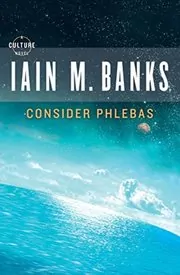
Consider Phlebas
by Iain M Banks
1987
Shape‑shifting mercenary Bora Horza Gobuchul is hired by the fanatical Idiran Empire to recover a runaway Culture Mind hidden on a forbidden planet. His hunt drags him through heists, cults and a doomed orbital as a brutal interstellar war rages in the background.
Recommended by
2 people Max Levchin recommended this book
Max Levchin
Max Levchin recommended this book on LinkedIn.
Max Levchin's recommendation of this book  PewDiePie recommended this book
PewDiePie
"Overall just a fun space adventure." - PewDiePie
PewDiePie's recommendation of this book
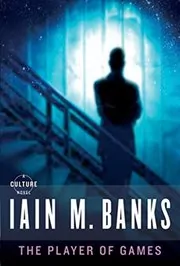
The Player of Games
by Iain M Banks
1988
Jernau Morat Gurgeh, a bored master of strategy games, is recruited by the Culture to play Azad, a vast game that decides rank and power in a distant empire. As he advances through its vicious tournament, Gurgeh realises the stakes involve far more than winning a title.
Recommended by
2 people Mark Zuckerberg recommended this book
Mark Zuckerberg
"A science fiction book about an advanced civilization with AI and a vibrant culture." - Mark Zuckerberg
Mark Zuckerberg's recommendation of this book  Lex Fridman recommended this book
Lex Fridman
Lex Fridman mentioned this book on Instagram.
Lex Fridman's recommendation of this book
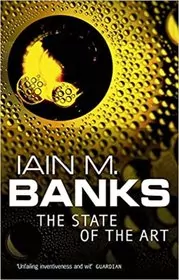
The State of the Art
by Iain M Banks
1989
In the title novella, a Culture ship covertly surveys Earth in 1977 while its crew argue over whether humanity should be contacted, helped or left alone. The collection also gathers other short tales, some set in the Culture, some not, that showcase Banks’s weirder, sharper edges in miniature.
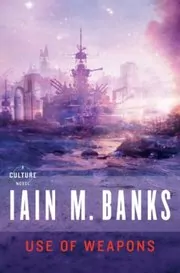
Use of Weapons
by Iain M Banks
1990
Cheradenine Zakalwe is a brilliant, damaged soldier hired again and again by the Culture’s Special Circumstances to tilt wars in their favour. Told in interlocking timelines, the novel follows brutal campaigns and the buried childhood trauma that shapes how he chooses—and misuses—his weapons.
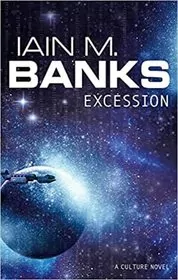
Excession
by Iain M Banks
1996
When an impossibly ancient, inscrutable artifact appears at the edge of Culture space, the galaxy’s most powerful Minds scramble to understand or control it. Amid their secretive manoeuvres, human diplomat Byr Genar‑Hofoen is dragged into a conspiracy involving a brutally expansionist alien race.

Inversions
by Iain M Banks
1998
On a war‑torn, vaguely medieval world, two outsiders take very different roles: a mysterious female doctor at one royal court and a bodyguard to a revolutionary ruler elsewhere. Through intertwined stories and rumours, hints emerge that both may be agents from a far more advanced civilisation.
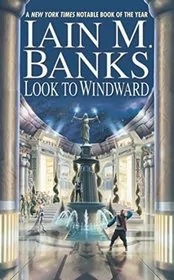
Look to Windward
by Iain M Banks
2000
Major Quilan, a grief‑stricken alien veteran, travels to the Culture’s lush orbital Masaq’ on what seems like a diplomatic mission to a reclusive composer. Unbeknown to most of the inhabitants, his real purpose is tied to an old war and a quiet plan for spectacular revenge.
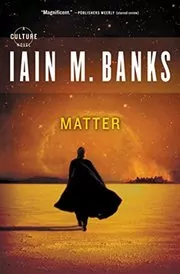
Matter
by Iain M Banks
2008
On the vast artificial ‘shellworld’ of Sursamen, three royal siblings are scattered across layers of civilisation after their father is murdered. As one brother flees into exile and another navigates court intrigue, their sister—now an agent of the Culture—returns home, forcing a clash between feudal politics and galactic power.
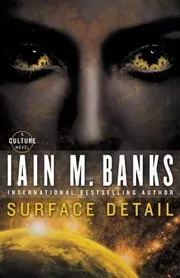
Surface Detail
by Iain M Banks
2010
Lededje Y’breq, an indentured servant whose body is literally marked with her owner’s power, is murdered and secretly revived by the Culture. Her quest for revenge intersects with a shadow war over virtual Hells—simulated afterlives where some societies condemn their dead to eternal torment.

The Hydrogen Sonata
by Iain M Banks
2012
As the ancient Gzilt civilisation prepares to ‘Sublime’ and leave the material universe, musician and soldier Vyr Cossont is pulled into a last‑minute hunt for a buried truth about their past. Meanwhile Culture ships argue, scheme and improvise their way through the political fallout.

The Culture: The Drawings
by Iain M Banks
2023
This art book presents Banks’s own sketches and diagrams of the Culture universe, reproduced from his working notebooks. Detailed drawings of ships, habitats, drones and symbols give fans a behind‑the‑scenes look at how he imagined the series’ technology and worlds.
Culture books in chronological order
Series background & context
The Culture books share a far‑future universe where a loose, space‑faring civilisation of humans, aliens and sentient machines has solved most material problems. Food, shelter and healthcare are free; lifespans are long; almost everything tedious is handled by ultra‑intelligent AIs known as Minds.
Most of the Culture’s billions live on vast artificial habitats—ring‑shaped Orbitals, continent‑sized ships and other engineered worlds that feel like pleasant, slightly eccentric utopian cities. Because scarcity is gone and money has no real role, people are free to chase art, games, travel or whatever strange hobbies they like.
But Banks rarely writes about the contented majority; he follows the awkward people at the edges who get dragged into the Culture’s Contact and Special Circumstances work with other civilisations.
Across the ten main novels and the stories in The State of the Art, you see the Culture tested in very different ways. Consider Phlebas drops you into its holy war with the fanatical Idiran Empire, viewed through the eyes of a shape‑shifting mercenary who hates the Culture. The Player of Games sends a gifted game expert to an alien empire where a complex board game decides political power, turning a tournament into a quiet act of regime change. Use of Weapons is more intimate, unpicking the life of a war‑scarred operative whose brilliant interventions hide a private horror.
Later books push the setting wider. Excession concentrates on the Minds themselves as they argue, scheme and joke their way through the arrival of an impossible alien artifact and a crisis involving the sadistic Affront species. Look to Windward and Matter explore the long aftershocks of earlier interventions, from traumatised veterans and guilty Minds to a princess‑turned‑Culture‑agent who is forced to decide how far she’ll go to fix the politics of her birth world. In Surface Detail, simulated afterlives where the dead are tortured become the battleground for a hidden war, while The Hydrogen Sonata follows a civilisation preparing to abandon reality altogether by “Subliming” into a higher state.
Throughout, the tone mixes big, playful invention—ship names, throwaway technologies, bizarre habitats—with serious questions about power, responsibility and what a ‘good’ future might look like. The books stand alone and can be read in almost any order, though many readers like to start with The Player of Games or Use of Weapons before roaming further. For those who want a visual peek behind the scenes, The Culture: The Drawings collects Banks’s own annotated sketches of ships, drones and worlds, showing how much planning sat behind the chaos on the page.









Edited by
Software engineer whose passion for tracking book recommendations from podcasts inspired the creation of MRB.
Lead investor at 3one4 Capital whose startup expertise and love for books helped shape MRB and its growth.
Comments
Did we miss something? Have feedback?
Help us improve this page by sharing your thoughts