
Tom Sharpe Books in Order
Explore all Tom Sharpe books in order, with quick summaries, series overviews, adaptation notes and reading-order tips to help you decide where to start.
Last updated:
As an Amazon Associate, we earn from qualifying purchases (at no extra cost to you).
Tom Sharpe books in publication order
17 books
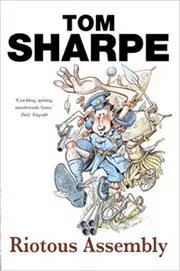
Riotous Assembly
by Tom Sharpe
1971
Set in the fictional South African town of Piemburg, Riotous Assembly follows bungling Kommandant van Heerden as a seemingly straightforward murder confession triggers political panic, police massacres and wildly escalating farce that savagely lampoons apartheid and those who enforce it.
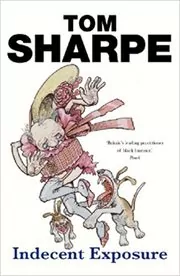
Indecent Exposure
by Tom Sharpe
1973
In this sequel to Riotous Assembly, the Piemburg police attempt to stamp out fraternising with Black women using experimental aversion therapy, only to turn the entire force into a public-relations disaster in a viciously funny send-up of sexual panic and racist bureaucracy.
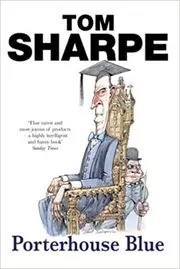
Porterhouse Blue
by Tom Sharpe
1974
Porterhouse Blue chronicles a battle inside an ancient Cambridge college as a modernising Master and his driven wife clash with gluttonous traditionalists and scheming porters, unleashing sexual mishaps, financial ruin and explosive catastrophe in one of Sharpe’s most celebrated campus satires.
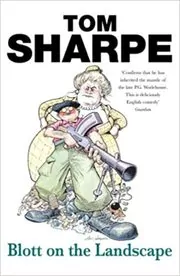
Blott On The Landscape
by Tom Sharpe
1975
In Blott On The Landscape, corrupt MP Sir Giles Lynchwood secretly backs a motorway project that will obliterate his ancestral home, while his formidable wife and their enigmatic ex-POW gardener Blott wage a guerrilla campaign of sabotage to save their gorge and expose his schemes.
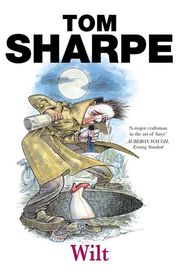
Wilt
by Tom Sharpe
1976
In Wilt, downtrodden lecturer Henry Wilt endures a dead-end job teaching apathetic tradesmen and a domineering wife, until a humiliating party and an inflatable doll lead him into a botched attempt at symbolic revenge that convinces the police he has committed murder.
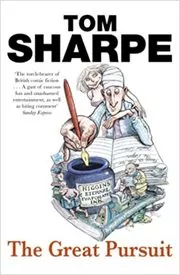
The Great Pursuit
by Tom Sharpe
1977
The Great Pursuit sends up the publishing industry as struggling agency Frensic and Futtle discover a scandalous anonymous manuscript, hire hapless writer Peter Piper to pose as its author, and ride a cynical publicity circus from London to America where greed and hypocrisy collide.
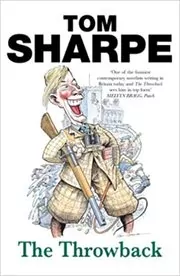
The Throwback
by Tom Sharpe
1978
The Throwback centres on Lockhart Flawse, a naive young man raised in isolation at crumbling Flawse Hall, whose disastrous double marriage drags him into suburban London, ruthless property battles and violent confrontations as his ferocious grandfather pursues a long-nursed vendetta.
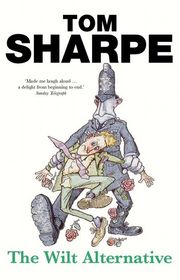
The Wilt Alternative
by Tom Sharpe
1979
The Wilt Alternative finds Henry newly promoted at Fenland College but still powerless, juggling ideological battles at work and domestic chaos at home, when he blunders into a terrorist siege and becomes a bargaining chip for extremists and blundering anti-terror police alike.
Ancestral Vices
by Tom Sharpe
1980
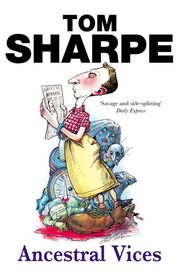
Ancestral Vices teams obsessive left-wing academic Walden Yapp with the fabulously corrupt Petrefact family, after a scheming patriarch hires him to write a smear-filled history. Yapp’s research in the town of Buscott uncovers secrets, erotic sidelines and grotesque crimes that spiral into chaos.

Vintage Stuff
by Tom Sharpe
1982
Vintage Stuff follows dim but obedient teenager Peregrine Clyde-Brown, packed off to eccentric boarding school Groxbourne, where he falls under the spell of adventure-story-besotted teacher Gerald Glodstone and is swept into a disastrously literal “rescue” mission at a French chateau.
Wilt On High
by Tom Sharpe
1984
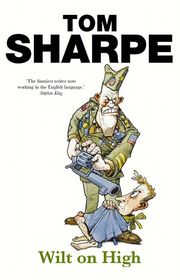
In Wilt On High, rumours of drug dealing at the college and an accusation of voyeurism make Henry the scapegoat for every scandal, drawing Inspector Flint back into his life and culminating in an absurd Anglo-American showdown at a nearby airbase.
Selected Works
by Tom Sharpe
1986
Selected Works is an omnibus volume bringing several of Tom Sharpe’s fiercest comic novels together, offering new readers a one-stop introduction to his blend of outrageous farce, institutional satire and gleefully bad taste.
Grantchester Grind
by Tom Sharpe
1995
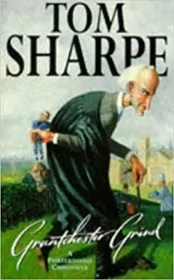
Grantchester Grind returns to Porterhouse College after the events of Porterhouse Blue, with stroke-stricken Skullion clinging to the Mastership, a vengeful widow buying influence, a predatory American mogul circling and the Fellows resorting to blackmail and darker schemes to save the college.
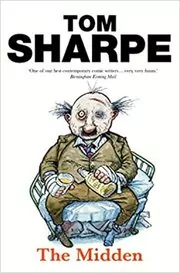
The Midden
by Tom Sharpe
1996
In The Midden, dim, entitled Timothy Bright flees financial ruin and a furious police superintendent after a bout of embezzlement, only to take refuge at decaying Middenhall with formidable Miss Midden, where his arrival ignites a vicious war against local corruption and authority.

Wilt In Nowhere
by Tom Sharpe
2004
Wilt In Nowhere sees Henry dodging a family trip to America by disappearing on a walking holiday, only to suffer a head injury and wake in the middle of a lurid local scandal, while Eva and their quadruplet daughters become suspects in a US drug investigation.
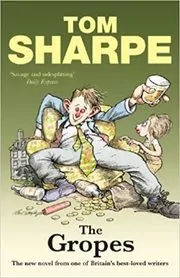
The Gropes
by Tom Sharpe
2009
The Gropes introduces centuries-old Grope Hall and its dynasty of domineering, oversexed women, who kidnap timid teenager Esmond as breeding stock. His abduction sets off a chain of grotesque sexual manoeuvres, family feuds and violent slapstick in one of Sharpe’s darkest country-house farces.

The Wilt Inheritance
by Tom Sharpe
2010
In The Wilt Inheritance, middle-aged Henry is trapped in a pointless university job and crushed by his daughters’ school fees, then bullied into tutoring the gun-happy son of a titled family—a summer arrangement that explodes into blackmail, violence and yet another police circus.
Where to start with Tom Sharpe
If you want his signature comic hero: Wilt → The Wilt Alternative → Wilt On High.
If you enjoy campus and class satire: Porterhouse Blue → Grantchester Grind.
If you’re curious about his South African books: Riotous Assembly → Indecent Exposure.
If you like English country-house mayhem: Blott On The Landscape → The Throwback → Ancestral Vices.
If you want a one-volume sampler: Selected Works collects several of his wildest satires in one place.
Tom Sharpe sub-series and character series
Tom Sharpe collections, short stories, and related book types
Collections
Standalone Tom Sharpe books
Author bio
Tom Sharpe (Thomas Ridley Sharpe) was an English satirical novelist whose furious farces skewered the absurdities of power, class and bureaucracy. Born on 30 March 1928 in Holloway, north London, and raised in nearby Croydon, he became one of the defining comic voices of late‑twentieth‑century British fiction, best known for the Wilt novels and the stand‑alone hits Porterhouse Blue and Blott on the Landscape.
Sharpe grew up in a profoundly political household. His father, the Reverend George Coverdale Sharpe, was a Unitarian minister who drifted into the far right in the 1930s and involved himself with pro‑fascist groups. As a boy Tom briefly absorbed some of those ideas, but the newsreel images of liberated concentration camps during the final months of the Second World War shocked him into rejecting his father's beliefs and fed the anger about cruelty and hypocrisy that would later drive his fiction.
He was educated at Bloxham School and then Lancing College, boarding schools whose rituals and hierarchies later resurfaced in the grotesque public‑school parody of Vintage Stuff. After national service with the Royal Marines he went up to Pembroke College, Cambridge, to study history and social anthropology, disciplines that deepened his fascination with how institutions behave and how ordinary people get crushed inside them.
In 1951 Sharpe left post‑war Britain for South Africa, where he worked first as a social worker and teacher and later ran a photographic studio in Pietermaritzburg. Living under apartheid radicalised him. He wrote plays and satire attacking the regime, most notably The South African, whose London production brought him to the attention of the security police. In 1961 he was arrested for sedition, briefly imprisoned and then deported back to Britain—an experience that hardened his contempt for authoritarianism and directly inspired his first two novels.
Back in England, Sharpe taught history at what was then the Cambridge College of Arts and Technology, later part of Anglia Ruskin University. By day he lectured in demoralised further‑education classrooms; by night he channelled his fury and bleak amusement into fiction. His debut novel, Riotous Assembly (1971), and its sequel Indecent Exposure (1973) are set in the fictional South African town of Piemburg and follow a catastrophically inept police force as it turns a murder case and a misguided “moral purity” campaign into carnage. The books’ cartoonish violence and manic, escalating misunderstandings announced a writer who was willing to push farce to the edge of bad taste in order to ridicule racism and state power.
After those South African satires, Sharpe turned his fire on British targets. Porterhouse Blue (1974) lampoons an ancient Cambridge college locked in a war between gluttonous traditionalists and an earnest modernising Master, while Blott on the Landscape (1975) pits corrupt politicians and planners against an indomitable aristocrat and her mysteriously resourceful gardener over a proposed motorway through an idyllic English gorge. With Wilt (1976), he created his most enduring character: Henry Wilt, a downtrodden lecturer at a fenland technical college whose fantasies of escape and revenge collide with police suspicion, bureaucratic panic and his own appalling luck, spawning a long‑running series of increasingly baroque misadventures.
Across later stand‑alone novels such as The Great Pursuit, The Throwback, Ancestral Vices, Vintage Stuff, The Midden and The Gropes, and sequels like Grantchester Grind and the subsequent Wilt books, Sharpe kept returning to the same obsessions: institutional stupidity, class snobbery, money worship and the small‑mindedness of those in authority. Critics praised his ability to combine intricate plotting with slapstick, grotesque caricature and jet‑black humour, seeing him as an heir to earlier comic moralists while also noting how gleefully vulgar and offensive his work could be.
Sharpe’s novels reached even wider audiences through screen adaptations: Blott on the Landscape became a BBC television series in 1985, Porterhouse Blue followed on Channel 4 in 1987, and Wilt was filmed in 1989 as The Misadventures of Mr Wilt. He received international recognition for his brand of black comedy, including France’s Grand Prix de l’Humour Noir and a Spanish prize for comic writing. In later life he divided his time between Cambridge and the Catalan coast around Palafrugell and Llafranc, writing from a garden shed and grumbling publicly about what he saw as the coarsening of modern Britain. Married to American artist Nancy Looper and father to three daughters, he continued to publish well into his eighties; his final novel, The Wilt Inheritance, appeared in 2010. Tom Sharpe died in Llafranc on 6 June 2013, aged 85, leaving behind sixteen novels whose ferocious farce and moral outrage still feel startlingly contemporary.




Edited by
Software engineer whose passion for tracking book recommendations from podcasts inspired the creation of MRB.
Lead investor at 3one4 Capital whose startup expertise and love for books helped shape MRB and its growth.
Comments
Did we miss something? Have feedback?
Help us improve this page by sharing your thoughts