
Ivan Doig Books in Order
This page lists Ivan Doig books in order, with summaries and reading guides for the Montana Trilogy, Two Medicine Country, and the Whistling Season novels.
Last updated:
As an Amazon Associate, we earn from qualifying purchases (at no extra cost to you).
Ivan Doig books in publication order
19 books
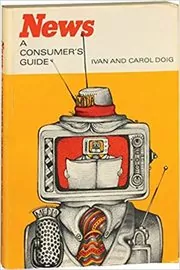
News
by Ivan Doig & Carol Doig
1972
This early nonfiction book, co-written with Carol Doig, serves as a practical guide to how the news business works, explaining how stories are gathered, edited, and presented so readers can recognize bias, weigh sources, and become more skeptical, informed consumers.

Utopian America
by Ivan Doig
1976
An edited volume that surveys visions of the perfect society in United States history, collecting essays and documents on utopian thinkers and experimental communities while weighing how their hopes measured up against the realities of American culture and politics.
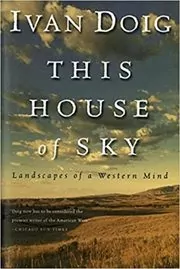
This House of Sky
by Ivan Doig
1978
In this memoir, Doig looks back on his hardscrabble Montana boyhood after his mother’s death, tracing life with his sheepherder father and indomitable grandmother along the Rocky Mountain Front and exploring how landscape, memory, and family shaped his imagination.
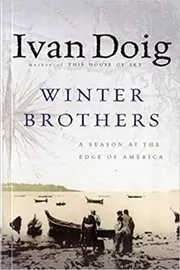
Winter Brothers
by Ivan Doig
1980
Drawing on the nineteenth-century diaries of coastal settler James G. Swan, Doig keeps his own winter journal in the Pacific Northwest, weaving past and present into a reflective portrait of storms, shorelines, Native communities, and the restless urge to record a place.
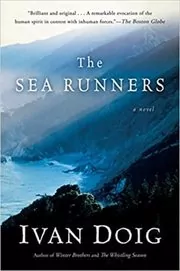
The Sea Runners
by Ivan Doig
1981
Based on an 1853 escape from Russian Alaska, four Scandinavian indentured laborers steal a native canoe and attempt a perilous 1,200-mile voyage down the stormy Pacific coast toward Oregon, battling brutal weather, scarce supplies, and their own clashing temperaments.
Inside This House of Sky
by Duncan Kelso & Ivan Doig
1983
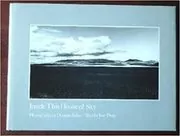
This photographic companion to This House of Sky pairs Duncan Kelso’s black-and-white images of Montana ranch country with short passages by Doig, giving readers a visual tour of the small towns, open range, and weathered buildings that underlie his childhood memoir.
English Creek
by Agatha Christie & Ivan Doig
1984
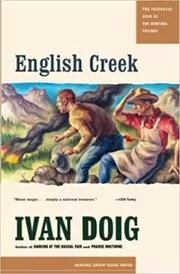
Set in the summer of 1939, the novel follows fourteen-year-old Jick McCaskill through a season of sheep counts, family quarrels, and wildfire in Montana’s Two Medicine country as he begins to understand both his parents’ past and the hard choices ahead.
Dancing at the Rascal Fair
by Ivan Doig
1987
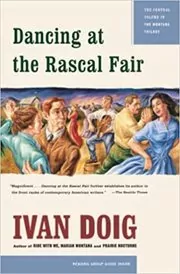
Beginning in 1889, two young Scots, Angus McCaskill and Rob Barclay, stake their future on sheep ranching in Montana’s so-called Scottish Heaven, confronting blizzards, droughts, influenza, and a complicated love triangle as friendship, family duty, and ambition pull them in different directions.
Ride With Me, Mariah Montana
by Ivan Doig
1990
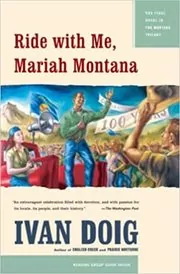
On Montana’s 1989 centennial, an aging Jick McCaskill drives a Winnebago for his photographer daughter Mariah and her reporter ex-husband as they crisscross the state, gathering stories, revisiting old haunts, and facing long-unspoken tensions in their own family history.
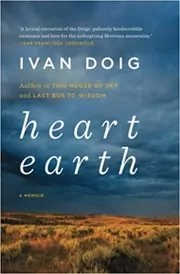
Heart Earth
by Agatha Christie & Ivan Doig
1992
Prompted by a box of wartime letters his mother wrote before her early death, Doig reconstructs his family’s moves between Montana ranches and an Arizona defense-workers’ camp, offering a tender portrait of a tough, witty woman and the postwar West she inhabited.
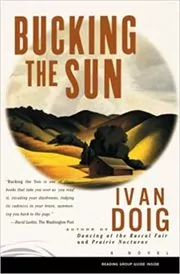
Bucking the Sun
by Ivan Doig
1996
The Duff family leaves their struggling farm to work on Montana’s massive Fort Peck Dam during the 1930s, getting swept into New Deal boom times, dangerous construction work, and a suspicious family tragedy that slowly unravels amid shifting loyalties and secrets.
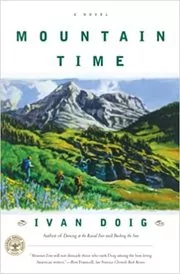
Mountain Time
by Ivan Doig
1999
Environmental reporter Mitch Rozier and caterer Lexa McCaskill travel from Seattle back to Montana when Mitch’s scheming, ailing father calls them home, forcing all three to confront old grievances, aging, and the uneasy collision between Western landscapes and modern life.
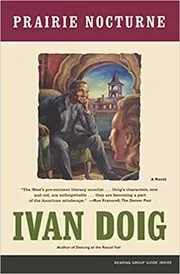
Prairie Nocturne
by Ivan Doig
2003
In 1920s Montana and New York, voice teacher Susan Duff and her former lover, ex-politician Wes Williamson, coach their Black chauffeur Monty Rathbun toward a concert career, challenging local racism, their own regrets, and the high personal cost of chasing art and freedom.
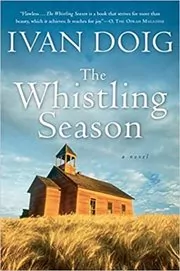
The Whistling Season
by Ivan Doig
2006
When widower Oliver Milliron hires housekeeper Rose Llewellyn and her bookish brother Morrie in 1909, their arrival upends life on a remote Montana homestead and in its one-room schoolhouse, as seen through the eyes of thirteen-year-old Paul, looking back decades later.
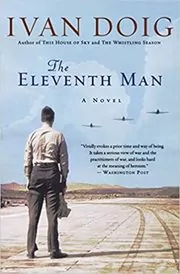
The Eleventh Man
by Ivan Doig
2008
During World War II, former college football star Ben Reinking is reassigned from pilot training to write human-interest stories about his ten scattered teammates, sending him from Pacific islands to European battlefields while he wrestles with propaganda, survivor’s guilt, and a forbidden romance.
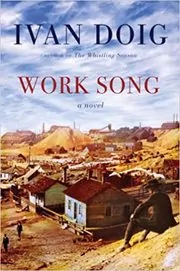
Work Song
by Ivan Doig
2010
A decade after The Whistling Season, Morrie Morgan turns up in 1919 Butte, Montana, landing jobs as a funeral crier and then a librarian before being drawn into a bruising fight between copper magnate Anaconda, outside agitators, and the union miners he befriends.
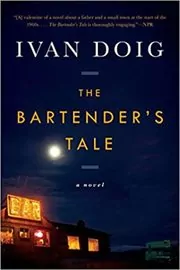
The Bartender's Tale
by Ivan Doig
2012
In the summer of 1960, twelve-year-old Rusty Harry helps his charming, mysterious father run the Medicine Lodge bar in Gros Ventre until a former dancer from Tom’s past arrives claiming he has a grown daughter, upending Rusty’s ideas about family and belonging.
Sweet Thunder
by Ivan Doig
2013
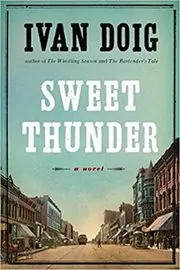
Newlyweds Morrie and Grace Morgan return to Butte in 1920 to inherit a crumbling mansion, and Morrie becomes editorial writer for a scrappy union newspaper, pitting his wit against the powerful Anaconda Copper Company while trying not to lose his marriage in the fray.
Last Bus to Wisdom
by Ivan Doig
2015
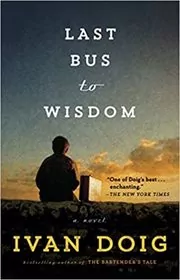
In 1951, eleven-year-old Donal Cameron is sent by Greyhound from his Montana ranch home to an unknown great-aunt in Wisconsin, then flees back west with her long-suffering husband, embarking on a rambling bus trip full of odd characters, trouble, and unexpected grace.
Where to start with Ivan Doig
If you want his Montana family saga: English Creek → Dancing at the Rascal Fair → Ride With Me, Mariah Montana.
If you love school stories and small towns: The Whistling Season → Work Song → Sweet Thunder.
If you prefer memoir and real lives: This House of Sky → Heart Earth → Winter Brothers.
If you’d like a stand‑alone first taste: The Sea Runners → The Bartender’s Tale → Last Bus to Wisdom.
Ivan Doig sub-series and character series
Two Medicine Country books in order
Explore this seriesTwo Medicine Country books in chronological order
Ivan Doig collections, short stories, and related book types
Non-Fiction
Standalone Ivan Doig books
Author bio
Ivan Doig was born on June 27, 1939, in White Sulphur Springs, a small town in Montana’s Smith River Valley. His parents were ranch workers, and after his mother died on his sixth birthday he was raised by his father, Charlie, and his grandmother, Bessie Ringer, along the rough edge of the Rocky Mountain Front. Those years of sheep camps, one‑room schools, and long drives across open country became the emotional ground he would return to again and again in his books.
As a boy he devoured whatever print he could find—comic strips, sports pages, mass‑market magazines—while listening hard to the talk around kitchen tables and bunkhouses. He finished high school in the tiny town of Valier, graduating second in a class of twenty‑one, and won a full scholarship to Northwestern University, where he earned both a bachelor’s and a master’s degree in journalism before completing a Ph.D. in American history at the University of Washington.
Before he ever called himself a novelist, Doig worked as a ranch hand, wrote for the U.S. Forest Service, freelanced for newspapers and magazines, and served as an editorial writer for a Midwestern newspaper chain and as an assistant editor at a national magazine. At Northwestern’s Medill School of Journalism he also met Carol Muller, who became both his wife and closest editor; the two settled in the Seattle area, where Carol taught journalism and the literature of the American West while helping to shape every manuscript he produced.
His breakthrough book was the memoir This House of Sky: Landscapes of a Western Mind, published in 1978. Written largely in Seattle libraries and based on long interviews with his father and grandmother, it was a finalist for the National Book Award and made his blend of landscape, family story, and plain‑spoken lyricism widely known. He returned to nonfiction with Winter Brothers, a winter’s journal twined with the 19th‑century diaries of coastal settler James G. Swan, and later with Heart Earth, drawn from his mother’s wartime letters.
Most readers, though, meet him through the long run of Montana novels he set in an imagined Two Medicine country patterned on the places where he grew up. English Creek, Dancing at the Rascal Fair, and Ride With Me, Mariah Montana follow the McCaskill family across a century of statehood, from Scottish immigrants carving out a sheep ranch to a Winnebago road trip during the 1989 centennial. Other books such as Bucking the Sun, Prairie Nocturne, and Mountain Time move between Fort Peck Dam work camps, Harlem Renaissance New York, Seattle, and the contemporary West but keep circling questions of loyalty, work, and change.
In the later part of his career Doig introduced some of his most beloved characters: the fast‑talking teacher Morrie Morgan of The Whistling Season, Work Song, and Sweet Thunder; the father‑and‑son pair Tom and Rusty Harry in The Bartender’s Tale; and red‑haired Donal Cameron on his cross‑country Greyhound journey in Last Bus to Wisdom. Across these stories, miners, librarians, ranch cooks, schoolteachers, bartenders, and kids trying to make sense of the adults around them step into the foreground.
Although he was often labeled a Western writer, Doig liked to say that his real subject was language—the weathered metaphors, jokes, and work talk he collected on thousands of index cards from the working people he grew up among.
His books rarely center on famous historical figures; instead they give narrative weight to sheepherders, homesteaders, miners, and small‑town women whose lives are usually left out of official histories of the American West. Again and again he looked for the point where big public events—statehood, war, dam building, labor battles—meet the day‑to‑day compromises of families trying to stay afloat.
Diagnosed with a blood disorder that later progressed to multiple myeloma, he kept writing through years of treatment and finished his final novel, Last Bus to Wisdom, shortly before his death on April 9, 2015. Afterward, Carol Doig placed his papers, notebooks, photographs, and recordings at Montana State University, where the Ivan Doig Archive and the Ivan Doig Center continue to support new work on the lands and peoples of the North American West.





Edited by
Software engineer whose passion for tracking book recommendations from podcasts inspired the creation of MRB.
Lead investor at 3one4 Capital whose startup expertise and love for books helped shape MRB and its growth.
Comments
Did we miss something? Have feedback?
Help us improve this page by sharing your thoughts