
Edward Ellsberg Books in Order
Browse Edward Ellsberg books in order, with short summaries, series background, and clear suggestions for where to start with his naval adventures.
Last updated:
As an Amazon Associate, we earn from qualifying purchases (at no extra cost to you).
Edward Ellsberg books in publication order
10 books
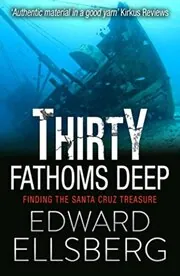
Thirty Fathoms Deep
by Edward Ellsberg
1929
A salvage expedition searching for long-lost treasure off the Peruvian coast finds danger above and below the surface. Ellsberg turns the hunt into a brisk sea adventure, using real diving and salvage know-how to give the underwater work real weight.
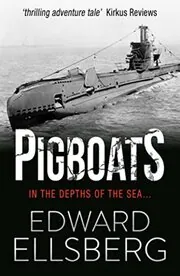
Pigboats
by Edward Ellsberg
1931
Set in World War I submarine service, this novel follows men in cramped early pigboats as combat, rivalry, and exhaustion close in. Ellsberg brings the machinery, tension, and odd intimacy of undersea warfare vividly to life.
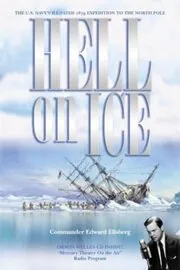
Hell on Ice
by Edward Ellsberg
1938
Drawing on the fate of the Jeannette expedition, Ellsberg tells of a polar voyage that turns into a fight for survival after the ship is trapped and crushed by Arctic ice. It is a harsh, human story of cold, leadership, and endurance.
Men Under the Sea
by Edward Ellsberg
1939
Ellsberg surveys the world of deep-sea diving and salvage, beginning with the S-51 and moving through other famous underwater rescues and treasure recoveries. Part history and part memoir, it shows how much courage and improvisation life below the surface demands.
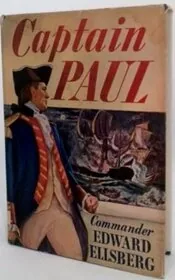
Captain Paul. .
by Edward Ellsberg
1941
When young Tom Folger's life at sea intersects with John Paul Jones, he is swept into the Revolutionary War and its hard, risky battles afloat. Ellsberg blends whaling, privateering, and naval combat into a lively historical sea adventure.
Under the Red Sea Sun
by Edward Ellsberg
1946
Sent to Massawa after the Italians leave the harbor choked with wrecks, Ellsberg must rebuild a working port with scant gear and almost no support. It is a vivid wartime memoir of salvage work, improvisation, and brutal Red Sea heat.
No Banners, No Bugles
by Edward Ellsberg
1949
In North Africa during Operation Torch, Ellsberg is tasked with clearing wrecked harbors and keeping the Allied advance moving. The memoir mixes engineering drama, wartime pressure, and his sharp account of how bureaucracy can be as dangerous as enemy action.

Mid Watch
by Edward Ellsberg
1954
Aboard the armored cruiser Manhattan, young Vic Cushing faces a split-second choice when his captain's orders clash with Navy regulations and lives are on the line. Ellsberg turns the crisis into a tense novel of duty, command, and consequence.
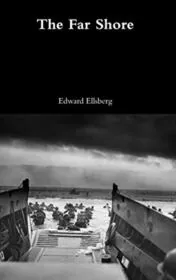
The Far Shore
by Edward Ellsberg
1959
Ellsberg follows the huge engineering effort behind D-Day, from artificial harbors and invasion planning to the chaos off Omaha Beach. It is a firsthand look at how victory depended on logistics, nerve, and a lot of unglamorous work at sea.
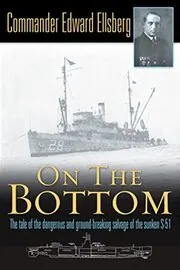
On the Bottom
by Edward Ellsberg
1960
After the submarine S-51 sinks off Block Island, Ellsberg helps lead a dangerous effort to raise her from 132 feet of water. This firsthand account turns deep-sea salvage into a tense story of cold, risk, and stubborn problem-solving.
Where to start with Edward Ellsberg
If you want the signature true story: On the Bottom
If you want his World War II memoirs: Under the Red Sea Sun → No Banners, No Bugles → The Far Shore
If you want a wider look at divers and salvage crews: Men Under the Sea
If you want survival history in extreme conditions: Hell on Ice
Edward Ellsberg sub-series and character series
Under the Red Sea Trilogy books in order
Explore this seriesUnder the Red Sea Trilogy books in chronological order
Edward Ellsberg collections, short stories, and related book types
Non-Fiction
Author bio
Edward Ellsberg was born in New Haven, Connecticut, in 1891, and grew up in Colorado after his family moved west. He was the son of Jewish refugees from czarist Russia, and he entered the U.S. Naval Academy at a time when there were very few Jewish midshipmen there. He graduated in 1914, first in his class academically, with a strong engineer's mind and a habit of pushing straight at hard problems.
He was not built for quiet desk work.
After a stint aboard the battleship Texas, the Navy sent him to the Massachusetts Institute of Technology for postgraduate work in naval architecture. He earned a master's degree there in 1920 and moved into the Construction Corps, where he built a reputation as a practical, hands-on officer. He liked machinery, disliked drift, and had a blunt streak that could help him or get him in trouble.
The turning point came in 1925, when the submarine S-51 sank off Block Island after a collision. The Navy had no real playbook for lifting a big submarine from deep, rough water, but Ellsberg volunteered anyway. During the operation he trained as a diver himself, becoming the first Construction Corps officer to qualify as a deep-sea diver, and helped lead the long, dangerous salvage effort that finally brought the boat up. The job made him a national figure and fixed his public image for good.
It also made him a writer.
His first big book, On the Bottom, grew out of the S-51 operation and became a best seller in 1929. It was later serialized in The Saturday Evening Post, which shows how wide his audience had become. When the submarine S-4 sank in 1927, he was called back to help again, and that disaster deepened his public role as the Navy's salvage expert. By then he had already left active duty, frustrated by Navy promotion rules and by criticism over his public speaking, and gone to work for Tide Water Oil as chief engineer. Even there, he kept inventing, lecturing, and writing, and he also patented several oil-refining processes.
The books that followed show how wide his range was. Pigboats turned submarine service into fiction and later became the film Hell Below. Hell on Ice retold the Jeannette polar disaster with the pace of an adventure novel, while Men Under the Sea pulled together stories of divers and underwater rescue. In Captain Paul, he shifted farther back in time to John Paul Jones. Readers tend to like him because even when he is writing history, he never loses sight of the people doing the hard, dirty work.
Pearl Harbor pulled him back into uniform on December 8, 1941. In World War II he was sent first to Massawa in Eritrea, where he helped clear scuttled ships and rebuild a vital Red Sea port under brutal heat and with very little support. Then came North Africa during Operation Torch, and later the huge engineering preparations that supported D-Day. Those experiences fed directly into Under the Red Sea Sun, No Banners, No Bugles, and The Far Shore, three books that show war from the side of salvage crews, harbor workers, planners, and officers trying to keep armies supplied. His wartime service eventually brought him two Legions of Merit and a British honor, but the books make the real point better than the medals do.
He retired from the Navy in 1951 with the rank of rear admiral. After that he kept writing, lecturing, and working as a consulting engineer, and he spent his later years between Maine and St. Petersburg Beach, Florida. He died in 1983, at ninety-one. If you like sea writing that cares as much about solving the problem as winning the battle, Ellsberg is still a very good companion.











Edited by
Software engineer whose passion for tracking book recommendations from podcasts inspired the creation of MRB.
Lead investor at 3one4 Capital whose startup expertise and love for books helped shape MRB and its growth.
Comments
Did we miss something? Have feedback?
Help us improve this page by sharing your thoughts