
Edgar Allan Poe Books in Order
Explore Edgar Allan Poe books in order, with short summaries, poem and tale collections, series background, reading order help, and clear tips on where to start.
Last updated:
As an Amazon Associate, we earn from qualifying purchases (at no extra cost to you).
Edgar Allan Poe books in publication order
93 books
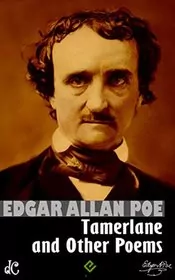
Tamerlane and Other Poems
by Edgar Allan Poe
1827
Poe's first poetry book is youthful, earnest, and full of ambition, lost love, and the melancholy idealism that would stay with him.
Al Aaraaf, Tamerlane and Minor Poems
by Edgar Allan Poe
1829
An expanded early collection that mixes long dreamlike poems with shorter pieces about beauty, distance, longing, and poetic ambition.

The Works of Edgar Allan Poe
by Edgar Allan Poe
1829
A collected edition that brings together Poe's major tales, poems, and prose, useful for readers who want the range rather than a sampler.
A Tale of Jerusalem
by Edgar Allan Poe
1832
Set during the siege of Jerusalem, this short comic satire turns religious ritual and bargaining into absurd farce. It shows Poe's early taste for parody as much as plot.
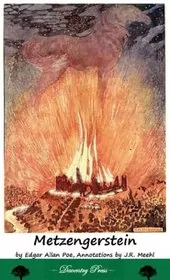
Metzengerstein
by Edgar Allan Poe
1832
A bitter feud between noble houses, a mysterious horse, and a young baron's worsening obsession drive this early tale toward hereditary doom.

Ms. Found in a Bottle
by Edgar Allan Poe
1833
A traveler survives disaster at sea only to find himself aboard a ghostly ship rushing toward a final, almost cosmic abyss.

Berenice
by Edgar Allan Poe
1835
Egaeus grows obsessively fixated on his sick cousin Berenice, and Poe follows that monomania to one of his earliest and most disturbing endings.
King Pest
by Edgar Allan Poe
1835
Two sailors wander into a plague-ridden district and meet a grotesque mock court obsessed with death, drink, and decay.
Morella
by Edgar Allan Poe
1835
A husband watches fearfully as the dead do not seem willing to stay gone. Poe turns marriage, intellect, and identity into a compact tale of dread.
Shadow
by Edgar Allan Poe
1835
In a plague-stricken chamber, a small group of mourners encounter a strange presence that turns grief into something darker and less explainable.
The Unparalleled Adventures of One Hans Pfaall
by Edgar Allan Poe
1835
An eccentric craftsman tries to escape debt and ordinary life by building a balloon and setting off for the moon. It is part hoax, part adventure, part proto science fiction.
Four Beasts in One - The Homo-Cameleopard
by Edgar Allan Poe
1836
This satirical fantasy sends up tyranny and spectacle through a bizarre ruler and a city sliding into absurd chaos.
Maelzel's Chess-Player
by Edgar Allan Poe
1836
Poe applies cool logic to the famous chess automaton called the Turk and argues that a hidden human, not a machine, must be inside.
A Predicament
by Edgar Allan Poe
1838
This grotesque comic piece follows Signora Psyche Zenobia as her craving for sensational experience leads to a memorably absurd disaster.
Ligeia
by Edgar Allan Poe
1838
A grieving husband cannot escape the memory of his brilliant first wife, and his second marriage becomes entangled with obsession and possible return.
The Narrative of Arthur Gordon Pym of Nantucket
by Edgar Allan Poe
1838
Poe's only novel sends Arthur Gordon Pym to sea for mutiny, shipwreck, hunger, violence, and a final Antarctic mystery that only grows stranger.
The Devil in the Belfry
by Edgar Allan Poe
1839
A devilish visitor crashes into an obsessively orderly village and throws its careful sense of time into comic disorder.
William Wilson
by Edgar Allan Poe
1839
A proud, reckless man is pursued through life by a double who seems to know him too well. Poe turns the chase into a study of conscience and self-destruction.
Tales of the Grotesque and Arabesque
by Edgar Allan Poe
1840
This landmark two-volume collection gathers many of Poe's early stories, showing his full range from Gothic horror to satire, fantasy, and strange comic pieces.
The Journal of Julius Rodman
by Edgar Allan Poe
1840
This unfinished faux frontier journal imagines an expedition across the western wilderness and Rocky Mountains in the plain style of travel narrative.
The Man of the Crowd
by Edgar Allan Poe
1840
A recovering observer becomes fixated on an old man in London's streets and follows him for hours, only to find a human mystery that refuses to open.

The Philosophy of Furniture
by Edgar Allan Poe
1840
A witty essay on taste and interior design, this is Poe in satirical mode, judging curtains, carpets, and bad decorative habits with relish.
A Descent into the Maelstrom
by Edgar Allan Poe
1841
An old fisherman recounts how he was dragged into a gigantic whirlpool and survived by observing what panic hides from others.
Never Bet the Devil Your Head
by Edgar Allan Poe
1841
Poe spoofs moralizing fiction through the fate of Toby Dammit, a fool whose empty catchphrase ends in disaster. It is sharp, rude, and very funny.
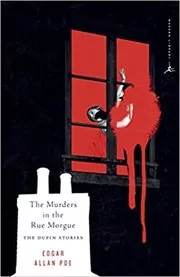
The Murders in the Rue Morgue
by Edgar Allan Poe
1841
Chevalier C. Auguste Dupin solves a brutal Paris murder that has baffled the police, and in the process Poe sketches the first modern detective story.
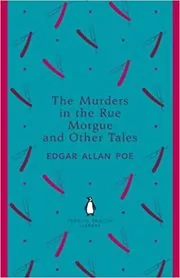
The Murders in the Rue Morgue and Other Tales
by Edgar Allan Poe
1841
A strong Poe sampler built around Dupin's breakthrough investigation and backed by other tales of terror, logic, and the uncanny.
Eleonora
by Edgar Allan Poe
1842
A dreamy valley, a first love, and a promise that outlives death shape this softer, more romantic Poe tale about memory and fidelity.
The Masque of the Red Death
by Edgar Allan Poe
1842
Prince Prospero seals himself and his guests away from a plague, but Poe's famous allegory makes clear that walls and wealth will not save them.
The Mystery of Marie Roget
by Edgar Allan Poe
1842
Dupin takes on the death of a young Parisian woman and works largely from newspapers and inference, making this one of Poe's most analytical mysteries.
The Pit and the Pendulum
by Edgar Allan Poe
1842
An imprisoned man wakes in darkness during the Inquisition and faces a series of calculated terrors designed to break both body and mind.
A Tale of the Ragged Mountains
by Edgar Allan Poe
1843
Poe blends Virginia scenery, mesmerism, and unsettled memory in a tale where time and identity begin to blur.

Diddling
by Edgar Allan Poe
1843
A comic essay on petty fraud, this piece treats swindling as if it were a rigorous art with rules, methods, and gifted practitioners.
The Black Cat
by Edgar Allan Poe
1843
A condemned man recounts how drink, cruelty, and rage wrecked his life, while a cat seems to watch, return, and finally expose him.
The Gold-Bug
by Edgar Allan Poe
1843
After William Legrand finds a strange insect and an encoded parchment, obsession turns into a cipher hunt for buried treasure. It is Poe at his most briskly entertaining.
The Prose Romances of Edgar A. Poe
by Edgar Allan Poe
1843
A rare volume devoted to Poe's longer prose experiments, linking mystery, adventure, and the strange narrative turns he handled so well.
The Tell-Tale Heart and Other Writings
by Edgar Allan Poe
1843
A strong introductory volume that pairs Poe's best-known terror tales with poems and prose, making it easy to see both the storyteller and the stylist.
Mesmeric Revelation
by Edgar Allan Poe
1844
A bedside session of hypnosis opens into a strange conversation about death, consciousness, and what may lie beyond the body.

Morning on the Wissahiccon
by Edgar Allan Poe
1844
Part travel sketch, part meditation on beauty, this piece wanders along a Pennsylvania creek and turns scenery into something dreamy, almost enchanted.
The Angel of The Odd
by Edgar Allan Poe
1844
After mocking improbable events, a skeptical narrator meets the spirit of absurd mishap and learns that bad luck can be both comic and punishing.
The Balloon-Hoax
by Edgar Allan Poe
1844
Poe presents a fake news report of a transatlantic balloon crossing and shows how easily sensation can outrun skepticism.
The Literary Life of Thingum Bob, Esq
by Edgar Allan Poe
1844
A comic portrait of literary ambition and shameless self-promotion, this story skewers puffery, networking, and the business side of fame.
The Oblong Box
by Edgar Allan Poe
1844
A shipboard narrator misreads a fellow passenger and his long wooden box, with tragic consequences. The tale turns grief and appearances into quiet horror.
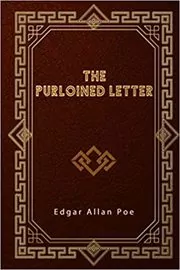
The Purloined Letter
by Edgar Allan Poe
1844
A stolen letter gives its holder dangerous leverage, and Dupin shows that the cleverest concealment may be the most obvious one.
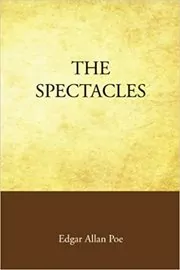
The Spectacles
by Edgar Allan Poe
1844
A vain young man falls hard for a woman he barely sees clearly, and Poe turns the mistake into a playful comedy of vanity, romance, and bad eyesight.

The System of Doctor Tarr and Professor Fether
by Edgar Allan Poe
1844
A visitor tours a remote asylum and slowly realizes the rules inside may have been overturned. Poe mixes farce and dread until the institution itself becomes the punch line.
Anastatic Printing
by Edgar Allan Poe
1845
Poe looks at a new facsimile printing method and imagines how cheap reproduction could reshape publishing, piracy, and the spread of texts.
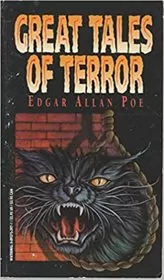
Great Tales of Terror
by Edgar Allan Poe
1845
A curated horror selection built around Poe's most chilling pieces, from buried fears and plague visions to guilt-ridden confession.

Landor's Cottage
by Edgar Allan Poe
1845
A calm, almost pastoral sketch that lingers over a beautiful home and landscape. It offers a gentler late Poe, more reflective than terrifying.
Some Words with a Mummy
by Edgar Allan Poe
1845
A revived mummy calmly dismantles modern self-importance, turning a parlor experiment into brisk satire on science, history, and progress.
The Colloquy of Monos and Una
by Edgar Allan Poe
1845
Two lovers speak after death about the collapse of civilization, the end of the world, and what consciousness may become beyond it.
The Facts in the Case of M. Valdemar
by Edgar Allan Poe
1845
A mesmerist tries to hold a dying man suspended between life and death, and Poe pushes the experiment toward one of his most gruesome payoffs.
The Imp of The Perverse
by Edgar Allan Poe
1845
One of Poe's clearest studies of self-sabotage, this tale follows a murderer whose urge to confess grows stronger precisely because silence would save him.
The Oval Portrait
by Edgar Allan Poe
1845
A wounded traveler studies a portrait in an abandoned room and discovers the terrible price of the artist's devotion to perfect beauty.
The Raven
by Edgar Allan Poe
1845
Poe's most famous poem follows a grieving speaker whose midnight visitor turns sorrow into a ritual of repetition, memory, and despair.
The Raven and Other Poems
by Edgar Allan Poe
1845
The collection that cemented Poe's fame, pairing The Raven with other poems of grief, longing, beauty, and fatal memory.

The Thousand-And-Second Tale of Scheherazade
by Edgar Allan Poe
1845
Poe gives Scheherazade one more night and fills it with marvels modeled on real science and invention. The joke is that modern progress already sounds unbelievable.
The Cask of Amontillado
by Edgar Allan Poe
1846
Montresor leads Fortunato into the catacombs under the pretense of tasting rare wine, and revenge closes in with terrible patience.
The Domain of Arnheim
by Edgar Allan Poe
1846
A wealthy dreamer uses his fortune to create an ideal landscape, and Poe turns garden design into a meditation on beauty and artifice.
The Philosophy of Composition
by Edgar Allan Poe
1846
Poe explains, perhaps not without some mischief, how deliberate choices in tone, length, and refrain shaped The Raven.
Eureka
by Edgar Allan Poe
1848
Poe's strangest major work is a prose meditation on the universe, mixing cosmology, theology, intuition, and sheer intellectual daring.

Annabel Lee
by Edgar Allan Poe
1849
Poe's late poem turns a lost seaside love into a haunting ballad of memory, devotion, and grief that refuses to fade.

The Complete Tales of Edgar Allan Poe
by Edgar Allan Poe
1849
A broad collection of Poe's short fiction, spanning detective stories, macabre classics, comic pieces, and strange speculative tales.
Tales of Mystery and Imagination
by Edgar Allan Poe
1852
One of the classic Poe samplers, this collection brings together the tales of horror, suspense, and deduction that fixed his reputation.

Politian
by Edgar Allan Poe
1923
Poe's unfinished verse drama, based on a notorious murder case, circles jealousy, honor, and fatal passion in a more theatrical register than his stories.

Ten Great Mysteries
by Edgar Allan Poe
1960
A themed selection of Poe stories and poems built around puzzles, dread, and sharp reversals, good for readers who want a compact mystery-heavy sampler.
Tales of Mystery
by Edgar Allan Poe
1963
A compact selection of suspenseful Poe stories, good for readers who want the eerie mood and sharp endings without a complete edition.

The Collected Tales and Poems of Edgar Allan Poe
by Edgar Allan Poe
1969
A generous omnibus that gathers Poe's signature stories and poems in one place, showing how closely his dread and lyric melancholy belong together.
Letters Until Now Unpublished
by Edgar Allan Poe
1973
A documentary volume of Poe's letters, useful for readers who want the writer offstage, with work worries, relationships, and literary plans in his own voice.
Great Tales of Edgar Allan Poe
by Edgar Allan Poe
1979
A broad anthology of Poe favorites, balancing Gothic terror, psychological breakdown, and the puzzle-minded stories that helped invent detective fiction.
The Detective Stories of Edgar Allan Poe
by Edgar Allan Poe
1979
A focused collection of Poe's analytical mysteries, led by Dupin and supported by other tales of clues, codes, and reasoning under pressure.

The Complete Tales and Poems of Edgar Allan Poe
by Edgar Allan Poe
1992
A comprehensive one-volume Poe, combining the major stories and poems for readers who want the classic pieces in a single edition.
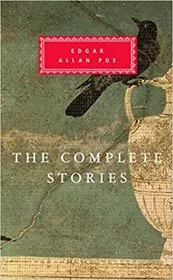
The Complete Stories
by Edgar Allan Poe
1993
A near-comprehensive gathering of Poe's fiction, moving from satire and sea adventure to detective stories and the dark psychological tales readers know best.

Edgar Allan Poe
by Edgar Allan Poe
1995
An introductory poetry selection that makes Poe approachable for younger readers while keeping the eerie music, sadness, and vivid imagery of his verse.

Tales of Terror and Detection
by Edgar Allan Poe
1995
A smart pairing of Poe's two strongest modes, the terrifying tale and the analytic mystery, in a concise themed selection.
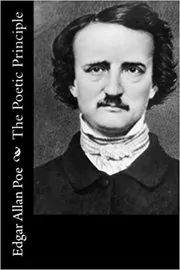
The Poetic Principle
by Edgar Allan Poe
2000
This late essay lays out Poe's view that poetry should aim at beauty and emotional intensity rather than moral instruction or argument.
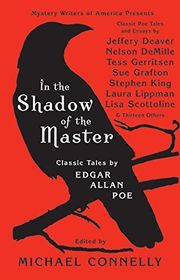
In the Shadow of the Master
by Edgar Allan Poe, Michael Connelly, Nelson DeMille & Stephen King
2003
Sixteen tales by Edgar Allan Poe are paired with twenty original essays by mystery writers on Poe’s influence on their reading and work. Edited by Michael Connelly, the volume includes an essay by Nelson DeMille and commemorates Poe’s bicentennial.
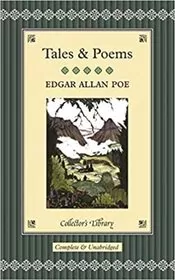
Tales and Poems
by Edgar Allan Poe
2004
A one-volume introduction that puts Poe's major fiction and verse side by side, useful if you want both the stories and the famous lyrics.

Edgar Allan Poe's Complete Poetical Works
by Edgar Allan Poe
2007
A full gathering of Poe's poetry, from early ambitious pieces to the musical late poems that made his voice unforgettable.
Tales of Mystery and Terror
by Edgar Allan Poe
2008
A selected volume of Poe's darker work, built around dread, guilt, revenge, and the uneasy border between reason and madness.

The Best Short Stories of Edgar Allan Poe
by Edgar Allan Poe
2009
A strong selection of Poe's most effective short fiction, built around the stories of madness, revenge, guilt, and ratiocination that still read cleanly.

21 stories and "The Little Cord"
by Edgar Allan Poe
2011
A broad anthology of Poe pieces that moves through terror, riddles, vengeance, and dark wit, giving a useful cross-section of his shorter work.

POE
by Edgar Allan Poe
2011
A compact Poe collection that samples the tales and poems where grief, obsession, and reason slide into nightmare.
The Rationale of Verse
by Edgar Allan Poe
2013
Poe takes apart meter, rhythm, and sound in an ambitious essay on how verse works on the ear and why form matters.

A Few Words on Secret Writing
by Edgar Allan Poe
2014
Poe explores ciphers and codebreaking with brisk confidence, turning cryptography into both entertainment and a test of reasoning.

Poe: Poems
by Edgar Allan Poe
2014
A poem-centered selection that highlights Poe's musical language, dreamy melancholy, and lasting fascination with beauty, loss, and memory.

Weird Tales and Short Stories
by Edgar Allan Poe
2014
A varied anthology of Poe's stranger fiction, mixing Gothic dread, black humor, adventure, and the odd speculative turn.
The Raven and Other Selected Poems
by Edgar Allan Poe
2015
A poem-centered selection that highlights Poe's musical language, dreamy melancholy, and lasting fascination with beauty, loss, and memory.

Selected Tales of Edgar Allan Poe
by Edgar Allan Poe
2016
A curated entry point to Poe's short fiction, sampling his best-known tales of murder, obsession, detection, and buried fear.

The Fall of the House of Usher
by Edgar Allan Poe
2016
An unnamed narrator visits Roderick Usher's decaying mansion and finds illness, dread, and family collapse seeping into the very walls. Few Poe tales fuse atmosphere and psychology more completely.

The Fall of the House of Usher and Other Tales
by Edgar Allan Poe
2016
A gateway collection of Poe's Gothic fiction, gathering haunted houses, unstable minds, and elegant dread in some of his most famous stories.

Edgar Allan Poe Collection
by Edgar Allan Poe
2017
An omnibus of Poe's signature work, mixing horror tales, detective fiction, and melancholy poems in a convenient single volume.
The Bells and Other Poems
by Edgar Allan Poe
2017
A late poetry collection full of sound and incantation, best known for poems that turn bells, mourning, and lost love into music.

The Essential Tales and Poems of Edgar Allan Poe
by Edgar Allan Poe
2023
A curated one-volume introduction to Poe, bringing together the core horror tales, detective pieces, and poems that shaped his reputation.
Where to start with Edgar Allan Poe
If you want a broad introduction: The Tell-Tale Heart and Other Writings → The Fall of the House of Usher and Other Tales → Tales of Mystery and Imagination
If you want classic detective fiction: The Murders in the Rue Morgue → The Mystery of Marie Roget → The Purloined Letter
If you want pure gothic terror: The Fall of the House of Usher → The Pit and the Pendulum → The Cask of Amontillado
If you want the poems first: The Raven and Other Poems → The Bells and Other Poems → Annabel Lee
If you want adventure and the strange side of Poe: Ms. Found in a Bottle → A Descent into the Maelstrom → The Narrative of Arthur Gordon Pym of Nantucket
Edgar Allan Poe sub-series and character series
Edgar Allan Poe collections, short stories, and related book types
Tales
Collections
Non-Fiction
Standalone Edgar Allan Poe books
Author bio
Edgar Allan Poe was born in Boston on January 19, 1809, to two touring actors, David Poe Jr. and Elizabeth Arnold Poe. Before he was three, both parents were gone, and he was taken in by John and Frances Allan of Richmond, Virginia. He was never formally adopted, but Richmond was the city that shaped him, the place where he went to school, read widely, and started to imagine a life built around words.
His early years were unsettled. Poe spent part of his childhood in Britain, then returned to Virginia and later enrolled at the University of Virginia. He did well academically, especially in languages, but money problems and conflict with John Allan pushed him out after less than a year. In 1827 he left for Boston, published Tamerlane and Other Poems, and enlisted in the U.S. Army. He rose quickly, reached sergeant major, and later entered West Point, only to leave that path too.
He learned early that talent did not protect anyone from chaos.
By the early 1830s, living in Baltimore, Poe turned more fully toward fiction. He began publishing stories that mixed Gothic dread, satire, puzzles, and strange scientific ideas. He also worked as an editor and reviewer in Richmond, Philadelphia, and New York, writing at speed for magazines that did not pay much and did not offer much security. In 1836 he married his cousin Virginia Clemm, and the small household he shared with Virginia and her mother became the emotional center of his adult life.
The breakthrough most people know is The Raven, published in 1845. It made him famous almost at once, but not financially safe. That gap, public recognition on one side, constant money trouble on the other, runs through much of his life. He kept writing stories, poems, essays, reviews, and literary criticism, often with a sharp eye for structure and craft.
Read a handful of Poe, The Murders in the Rue Morgue, The Fall of the House of Usher, The Tell-Tale Heart, The Gold-Bug, The Raven, and you can feel how wide his range really was.
Some readers come for the atmosphere. Some come for the logic. Poe is one of the few writers who can give you both in the same small space. He could write about a mind cracking under guilt, a detective solving an impossible crime, a house that seems to share a family's illness, or a buried code that turns into an adventure. Again and again, he returned to obsession, doubles, premature burial, hidden messages, grief, and narrators who are certain they are rational right up to the moment they prove otherwise.
He was also serious about the mechanics of writing. In essays such as The Philosophy of Composition and The Poetic Principle, Poe argued that effect matters, that a poem or story should be shaped carefully rather than allowed to sprawl. That interest in form helps explain why so many of his best pieces are compact and intense. He liked compression. He liked design. He liked the feeling that every sentence was pushing toward a single mood or revelation.
Virginia's long illness and death in 1847 hit him hard. His final years were marked by grief, unstable work, and failing health, though he kept producing ambitious work, including Eureka, his odd and sweeping prose meditation on the universe. In October 1849 he died in Baltimore at the age of forty. The exact cause has never been settled.
What remains is a body of work that still feels unusually alive. Poe helped shape modern detective fiction, pushed horror inward toward psychology, and even wandered into early science fiction. He did all of that in a life that was short, messy, and often painful. That may be part of why the work still carries such force. It feels handmade under pressure.




Edited by
Software engineer whose passion for tracking book recommendations from podcasts inspired the creation of MRB.
Lead investor at 3one4 Capital whose startup expertise and love for books helped shape MRB and its growth.
Comments
Did we miss something? Have feedback?
Help us improve this page by sharing your thoughts