
Carol Zoref Books in Order
Explore Carol Zoref's books in order, with clear summaries, author background, and a simple reading guide to help you decide where to start.
Last updated:
As an Amazon Associate, we earn from qualifying purchases (at no extra cost to you).
Carol Zoref books in publication order
1 book
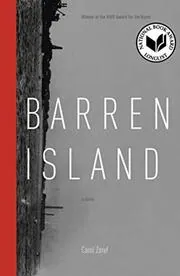
Barren Island
by Carol Zoref
2016
On her eightieth birthday, Marta Eisenstein Lane recalls growing up on a grim factory island in Jamaica Bay. As her immigrant family faces poverty, labor unrest, and news from Nazi Europe, Marta searches for a future beyond the rendering works.
Where to start with Carol Zoref
For a historical New York story: Barren Island
For an immigrant family saga: Barren Island
For a coming-of-age novel with political stakes: Barren Island
Standalone Carol Zoref books
Author bio
Carol Zoref is a fiction writer and essayist whose work often returns to the complicated ties between place, memory, family, and history. She grew up in the New York area, a fact that matters to her best-known novel, Barren Island, which uncovers a nearly forgotten corner of the city’s past.
Her route into writing also includes a long life in the classroom. Zoref earned both her BA and MFA from Sarah Lawrence College, then built a career teaching writing as well as producing fiction and essays. She has taught at Sarah Lawrence since 1996 and serves as director of its Writing Center. She has also taught writing at New York University.
Teaching and writing have run side by side in her life.
Before publishing a novel, Zoref placed essays and stories in a range of outlets, including The New York Times and The Christian Science Monitor. Her work has also brought fellowships and grants from arts organizations, along with recognition in fiction competitions. Those years of shorter work and teaching helped shape a patient, research-minded approach to storytelling.
That approach comes fully into view in Barren Island, her debut novel. The book is set around the real Barren Island in Jamaica Bay, where animal-rendering factories once turned the city’s dead horses and other large animals into glue and fertilizer. It is not the sort of New York setting most people know, which is exactly part of its pull.
The novel is narrated by Marta Eisenstein Lane, looking back on her early life from the vantage point of her eightieth birthday. Through Marta and her immigrant family, Zoref follows a community of Jewish, Greek, Italian, Irish, and African American factory families as they face poverty, labor conflict, political arguments, and alarming news from Europe in the years before World War II.
It’s a story about people trying to make a home in a place many others would rather forget.
Barren Island won the Association of Writers and Writing Programs Award for the Novel and a National Jewish Book Award for debut fiction. It was also longlisted for the National Book Award and received the Harold U. Ribalow Award for Fiction. The recognition reflects the book’s unusual blend of historical research and intimate family life, but its center remains Marta’s coming-of-age story.
Readers drawn to historical fiction with a strong sense of place will find plenty here: a vanished landscape, a crowded working community, and a young woman trying to understand what she owes to her family and herself. Zoref is interested in big questions, including faith, justice, belonging, and what it means to remember, but she approaches them through daily work, neighborhood pressures, friendships, and family worries.
Her published novel may be rooted in the past, yet its concerns feel close at hand. People arrive looking for safety. Families carry news from far away. Communities argue about work, money, and who gets to belong. Zoref keeps the focus on the human scale, even when history is moving fast around her characters.






Edited by
Software engineer whose passion for tracking book recommendations from podcasts inspired the creation of MRB.
Lead investor at 3one4 Capital whose startup expertise and love for books helped shape MRB and its growth.
Comments
Did we miss something? Have feedback?
Help us improve this page by sharing your thoughts