
Allan Folsom Books in Order
Explore Allan Folsom's thrillers in order, with short book summaries, series background, reading tips, and a clear guide to where to start.
Last updated:
As an Amazon Associate, we earn from qualifying purchases (at no extra cost to you).
Allan Folsom books in publication order
5 books
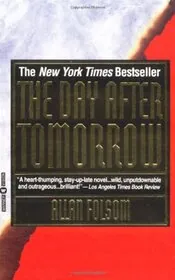
The Day After Tomorrow
by Allan Folsom
1994
Surgeon Paul Osborn sees his father’s killer in a Paris café and starts chasing answers he has wanted for decades. Meanwhile, detective McVey investigates headless bodies, pulling both men into a vast European conspiracy.
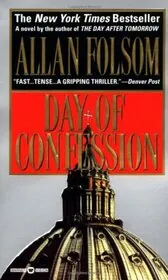
Day of Confession
by Allan Folsom
1998
Los Angeles lawyer Harry Addison flies to Rome after his estranged brother, a Vatican priest, is reported dead in a bus bombing. Instead, Harry finds Danny accused of murder and himself trapped inside a Vatican conspiracy.
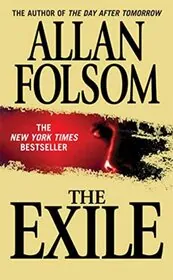
The Exile
by Allan Folsom
2004
John Barron is the newest member of an elite LAPD squad when a train arrest exposes the unit’s brutal code. Forced to flee to Europe with his sister Rebecca, he is drawn into a conspiracy reaching from Los Angeles to the Romanovs.
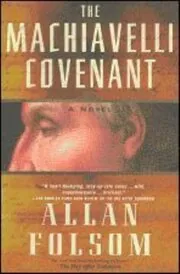
The Machiavelli Covenant
by Allan Folsom
2006
Former LAPD detective Nicholas Marten comes out of hiding after his former girlfriend and her family are killed. His search collides with President John Henry Harris, who is fleeing a cabal tied to assassinations, bioweapons, and a hidden Machiavelli manuscript.
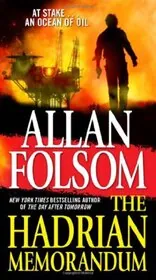
The Hadrian Memorandum
by Allan Folsom
2009
The discovery of oil off Equatorial Guinea pulls Nicholas Marten into a plot involving mercenaries, a Texas energy company, and the White House. With President John Henry Harris his only real ally, Marten has to get proof before thousands die.
Where to start with Allan Folsom
For the big breakout thriller: The Day After Tomorrow.
For Vatican conspiracy suspense: Day of Confession.
For John Barron/Nicholas Marten in order: The Exile → The Machiavelli Covenant → The Hadrian Memorandum.
For Folsom's core themes: The Day After Tomorrow → The Exile → The Machiavelli Covenant.
Allan Folsom sub-series and character series
John Barron/Nicholas Marten books in order
Explore this seriesJohn Barron/Nicholas Marten books in chronological order
Standalone Allan Folsom books
Author bio
Allan Folsom was born Allan Reed Folsom on December 9, 1941, in Orlando, Florida. He grew up in Newton, Massachusetts, just outside Boston, and later studied communications at Boston University, where he graduated in 1963.
He did not come to novels by the short road.
After college, Folsom moved into the working side of film and television in California. He took jobs as a delivery driver, camera operator, film editor, writer, and producer, the kind of mixed bag that teaches a storyteller where the practical problems are. He also wrote for television, with credits that included episodes of Hart to Hart.
For years, he was a screenwriter trying to get projects made. One script about poet Anne Sexton nearly drew interest with Natalie Wood attached, but like many Hollywood almost-stories, it never became the break he needed. The real turn came when he shifted a big, visual thriller idea onto the page as a novel.
That book was The Day After Tomorrow, published in 1994. Before readers even had it in their hands, the manuscript had made news for a huge first-novel deal. Once released, it reached No. 3 on the bestseller list and introduced the kind of story Folsom liked best: an ordinary professional pulled into a violent, international plot that is much bigger than one crime.
He liked scale, but he usually gave readers a person to follow through the chaos.
In The Day After Tomorrow, surgeon Paul Osborn spots the man who killed his father and is pulled into a European conspiracy while detective McVey works a string of brutal murders. Day of Confession moves the action to Rome and Vatican politics, where Hollywood lawyer Harry Addison tries to find out what really happened to his priest brother. The Exile begins the John Barron and Nicholas Marten sequence, turning an LAPD detective's break with his own squad into a chase that reaches across Europe.
Folsom followed that thread with The Machiavelli Covenant and The Hadrian Memorandum, where Marten is up against secret power networks, bioweapons, oil interests, mercenaries, and pressure that reaches the U.S. presidency. Readers who enjoy his books usually come for the pace, the globe-hopping settings, and the sense that every powerful room has another locked door behind it.
His fiction returns often to a few clear ingredients: damaged professionals, family trouble, old crimes, hidden organizations, and institutions that cannot be trusted just because their names sound important. Doctors, lawyers, police officers, priests, presidents, and assassins all share the stage. The plots can get large, but the engine is usually simple: someone learns too much and has to keep moving.
Folsom lived for many years in Santa Barbara, California, with his wife, Karen Glick, whom he married in 1979, and their daughter, Riley. He died there on May 16, 2014, at age 72, from melanoma. He left five novels, all built for readers who like their suspense loud, mobile, and full of trouble.





Edited by
Software engineer whose passion for tracking book recommendations from podcasts inspired the creation of MRB.
Lead investor at 3one4 Capital whose startup expertise and love for books helped shape MRB and its growth.
Comments
Did we miss something? Have feedback?
Help us improve this page by sharing your thoughts