
Alan Furst Books in Order
Explore the books of Alan Furst in order, with Night Soldiers reading guide, series overviews, short summaries, and tips on where to start with his WWII espionage novels.
Last updated:
As an Amazon Associate, we earn from qualifying purchases (at no extra cost to you).
Alan Furst books in publication order
23 books
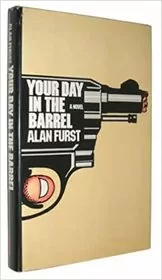
Your Day in the Barrel
by Alan Furst
1976
Drug dealer Roger Levin works Pennsylvania college towns until a traffic stop exposes his stash. Offered freedom if he helps in a murky CIA murder scheme, he has to outwit both spooks and criminals to stay alive and keep his own plans intact.
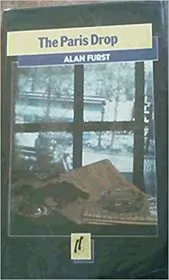
The Paris Drop
by Alan Furst
1980
Roger Levin agrees to carry synagogue fund‑raising cash and a ring to a mysterious pro‑Israel group in Paris. Soon he’s dodging bullets and femme fatales while trying to learn who really wants the money, the ring, and the invention hidden inside it.
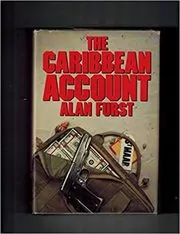
The Caribbean Account
by Alan Furst
1981
Ex‑dealer turned fixer Roger Levin is hired to deliver half a million dollars in ransom money to Miami for a kidnapped heiress held by a bizarre cult. When the drop goes bad and the cash vanishes, he must navigate crooked lawyers and lethal hustlers to bring her home.
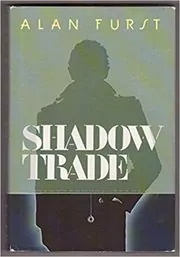
Shadow Trade
by Alan Furst
1984
Ex‑CIA officer Guyer now runs a shoestring private intelligence firm that supplies look‑alike stand‑ins on demand. A lucrative job involving a notorious terrorist goes fatally wrong, leaving a dead double and a vanished middleman, and Guyer has to untangle a web of betrayals before he’s silenced too.
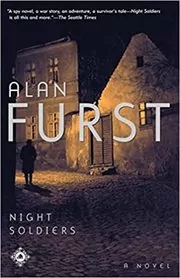
Night Soldiers
by Alan Furst
1988
Bulgaria, 1934: after his brother is murdered by fascists, Khristo Stoianev is recruited by Soviet intelligence and trained as an NKVD agent. From the Spanish Civil War to occupied France, he survives purges, betrayals, and clandestine missions across a Europe sliding into war.
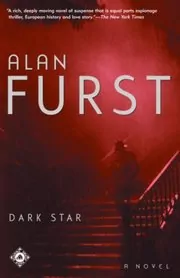
Dark Star
by Alan Furst
1991
Pravda foreign correspondent André Szara, a Jewish survivor of earlier wars, is quietly drafted into the NKVD. Shuttling between Paris, Berlin, and Prague in 1937, he builds a spy network, dodges Stalin’s purges, and learns how fragile any loyalty is in the coming storm.
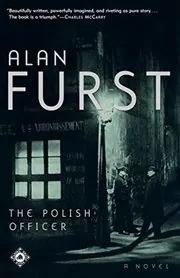
The Polish Officer
by Alan Furst
1995
As Warsaw falls in 1939, Captain Alexander de Milja is recruited into the Polish underground. Tasked first with smuggling the nation’s gold to safety, then with sabotage missions from Paris to Calais and Ukraine, he fights a hidden war under a series of assumed identities.
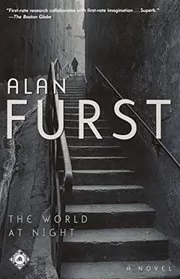
The World at Night
by Alan Furst
1996
Jean Casson, a French producer of stylish gangster films, tries to keep working when the Germans occupy Paris. As friends are arrested and the net tightens, he’s pushed from cautious neutrality into resistance, risking his career, his lovers, and eventually his life.
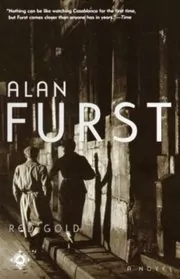
Red Gold
by Alan Furst
1999
Living under a false name in occupied Paris, the now‑broke Casson is drawn deeper into the resistance. Acting as go‑between for Gaullist networks and French communists, he helps run guns and plan sabotage while trying to stay one step ahead of the Gestapo and informers.
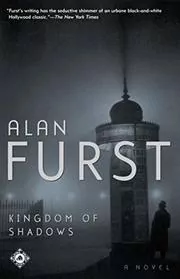
Kingdom of Shadows
by Alan Furst
2000
In 1938–39, Hungarian émigré Nicholas Morath runs a small advertising agency in Paris by day and carries out clandestine missions at the request of his diplomat uncle. Smuggling money, gathering intelligence, and enduring border jails, he watches Europe drift toward a war Hungary may not survive.
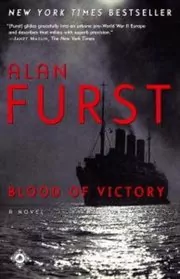
Blood of Victory
by Alan Furst
2002
Russian émigré writer I. A. Serebin is recruited in Istanbul by British intelligence to attack a crucial target: the flow of Romanian oil feeding Hitler’s armies. His mission—from Bucharest to the Black Sea and Belgrade—draws together spies, gangsters, and exiles in a hazardous Danube operation.
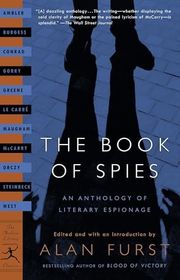
The Book of Spies: An Anthology of Literary Espionage
by Alan Furst
2003
Alan Furst selects literary espionage fiction spanning political upheaval, war, and the Cold War. The anthology ranges from clandestine operatives and resistance fighters to civilians caught in intelligence work, drawing its entries from acclaimed twentieth-century writers and earlier genre landmarks.
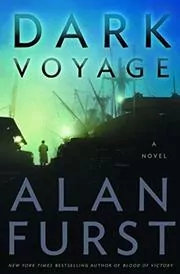
Dark Voyage
by Alan Furst
2004
Under the name Santa Rosa, a Dutch freighter secretly serves British naval intelligence in 1941. Captain Eric DeHaan and his mixed crew of refugees and misfits carry hidden detection gear and dangerous cargoes through U‑boat‑infested seas, where every port call or signal could expose them.
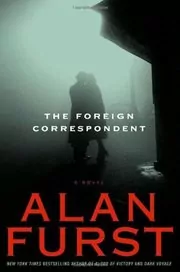
The Foreign Correspondent
by Alan Furst
2006
Italian journalist Carlo Weisz reports for Reuters while quietly editing Liberazione, a clandestine anti‑fascist newspaper smuggled back into Mussolini’s Italy. Hunted by OVRA agents, shadowed by French police and British spies, and reunited with a former lover in Berlin, he has to keep the paper—and himself—alive.
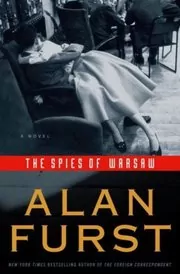
The Spies of Warsaw
by Alan Furst
2008
In late‑1930s Warsaw, French military attaché Colonel Jean‑François Mercier runs a small espionage network while posing as a diplomat. Tank plans, border skirmishes, and a dangerous liaison with a League of Nations lawyer draw him into clashes with the Gestapo and complacent superiors in Paris.
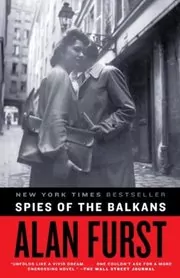
Spies of the Balkans
by Alan Furst
2010
In Salonika on the eve of the German invasion, senior police official Costa Zannis cleans up political messes for the city’s bosses. As Jewish refugees and Allied agents arrive, he builds escape routes out of the Balkans, juggling lovers, informants, and growing pressure from German intelligence.
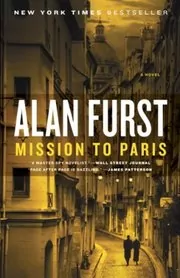
Mission to Paris
by Alan Furst
2012
Vienna‑born Hollywood star Fredric Stahl comes to Paris in 1938 to make a film and is targeted by Nazi propagandists who want him to influence French opinion. Reluctantly drawn into counter‑moves by American diplomats, he must play both actor and spy as Europe edges toward war.

Give Peas a Chance
by Alan Furst
2014
This short collection for younger readers spins four playful stories and illustrations around peas, from a stormy night in Miller’s Field to a fairy‑tale twist on Snow White. It’s light, pun‑filled reading meant to make kids laugh, groan, and maybe look at vegetables differently.
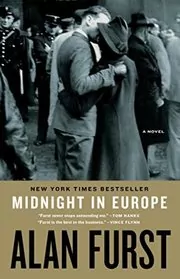
Midnight in Europe
by Alan Furst
2014
Cristián Ferrar, a Spanish lawyer based in Paris and New York, is asked to help secretly arm the Spanish Republic in 1937. His search for weapons leads through nightclubs, law offices, and ports from Paris to Odessa, where alliances with gangsters, aristocrats, and fellow exiles all carry hidden costs.

The Big Tip
by Alan Furst
2014
T.J. and Blake launch their Treasure Finders business when Mildred Russell hires them to decode an old letter from a soldier who claimed to hide something valuable for her. Cracking the code sends them chasing a long‑buried secret while a greedy rival tries to beat them to the prize.
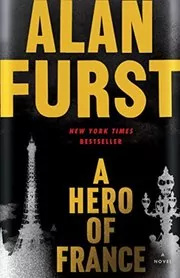
A Hero of France
by Alan Furst
2016
In 1941 occupied Paris, Resistance leader Mathieu runs a small cell dedicated to escorting downed British airmen across France and into Spain. Working with students, nightclub owners, aristocrats, and farmers, he must protect his routes as German security services tighten their grip.

Kofi's Plot
by Alan Furst
2019
On a medical mission in Ghana, T.J. and Blake discover a mysterious object buried in a farmer’s field crawling with venomous snakes. The land has been reassigned for a new clinic, and they’re caught between Kofi Adofo’s anger, village politics, and a dangerous search for the truth.
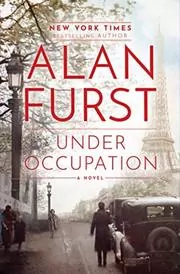
Under Occupation
by Alan Furst
2019
Crime novelist Paul Ricard is standing on a Paris street when a man fleeing the Gestapo is shot and presses technical drawings into his hand. Trying first to pass them on, then to understand them, Ricard is pulled into a series of Resistance operations aimed at sabotaging German U‑boats.
Where to start with Alan Furst
If you want to start at the beginning: Night Soldiers → Dark Star → The Polish Officer.
If you love occupied‑Paris stories: The World at Night → Red Gold → The Foreign Correspondent.
If you prefer a stand‑alone entry point: The Spies of Warsaw → Spies of the Balkans.
If you like Hollywood and glamour with intrigue: Mission to Paris → Midnight in Europe.
If you’re curious about his early crime novels: Your Day in the Barrel → The Paris Drop → The Caribbean Account.
Alan Furst sub-series and character series
Alan Furst collections, short stories, and related book types
Childrens
Anthologies
Standalone Alan Furst books
Author bio
Alan Furst was born in New York City in 1941 and grew up on the Upper West Side of Manhattan. He was raised in a Jewish family whose stories about Europe before the war stayed with him.
His ancestors came from Poland, Latvia, and Russia, and family history included conscription into the czar’s army and long years of service. Those memories, mixed with the atmosphere of mid‑century New York, helped spark a lifelong interest in Europe between the wars.
Furst went to the Horace Mann School, then studied English at Oberlin College, graduating in 1962. After college he spent time driving a New York taxi, writing poetry, and figuring out how to make a living as a writer. Graduate school followed at Pennsylvania State University, where he earned an M.A. in 1967 and stayed on as a teaching assistant in English.
Teaching paid the bills, but it was never the whole plan.
While taking courses at Columbia’s School of General Studies he met the anthropologist Margaret Mead and briefly worked as her assistant. In 1969 he went to France on a Fulbright, teaching at the University of Montpellier and discovering the cities and landscapes that would later become the backdrop to his fiction. Paris in particular became a second home; he returned often and eventually lived there for long stretches.
Through the 1970s and early 1980s Furst wrote advertising copy and freelanced for magazines. He turned out profiles, travel pieces, and essays, and slowly moved into fiction. The early crime novels, including Your Day in the Barrel, The Paris Drop, The Caribbean Account, and Shadow Trade, are sharp, ironic stories about small‑time operators and private‑sector spies, already interested in power and betrayal.
Everything changed with Night Soldiers in 1988.
Written after years of living in Paris and traveling in Eastern Europe, Night Soldiers launched the loose sequence now known as the Night Soldiers novels. Books such as Dark Star, The Polish Officer, The World at Night, Red Gold, Kingdom of Shadows, and Blood of Victory follow ordinary people—journalists, sea captains, actors, lawyers, policemen—who are drawn into the shadow war that preceded and then accompanied the Second World War.
Later titles like The Foreign Correspondent, The Spies of Warsaw, Spies of the Balkans, Mission to Paris, Midnight in Europe, A Hero of France, and Under Occupation continue that project. The books share a common world, recurring minor characters, and a deep sense of how fear, compromise, and quiet courage shaped everyday life from 1933 to 1945. Furst’s heroes are rarely professionals at the start; they learn on the job and often pay a price.
Over time his work has been translated into many languages, adapted for television, and honored with awards, including the Helmerich Award for a distinguished body of work in 2011. He has spoken often about his debt to writers like Eric Ambler, Graham Greene, Arthur Koestler, and Joseph Roth, and readers often find the same blend of suspense, politics, and lived‑in detail in his own novels.
Furst has spent long periods in France but now makes his home on Long Island. He still writes at a steady pace, returning again and again to pre‑war Europe—its cafés and safe houses, rail yards and border crossings—watching as ordinary men and women decide what they are willing to risk in the dark.





Edited by
Software engineer whose passion for tracking book recommendations from podcasts inspired the creation of MRB.
Lead investor at 3one4 Capital whose startup expertise and love for books helped shape MRB and its growth.
Comments
Did we miss something? Have feedback?
Help us improve this page by sharing your thoughts