
Thomas Sowell Books in Order
See Thomas Sowell's books in order with brief summaries, series notes, and clear guidance on where to start with his economics and social commentary.
Last updated: June 7, 2026
As an Amazon Associate, we earn from qualifying purchases (at no extra cost to you).
Thomas Sowell books in publication order
49 books
Black Education: Myths and Tragedies
by Thomas Sowell
1974
Sowell offers a critical look at the history and condition of black education in America. He challenges myths about segregation and integration, highlights successful schools and programs, and argues that policies framed as help have sometimes undermined real achievement.
Classical Economics Reconsidered
by Thomas Sowell
1974
An earlier study of classical economists, this book revisits debates over value, distribution, and Say’s Law. Sowell clarifies what thinkers like Ricardo and Mill actually argued and how later interpretations, including some textbook summaries, have misread their work.
Ethnic America: A History
by Thomas Sowell
1975
Sowell traces the experiences of major ethnic groups in the United States—including Irish, Germans, Jews, Italians, Chinese, African Americans, Puerto Ricans, and Mexicans. He follows each from migration and early hardship through changing economic roles and patterns of mobility.
Race And Economics
by Thomas Sowell
1975
This book analyzes how race and economic forces interact in the United States. Sowell examines slavery’s legacy, labor markets, education, and migration, comparing black Americans with other minorities to show how incentives and skills influence group progress over time.
American Ethnic Groups
by Thomas Sowell
1978
Edited by Sowell, this volume brings together essays on a range of American ethnic communities, pairing narrative analysis with statistical profiles. The contributors explore how different groups arrived, adapted, and advanced within the United States’ broader economic and social landscape.
Essays and Data on American Ethnic Groups
by Thomas Sowell
1978
This reference volume, co‑edited by Sowell, combines analytical essays with extensive statistical tables on numerous American ethnic groups. It is designed for readers who want both narrative interpretation and hard numbers on migration, education, income, and occupational patterns.
Knowledge And Decisions
by Thomas Sowell
1979
This book explores how knowledge is created, transmitted, and used in markets, law, and politics. Drawing on themes from F. A. Hayek, Sowell argues that dispersed decision‑making usually outperforms centralized control, and shows how incentives and institutions shape outcomes.
Recommended by
2 people Steven Pinker recommended this book
Steven Pinker
Steven Pinker recommended this book in the "Tribe of Mentors" book.
Steven Pinker's recommendation of this book  Charles Koch recommended this book
Charles Koch
Charles Koch recommended this book on his website.
Charles Koch's recommendation of this book
Markets And Minorities Paper
by Thomas Sowell
1981
In this short work, Sowell argues that open markets often provide minorities with better opportunities than heavily regulated systems. He examines how competition, prices, and voluntary exchange can limit the power of prejudice compared with political allocations and bureaucratic control.
Pink and Brown People and Other Controversial Essays
by Thomas Sowell
1981
An early collection of essays on race, politics, courts, and economic policy. Sowell addresses affirmative action, crime, foreign policy, and the legal system, often challenging prevailing views and stressing the difference between intentions and measurable outcomes.
The Economics and Politics of Race
by Thomas Sowell
1983
Using an international lens, Sowell compares racial and ethnic groups across countries, including Jews, Chinese, Italians, and blacks in different societies. He explores how markets, discrimination, and political power have interacted to shape their fortunes over time.
Civil Rights: Rhetoric or Reality?
by Thomas Sowell
1984
Sowell reviews the decades following landmark civil‑rights laws, asking who has actually benefited from new policies. He distinguishes between removing barriers and granting preferences, and argues that some civil‑rights rhetoric has obscured disappointing or perverse results on the ground.
Education: Assumptions versus History
by Thomas Sowell
1985
Collecting several essays, this book tests fashionable assumptions about schooling against historical and contemporary evidence. Sowell discusses race and IQ, affirmative action, tuition tax credits, academic tenure, and university culture, asking whether common claims about education match the record.
Marxism: Philosophy and Economics
by Thomas Sowell
1985
This concise study introduces Karl Marx’s economic and philosophical ideas, then examines how they were interpreted and applied in later Marxist movements. Sowell separates Marx’s original arguments from the doctrines of Marxism‑Leninism and evaluates both against historical experience.
Compassion Versus Guilt, and Other Essays
by Thomas Sowell
1987
A collection of short essays on social policy, foreign affairs, law, education, and race. Sowell contrasts feel‑good rhetoric with what he sees as hard trade‑offs, criticizing policies driven more by public guilt or symbolism than by measured results.
Choosing a College
by Thomas Sowell
1989
Written as a guide for families, this book explains how to look past brochures and rankings to what actually happens on campus. Sowell discusses academic standards, campus culture, financial aid, and special programs to help students choose colleges that fit their goals.
Preferential Policies
by Thomas Sowell
1990
Looking at preference programs in the United States and abroad, Sowell analyzes quotas and group preferences in jobs, education, and politics. He contends that such policies often generate resentment, mismatches, and new inequalities while doing less than promised for the poorest.
Inside American Education
by Thomas Sowell
1992
Sowell critiques trends in U.S. schools and universities, arguing that fads, politicized curricula, and administrative priorities have displaced rigorous teaching. He raises concerns about falling standards, ideological double standards, and the effects of education schools on classroom quality.
Is Reality Optional? and Other Essays
by Thomas Sowell
1993
These essays range over economics, law, education, foreign affairs, and everyday politics. Sowell returns repeatedly to the idea that policies must confront real constraints—scarcity, incentives, trade‑offs—rather than assume that good intentions can override basic facts.
Race And Culture
by Thomas Sowell
1995
This book offers a broad look at how cultural “human capital”—skills, work habits, attitudes toward education, and entrepreneurship—shapes group outcomes across history. Sowell discusses migration, conquest, slavery, and race relations to argue that culture often outweighs genetics or formal politics.
The Vision of the Anointed
by Thomas Sowell
1995
Sowell examines how influential intellectuals, activists, and officials promote a moralized “vision” of society that, he argues, is insulated from evidence. Using case studies on crime, welfare, education, and regulation, he traces the real‑world costs of ideas that resist testing.
Recommended by
2 people Keith Rabois recommended this book
Keith Rabois
Keith Rabois recommended this book on Twitter.
Keith Rabois's recommendation of this book  Marc Andreessen recommended this book
Marc Andreessen
Marc Andreessen recommended this book on Twitter.
Marc Andreessen's recommendation of this book
Migrations and Cultures
by Thomas Sowell
1996
Focusing on Germans, Japanese, Italians, Chinese, Jews, and Indians, Sowell examines how migrant groups carry skills, habits, and networks around the world. He shows how these cultural traits affected both the communities they entered and the societies they left behind.
Late-Talking Children
by Thomas Sowell
1997
Combining his family’s experience with survey data from dozens of parents, Sowell describes bright children who begin speaking much later than usual. He highlights common traits, warns against hasty diagnoses of disability, and urges parents and professionals to recognize this specific pattern of development.
Conquests and Cultures
by Thomas Sowell
1998
This volume examines how military conquest has reshaped societies over centuries. Through case studies of Britain, Africa, the Slavic world, and the indigenous peoples of the Americas, Sowell traces how imposed institutions, technologies, and cultural clashes influenced later economic and social development.
Race, Culture, and Equality
by Thomas Sowell
1998
Drawing on his larger trilogy about culture, Sowell argues that enduring disparities between groups reflect geography, history, and cultural patterns at least as much as discrimination. He stresses that equal legal rights do not automatically erase differences built up over generations.
Barbarians inside the Gates and Other Controversial Essays
by Thomas Sowell
1999
In this collection, Sowell comments on topics such as affirmative action, multiculturalism, immigration, crime, and Social Security. He argues that many respected institutions are being hollowed out by fashionable ideas and that ignoring basic economics has serious social costs.
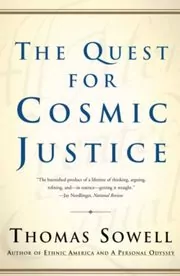
The Quest for Cosmic Justice
by Thomas Sowell
1999
Sowell distinguishes traditional justice—impartial rules applied equally—from what he calls “cosmic justice,” an effort to equalize outcomes by redesigning institutions. He argues that policies driven by cosmic‑justice ideals can undermine fairness, freedom, and social order despite good intentions.
Recommended by
1 person Ben Shapiro recommended this book
Ben Shapiro
"Really terrific." - Ben Shapiro
Ben Shapiro's recommendation of this book
A Personal Odyssey
by Thomas Sowell
2000
Sowell’s memoir follows his journey from a poor childhood in the Jim Crow South and Harlem through the Marines, night school, elite universities, and academic life. He recounts personal turning points, intellectual shifts, and behind‑the‑scenes stories from campuses and think tanks.
Basic Economics
by Thomas Sowell
2000
Written for general readers, this book explains core economic ideas—scarcity, prices, profits and losses, trade, and inflation—without graphs or equations. Sowell uses examples from everyday life and history to show how different systems encourage prosperity or waste.
Recommended by
1 person- Ben Shapiro recommended this book
Ben Shapiro
"[If you read this book and "Economics in One Lesson"] you'll know more than all or your classmates combined about the basic workings of free markets and economics." - Ben Shapiro
Ben Shapiro's recommendation of this book
Some Thoughts about Writing
by Thomas Sowell
2001
In this short work, Sowell reflects on the craft and business of writing. He describes years of rejection before publication, his habit of working on several books at once, and the practical challenges of dealing with editors, agents, and deadlines.
Controversial Essays
by Thomas Sowell
2002
Gathering some of his syndicated columns, this book covers economic policy, race relations, law, education, and international affairs. Each short piece aims to strip an issue down to its core trade‑offs and question widely accepted stories in public debate.
Dismantling America
by Thomas Sowell
2002
A collection of columns arguing that key American institutions and values—from the rule of law to academic standards—are being eroded. Sowell links controversies over courts, immigration, spending, and foreign policy to a broader concern about the country’s long‑term direction.
The Einstein Syndrome
by Thomas Sowell
2002
A follow‑up to Late‑Talking Children, this book describes a specific pattern in bright children who talk late but show strong analytical or musical abilities. Sowell, drawing on research and family histories, discusses misdiagnosis risks and what parents can realistically expect over time.
Applied Economics
by Thomas Sowell
2003
Subtitled "Thinking Beyond Stage One," this book applies basic economic ideas to issues like housing, medical care, immigration, and taxation. Sowell stresses the importance of looking past immediate results to long‑run consequences and unintended side effects of policies.
Affirmative Action Around the World
by Thomas Sowell
2004
Using case studies from the United States, India, Malaysia, Sri Lanka, Nigeria, and elsewhere, Sowell examines preference policies in education and employment. He argues that group‑based preferences often produce unintended costs and benefit already‑advantaged minorities more than the poorest.
Black Rednecks & White Liberals
by Thomas Sowell
2005
This collection of essays explores the historical roots of what Sowell calls “ghetto” culture, the global history of slavery, and the experience of middleman minorities such as Jews and overseas Chinese. He argues that cultural patterns, not innate traits, explain many modern racial controversies.
Recommended by
1 person- Ben Shapiro recommended this book
Ben Shapiro
"A really good book." - Ben Shapiro
Ben Shapiro's recommendation of this book
Ever Wonder Why? and Other Controversial Essays
by Thomas Sowell
2006
Sowell addresses a wide range of issues—from culture wars and twisted history to gun control, environmentalism, and economic myths. The essays are brief, pointed, and written to challenge assumptions readers may not realize they hold.
On Classical Economics
by Thomas Sowell
2006
A survey of classical economic thought from figures such as Adam Smith, David Ricardo, John Stuart Mill, and Karl Marx. Sowell explains how their ideas developed, what problems they tried to solve, and how later debates reshaped concepts like value, markets, and Say’s Law.
Economic Facts and Fallacies
by Thomas Sowell
2007
Sowell walks through common economic misunderstandings about housing, urban poverty, gender pay gaps, globalization, and more. He contrasts popular stories with data and basic principles, aiming to show how plausible‑sounding claims can hide costly fallacies.
Man of Letters
by Thomas Sowell
2007
This collection presents Sowell’s personal and professional letters over several decades. Through exchanges with friends, scholars, and public figures, readers see his evolving views on race, economics, foreign policy, academia, and everyday life behind the scenes of his published work.
Intellectuals and Society
by Thomas Sowell
2009
Here Sowell focuses on “idea workers” whose influence comes through shaping opinion rather than bearing responsibility for results. He reviews intellectuals’ roles in issues from war to social policy and argues that prestige without accountability can lead to costly errors.
Recommended by
1 person- Marc Andreessen recommended this book
Marc Andreessen
Marc Andreessen recommended this book on Twitter.
Marc Andreessen's recommendation of this book
The Housing Boom and Bust
by Thomas Sowell
2009
Sowell traces the U.S. housing bubble and mortgage crisis to a mix of easy credit, local land‑use rules, and federal pressure on lending standards. He explains how well‑intended policies, combined with speculation, helped inflate prices and magnify the eventual crash.
The Thomas Sowell Reader
by Thomas Sowell
2011
This one‑volume sampler spans decades of Sowell’s writing on social issues, economics, law, race, education, and more. Drawn from books, columns, and essays, it offers an accessible introduction to his main arguments for readers new to his work.
Trickle Down Theory and Tax Cuts for the Rich
by Thomas Sowell
2012
In this brief work, Sowell disputes the idea that advocates of lower tax rates believe in a “trickle down” effect. He reviews historical tax changes and revenue data to argue that incentives, not slogans, drive investment, growth, and government receipts.
Intellectuals and Race
by Thomas Sowell
2013
This book examines how writers, academics, and commentators have framed racial questions, from IQ debates to affirmative action. Sowell argues that fashionable narratives often ignore history and data, and can worsen tensions by treating group disparities as proof of deliberate oppression.
Wealth, Poverty and Politics
by Thomas Sowell
2015
Using examples from around the world, Sowell argues that debates on inequality focus too much on income gaps and too little on how wealth is created. He highlights the roles of geography, culture, and human capital in shaping prosperity and poverty across nations and groups.
Discrimination and Disparities
by Thomas Sowell
2018
Sowell looks at why economic and social outcomes differ so widely among individuals and groups. He challenges one‑factor explanations based on discrimination or genetics, instead emphasizing complex interactions among culture, chance, geography, history, and policy.
Charter Schools and Their Enemies
by Thomas Sowell
2020
Focusing on matched schools in places like New York City, Sowell compares test scores and practices in charter schools and traditional public schools. He argues that many charters deliver stronger results for disadvantaged students and explains why unions and bureaucracies often resist them.
Social Justice Fallacies
by Thomas Sowell
2023
Sowell critiques key assumptions behind contemporary social‑justice arguments about race, inequality, and discrimination. Organizing his discussion into several types of fallacies, he contrasts popular claims with historical and statistical evidence and emphasizes the difference between equal opportunities and equal outcomes.
A Conflict of Visions
by Thomas Sowell
Recommended by
2 people- Charles Koch recommended this book
Charles Koch
Charles Koch recommended this book on his website.
Charles Koch's recommendation of this book - Marc Andreessen recommended this book
Marc Andreessen
Marc Andreessen recommended this book on Twitter.
Marc Andreessen's recommendation of this book
Where to start with Thomas Sowell
If you want a clear intro to economics: Basic Economics → Applied Economics → Economic Facts and Fallacies
If you're interested in inequality and social policy: Wealth, Poverty and Politics → Discrimination and Disparities → Social Justice Fallacies
If you like big-picture ideas and political philosophy: A Conflict of Visions → The Vision of the Anointed → The Quest for Cosmic Justice
If you prefer history, culture, and race: Ethnic America: A History → Race And Culture → Migrations and Cultures → Conquests and Cultures
If you want personal stories and essays: A Personal Odyssey → The Thomas Sowell Reader → Ever Wonder Why? and Other Controversial Essays
Thomas Sowell sub-series and character series
Cultures books in order
Explore this series
Race And Culture
by Thomas Sowell
1995Cultures, Book 1
Migrations and Cultures
by Thomas Sowell
1996Cultures, Book 2
Conquests and Cultures
by Thomas Sowell
1998Cultures, Book 3
Cultures books in chronological order
Race And Culture
by Thomas Sowell
1995Cultures, Book 1Migrations and Cultures
by Thomas Sowell
1996Cultures, Book 2Conquests and Cultures
by Thomas Sowell
1998Cultures, Book 3
Thomas Sowell collections, short stories, and related book types
Non-Fiction
Black Education: Myths and Tragedies
by Thomas Sowell
1974
Classical Economics Reconsidered
by Thomas Sowell
1974
Ethnic America: A History
by Thomas Sowell
1975
Race And Economics
by Thomas Sowell
1975
American Ethnic Groups
by Thomas Sowell
1978
Knowledge And Decisions
by Thomas Sowell
1979
Markets And Minorities Paper
by Thomas Sowell
1981
The Economics and Politics of Race
by Thomas Sowell
1983
Civil Rights: Rhetoric or Reality?
by Thomas Sowell
1984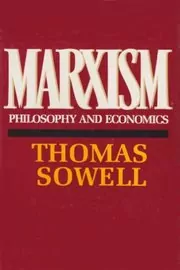
Marxism: Philosophy and Economics
by Thomas Sowell
1985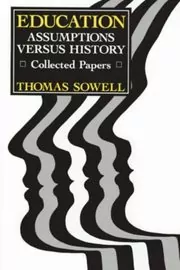
Education: Assumptions versus History
by Thomas Sowell
1985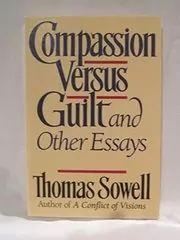
Compassion Versus Guilt, and Other Essays
by Thomas Sowell
1987
Choosing a College
by Thomas Sowell
1989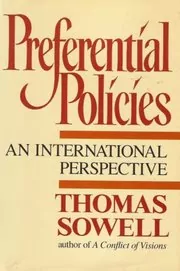
Preferential Policies
by Thomas Sowell
1990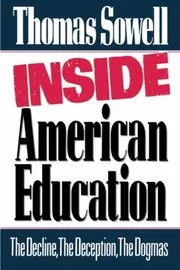
Inside American Education
by Thomas Sowell
1992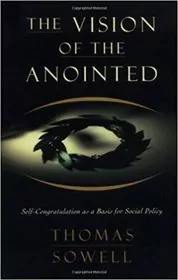
The Vision of the Anointed
by Thomas Sowell
1995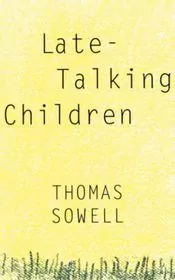
Late-Talking Children
by Thomas Sowell
1997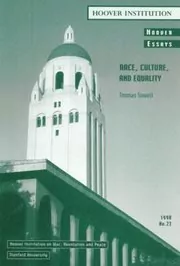
Race, Culture, and Equality
by Thomas Sowell
1998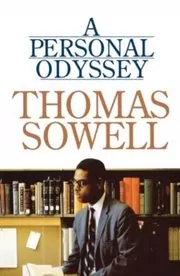
A Personal Odyssey
by Thomas Sowell
2000
Some Thoughts about Writing
by Thomas Sowell
2001
The Einstein Syndrome
by Thomas Sowell
2002
Dismantling America
by Thomas Sowell
2002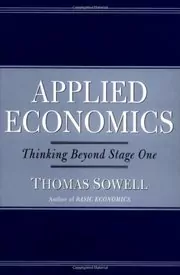
Applied Economics
by Thomas Sowell
2003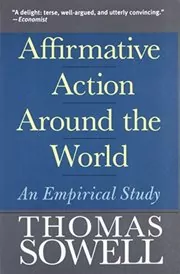
Affirmative Action Around the World
by Thomas Sowell
2004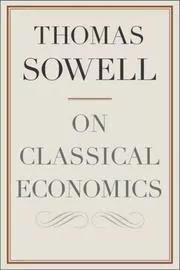
On Classical Economics
by Thomas Sowell
2006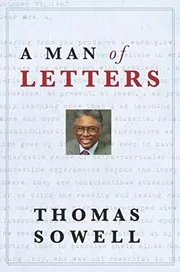
Man of Letters
by Thomas Sowell
2007
Economic Facts and Fallacies
by Thomas Sowell
2007
The Housing Boom and Bust
by Thomas Sowell
2009
Trickle Down Theory and Tax Cuts for the Rich
by Thomas Sowell
2012
Intellectuals and Race
by Thomas Sowell
2013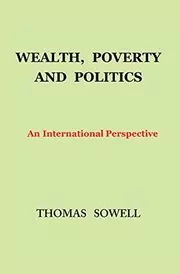
Wealth, Poverty and Politics
by Thomas Sowell
2015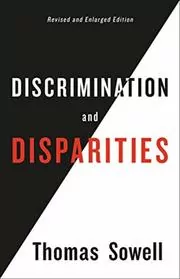
Discrimination and Disparities
by Thomas Sowell
2018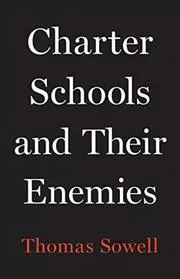
Charter Schools and Their Enemies
by Thomas Sowell
2020
Social Justice Fallacies
by Thomas Sowell
2023
Collections

Essays and Data on American Ethnic Groups
by Thomas Sowell
1978
Pink and Brown People and Other Controversial Essays
by Thomas Sowell
1981Compassion Versus Guilt, and Other Essays
by Thomas Sowell
1987
Is Reality Optional? and Other Essays
by Thomas Sowell
1993
Barbarians inside the Gates and Other Controversial Essays
by Thomas Sowell
1999
Controversial Essays
by Thomas Sowell
2002
Ever Wonder Why? and Other Controversial Essays
by Thomas Sowell
2006
The Thomas Sowell Reader
by Thomas Sowell
2011
Standalone Thomas Sowell books
The Quest for Cosmic Justice
by Thomas Sowell
1999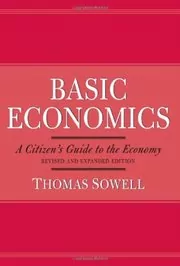
Basic Economics
by Thomas Sowell
2000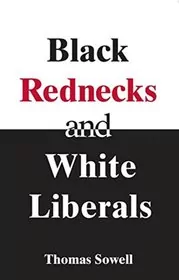
Black Rednecks & White Liberals
by Thomas Sowell
2005Hope, Mercy, Justice and Autonomy in the American Health Care System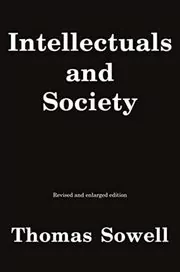
Intellectuals and Society
by Thomas Sowell
2009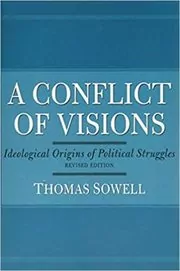
A Conflict of Visions
by Thomas Sowell
Publication date unknownIdeological Origins of Political Struggles
Author bio
Thomas Sowell was born in 1930 in Gastonia, North Carolina, and spent his early years in a small wooden house without electricity or running water. After his father died before he was born, he was raised by a great‑aunt and her daughters and later moved with them to Harlem in New York City.
Harlem in the 1940s gave him both opportunity and hardship. He qualified for Stuyvesant High School, becoming the first in his family to study beyond the sixth grade, but family conflict and money troubles pushed him to leave school as a teenager. He worked long hours in low‑wage jobs, delivered telegrams, and even tried out for the Brooklyn Dodgers before being drafted into the Marines during the Korean War.
In the Marines he served in a photography unit, a job that drew on a hobby he kept for the rest of his life. After his service, he finished high school equivalency, took a civil‑service job in Washington, D.C., and attended night classes at Howard University. Strong exam scores and the support of his professors opened the door to Harvard, where he graduated magna cum laude in economics in 1958.
Graduate study took him first to Columbia University for a master’s degree and then to the University of Chicago for a PhD under economist George Stigler. In his twenties, Sowell considered himself a Marxist and wrote early academic work on Marxist theory. His views shifted as he worked as an intern at the U.S. Department of Labor and concluded that many policies he had supported did not match their real‑world effects, especially on low‑income workers.
Over the next decades he taught economics at institutions including Howard, Rutgers, Cornell, Brandeis, Amherst, and UCLA. Classroom work and campus politics during the 1960s and 1970s deepened his interest in how ideas move from universities into law, media, and everyday life. In 1977 he joined the Hoover Institution at Stanford University; since 1980 he has worked there full‑time as a senior fellow, focusing on research and writing rather than classroom teaching.
His books range widely across economics, history, race, and public policy. Works like Knowledge and Decisions, A Conflict of Visions, and The Vision of the Anointed explore how different ways of seeing human nature lead people to opposite political conclusions. Basic Economics and Applied Economics aim to explain how markets, prices, and incentives work without math or jargon, while Economic Facts and Fallacies tackles common misunderstandings about topics such as housing, gender pay gaps, and urban policy.
Sowell has also written extensively on ethnicity, culture, and migration. Books such as Ethnic America, Race And Culture, Migrations and Cultures, and Conquests and Cultures examine how skills, habits, geography, and history shape the fortunes of groups across centuries and continents. Collections like Black Rednecks and White Liberals and Discrimination and Disparities continue that theme, asking why groups with similar legal rights can have very different outcomes.
Beyond economics and history, he has produced personal and practical work. A Personal Odyssey traces his path from the rural South to Harlem, the Marines, and a career in scholarship. As the father of a late‑talking child, he wrote Late‑Talking Children and The Einstein Syndrome to share patterns he saw among bright children who develop speech unusually late, and to caution against quick diagnoses.
For decades Sowell also wrote a nationally syndicated column, known for short, blunt pieces on current events. Over the years he has received major awards in the humanities and social sciences, but he tends to present his career in plain terms: testing ideas against evidence and trying to explain complex issues in everyday language.
Now in his nineties, he remains a reference point for readers who want an unapologetically empirical, often contrarian, take on economics, race, and public policy.













Edited by
Software engineer whose passion for tracking book recommendations from podcasts inspired the creation of MRB.
Lead investor at 3one4 Capital whose startup expertise and love for books helped shaped MRB and its growth.
Comments
Did we miss something? Have feedback?
Help us improve this page by sharing your thoughts