
Sebastian Faulks Books in Order
See all Sebastian Faulks books in order, with short summaries, series background, and where‑to‑start guidance across his French, Austrian, Bond and Jeeves novels.
Last updated:
As an Amazon Associate, we earn from qualifying purchases (at no extra cost to you).
Sebastian Faulks books in publication order
27 books
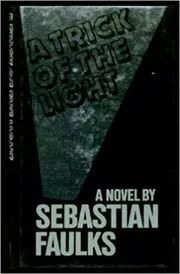
A Trick Of The Light
by Sebastian Faulks
1984
Faulks’s first novel follows George Grillet, a young French wine trader on compassionate leave in London. Asked to steal an apparently harmless cassette from a Docklands warehouse, he stumbles into a murky world of political extremism and personal danger he barely understands.
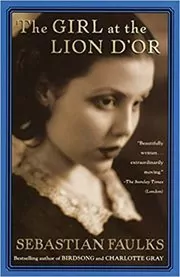
The Girl at the Lion d'Or
by Sebastian Faulks
1989
Set in a small Breton town in the 1930s, this novel follows Anne Louvet, a young waitress with a hidden past who begins an affair with married lawyer Charles Hartmann. Their fragile love unfolds against gathering political storms in pre‑war France.
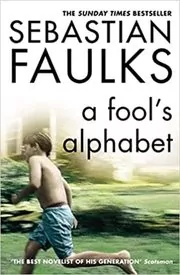
A Fool's Alphabet
by Sebastian Faulks
1992
A Fool's Alphabet traces photographer Pietro Russell's life in twenty‑six alphabetically arranged chapters, moving between Italian battlefields, English suburbs and far‑flung assignments. As love, grief and breakdown puncture his travels, the book pieces together how one ordinary man is shaped by family and history.
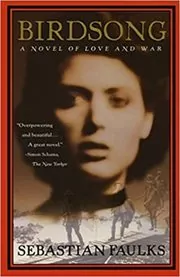
Birdsong
by Sebastian Faulks
1993
Birdsong intertwines Stephen Wraysford’s passionate pre‑war love affair in northern France with his later service as an officer in the First World War tunnels. Decades on, his granddaughter uncovers his notebooks and tries to understand the trauma and courage that reshaped her family.
The Fatal Englishman
by Sebastian Faulks
1996
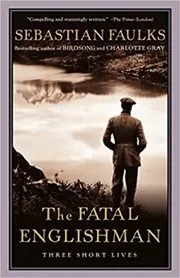
This multiple biography examines three gifted men who died young: painter Christopher Wood, Battle of Britain pilot Richard Hillary and journalist Jeremy Wolfenden. Through their brief lives, Faulks explores twentieth‑century Britain’s pressures, ideals and quiet failures.
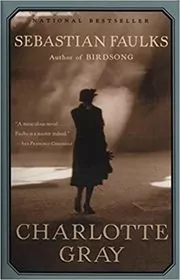
Charlotte Gray
by Sebastian Faulks
1998
In 1942, young Scottish woman Charlotte Gray is recruited by a British special operations unit and parachuted into occupied France. While helping the Resistance, she secretly searches for her missing RAF lover and confronts the compromises and betrayals of Vichy France.
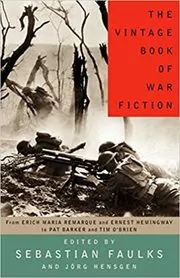
The Vintage Book of War Fiction
by Sebastian Faulks
1999
A companion volume to War Stories, this collection assembles classic and lesser‑known fiction about twentieth‑century conflicts. Novel extracts and short stories move from the trenches and U‑boats to Korea and Vietnam, revealing heroism, horror and dark humour.
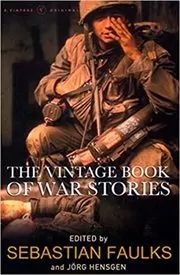
The Vintage Book Of War Stories
by Sebastian Faulks
1999
This anthology, edited by Sebastian Faulks with Jörg Hensgen, gathers twentieth‑century war stories from around the world. From call‑up to demobilisation, the pieces capture battle, comradeship, leave and long‑term scars in vivid, concentrated episodes.
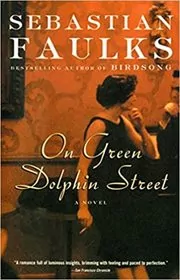
On Green Dolphin Street
by Sebastian Faulks
2001
In late‑1950s Washington, diplomat’s wife Mary van der Linden is torn between her loyal, hard‑drinking husband Charlie and charismatic American reporter Frank Renzo. Their affair plays out against Cold War paranoia, civil‑rights tensions and the lingering cost of past wars.
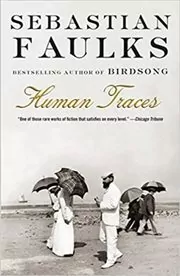
Human Traces
by Sebastian Faulks
2005
This sweeping novel follows Thomas Midwinter and Jacques Rebière, two young doctors who dream of understanding madness and healing the mind. From Victorian asylums to an ambitious sanatorium in the Austrian mountains, their work, friendships and families are tested by science, faith and impending war.
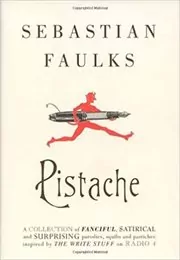
Pistache
by Sebastian Faulks
2006
Based on radio pastiches written for a literary quiz show, Pistache is a pocket collection of comic pieces in which Faulks playfully imitates famous authors and genres. It’s a quick, witty dip into nursery rhymes, fairy tales and classics turned on their heads.
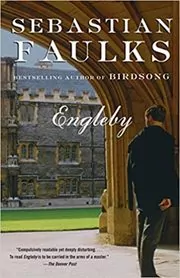
Engleby
by Sebastian Faulks
2007
Engleby is narrated by Mike Engleby, a scholarship boy from a brutal boarding school who wins a place at a prestigious university. As a fellow student disappears and his own memories prove unreliable, the novel becomes a chilling portrait of isolation, obsession and self‑deception.
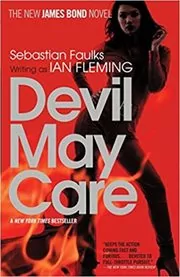
Devil May Care
by Sebastian Faulks
2008
Written to mark Ian Fleming’s centenary, this James Bond adventure sends 007 to investigate chemist Julius Gorner, whose empire masks a plot involving industrial‑scale heroin and a provocation between superpowers. Set in 1967, it recreates classic Bond danger, glamour and Cold War unease.
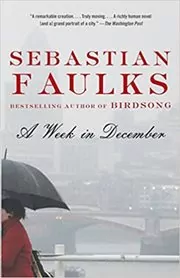
A Week in December
by Sebastian Faulks
2009
Set in London over one week in December 2007, this novel follows a hedge‑fund star, troubled teenager, radicalised student, footballer, Tube driver and barrister whose lives intersect at an extravagant dinner party just as financial crisis and a terror plot converge.
Ox-Tales: Fire
by Peter Florence, Victoria Hislop & Sebastian Faulks
2009
Part of Oxfam’s element-themed Ox-Tales project, this volume brings together original fiction centered on fire. Stories by Sebastian Faulks, Victoria Hislop, and other writers are joined by a poem from Vikram Seth; the collection was created to spotlight Oxfam’s work in conflict zones.
Faulks on Fiction
by Sebastian Faulks
2011
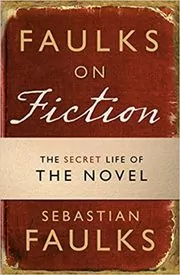
Part literary history, part personal essay, Faulks on Fiction looks at British novels through their characters rather than their authors. Organised into heroes, lovers, snobs and villains, it offers lively readings of classic figures and reflections on why they still matter.
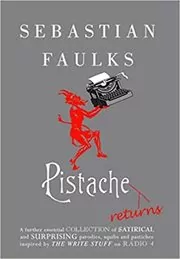
Pistache Returns
by Sebastian Faulks
2011
This second Pistache collection offers fresh parodies and playful squibs, recasting well‑known authors and characters in wildly inappropriate settings. It’s a light, fast read for dipping into whenever you want a sharp, literate joke at literature’s expense.
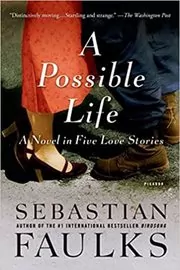
A Possible Life
by Sebastian Faulks
2012
Composed of five interlinked novellas, A Possible Life moves from a Victorian workhouse and a wartime prison camp to modern science labs and the 1970s music scene. Each story explores how chance, love and memory shape identity, and how one life can echo through another.
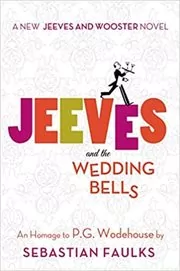
Jeeves and the Wedding Bells
by Sebastian Faulks & Julian Rhind-Tutt
2013
In this authorised homage to P. G. Wodehouse, Bertie Wooster agrees to pose as a valet while Jeeves takes an upstairs role at a country‑house house party. Their swapped positions entangle them in broken engagements, financial scrapes and a very precarious wedding.
A Broken World
by Sebastian Faulks & Hope Wolf
2014
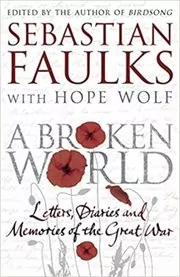
Edited with historian Hope Wolf, A Broken World gathers letters, diaries and memoirs from people who lived through the First World War. Voices from soldiers, nurses, civilians and objectors reveal horror, boredom, courage and protest in their own words.
Jack Firebrace's War
by Sebastian Faulks
2014
This short work returns to Jack Firebrace from Birdsong, following him and his fellow tunnellers beneath the Western Front. As they dig under no man’s land, facing cave‑ins and gas, Jack clings to letters from home and the fragile hope of survival.
The Great War in Portraits
by Sebastian Faulks
2014
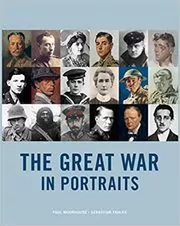
This illustrated volume from the National Portrait Gallery uses paintings and photographs to tell the story of the First World War through faces rather than battles. Generals, nurses, poets and ordinary soldiers appear side by side, with essays reflecting on memory and representation.
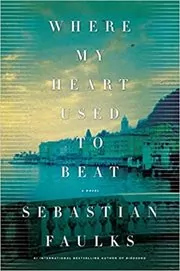
Where My Heart Used to Beat
by Sebastian Faulks
2015
Robert Hendricks, a successful but emotionally numb psychiatrist in 1980s London, is invited to a French island by elderly neurologist Alexander Pereira. There he is pushed to confront his childhood, his wartime experiences in Italy and the great love he lost but never escaped.
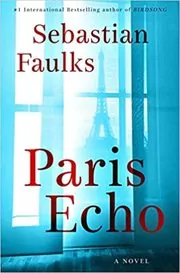
Paris Echo
by Sebastian Faulks
2018
In present‑day Paris, American researcher Hannah rents a room to Tariq, a teenage Moroccan who has slipped into the city illegally. As she listens to recordings of women who lived through the Occupation and he roams the banlieues, both are changed by the city’s layered past.

War
by Sebastian Faulks
2018
Part of the Vintage Minis series, War selects powerful extracts from Faulks’s novels about conflict, including scenes from Birdsong, A Possible Life and A Week in December. Soldiers, civilians and a would‑be bomber each face fear, duty and the aftermath of violence.

Snow Country
by Sebastian Faulks
2021
In this companion to Human Traces, aspiring journalist Anton Heideck and impoverished Austrian girl Lena are drawn together by circumstance and the psychiatric clinic Schloss Seeblick. Moving between 1914 and the 1930s, the novel links love, trauma and changing ideas about the mind.

The Seventh Son
by Sebastian Faulks
2023
When Talissa volunteers as a surrogate for a billionaire‑backed fertility project, she unknowingly agrees to carry a child created with experimental gene editing. As the boy, Seth, grows up extraordinary but not quite understood, the novel asks unsettling questions about science, power and belonging.
Where to start with Sebastian Faulks
If you want his World War epics first: The Girl at the Lion d'Or → Birdsong → Charlotte Gray
If you’re drawn to psychiatry and big ideas: Human Traces → Snow Country → Where My Heart Used to Beat
If you prefer contemporary city life and satire: A Week in December → Paris Echo
If you enjoy linked stories and shorter reads: A Possible Life → War → Jack Firebrace's War
If you want something lighter and comic: Pistache → Pistache Returns → Jeeves and the Wedding Bells
Sebastian Faulks sub-series and character series
James Bond (Sebastian Faulks) books in order
Explore this seriesJames Bond (Sebastian Faulks) books in chronological order
Jeeves (Sebastian Faulks) books in order
Explore this seriesJeeves (Sebastian Faulks) books in chronological order
Sebastian Faulks collections, short stories, and related book types
Short Stories/Novellas
Non-Fiction
A Broken World: Letters, Diaries and Memories of the Great War
by Sebastian Faulks & Hope Wolf
2014Letters, Diaries and Memories of the Great War
Anthologies
Standalone Sebastian Faulks books
Author bio
Sebastian Faulks was born in 1953 in Berkshire, near Newbury, into a family of judges, lawyers and strong‑minded talkers. His father had been a decorated Second World War officer before becoming a solicitor and circuit judge, and his mother worked in the cosmetics business. A period of illness at home when he was a boy left him unusually aware of how fragile the mind can be, a theme that would later run through his fiction.
He was educated at Elstree prep school and Wellington College, then went on to read English at Emmanuel College, Cambridge. At school and university he played cricket, loved 1960s television and pop music, and began to see that reading and writing could be more than just homework. Cambridge also showed him, not always pleasantly, how male and class‑bound the literary world could be.
After graduating he briefly taught at a private school in London, then turned to journalism because it seemed a way to make a living with words. He joined the Daily and Sunday Telegraph, learning how to write quickly, clearly and to deadline. His first novel, A Trick of the Light, appeared in 1984 while he was still juggling book reviews, features and late‑night sub‑editing shifts.
In 1986 he became the first literary editor of the newly founded Independent, and later deputy editor of the Independent on Sunday. During these years he wrote in the early mornings and on train journeys, producing The Girl at the Lion d'Or in 1989, the book that introduced his loose French Trilogy, followed by Birdsong in 1993 and Charlotte Gray in 1998. Those novels, set in France around the world wars, made his name with readers who wanted intimate love stories woven into large‑scale history and helped bring First World War experience back into mainstream fiction.
After the success of Birdsong he left full‑time journalism and concentrated on fiction, though he continued to write columns and essays. He shifted between eras and countries: Cold War Washington in On Green Dolphin Street, Victorian asylums and Alpine clinics in Human Traces and Snow Country, the unsettling first‑person voice of Engleby, the linked stories of A Possible Life, and the contemporary London tapestry of A Week in December. Again and again he has come back to questions of memory, mental illness, moral responsibility and how ordinary people manage to live with the twentieth century on their backs.
Faulks is known for doing deep research yet wearing it lightly. For Human Traces he spent years reading about psychiatry and psychoanalysis; for Birdsong and his First World War anthologies he immersed himself in diaries, trench maps and veterans’ testimony. The aim, he has said, is not to show off knowledge but to give the reader just enough solid ground to believe fully in the characters.
He has also enjoyed stepping into other people’s worlds. He wrote the authorised James Bond continuation novel Devil May Care for the centenary of Ian Fleming’s birth, and later returned to P. G. Wodehouse’s universe in Jeeves and the Wedding Bells. On BBC Radio 4’s quiz show The Write Stuff he supplied weekly literary pastiches that became the comic collections Pistache and Pistache Returns. His non‑fiction ranges from the multiple biography The Fatal Englishman to war anthologies and Faulks on Fiction, a lively tour through British novels via their heroes, lovers, snobs and villains.
More recent books such as Where My Heart Used to Beat, Paris Echo, Snow Country and The Seventh Son show him testing new forms while still returning to his old preoccupations of love, trauma and what it means to be fully human. The Austrian‑set novels are closely tied to questions of consciousness and treatment, while The Seventh Son looks ahead to gene editing and the ethics of redesigning people in the lab.
Faulks was elected a Fellow of the Royal Society of Literature in 1993 and appointed CBE for services to literature in 2002. Away from the desk he has presented television documentaries, captained a long‑running radio quiz, played for the Authors XI cricket team and followed West Ham United with stoical loyalty.
He married editor Veronica Youlten in 1989; they have two sons and a daughter and live in west London. When he talks about his work he still sounds less like a grand man of letters than a former reporter who happens to have spent decades thinking about war, love and the stories we tell ourselves.



Edited by
Software engineer whose passion for tracking book recommendations from podcasts inspired the creation of MRB.
Lead investor at 3one4 Capital whose startup expertise and love for books helped shape MRB and its growth.
Comments
Did we miss something? Have feedback?
Help us improve this page by sharing your thoughts