
James Jones Books in Order
Explore James Jones books in order, with concise summaries, World War II Trilogy background, and clear guidance on where to begin reading his work.
Last updated:
As an Amazon Associate, we earn from qualifying purchases (at no extra cost to you).
James Jones books in publication order
15 books
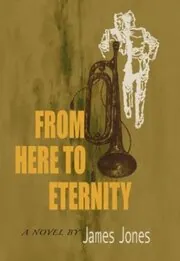
From Here to Eternity
by James Jones
1951
At a Hawaii Army post before Pearl Harbor, Private Prewitt refuses to box for his company and pays for it. Around him, Sergeant Warden and other soldiers test loyalty, love, ambition, and the limits of Army life.
Some Came Running
by James Jones
1957
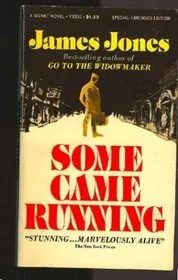
A war veteran with literary ambitions returns to his Midwestern hometown after a failed attempt at writing. Old family pressures, romantic trouble, and the town's narrow expectations make a fresh start painfully complicated.
The Pistol
by James Jones
1960
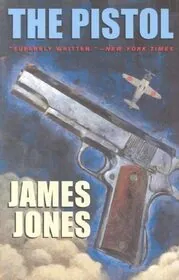
As Japanese planes attack Pearl Harbor, infantry private Richard Mast is carrying a coveted .45 pistol meant to be returned after guard duty. In the confusion, keeping it becomes a crime with consequences.
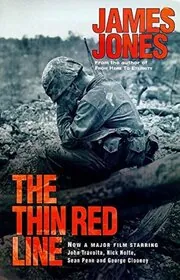
The Thin Red Line
by James Jones
1962
C-for-Charlie Company lands on Guadalcanal and enters a brutal campaign against the Japanese. Jones follows soldiers and officers through fear, fatigue, loyalty, and the split-second choices that combat forces on ordinary men.
Go to the Widow-Maker
by James Jones
1967
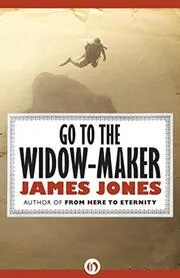
Successful playwright Ron Grant goes to Jamaica with his mistress and becomes consumed by deep-sea diving. As he pushes farther underwater, jealousy, insecurity, and his need to prove himself bring real danger to the surface.
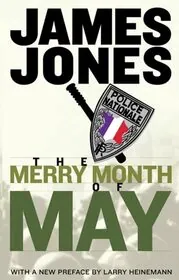
The Merry Month of May
by James Jones
1971
During the Paris student revolts of May 1968, a wealthy American expatriate family begins to splinter. Through their friend Jack Hartley, Jones tracks generational conflict, political unrest, and dangerous private entanglements.
A Touch of Danger
by James Jones
1973
Private investigator Frank "Lobo" Davies expects a Greek-island vacation, but favors for friends pull him into marital betrayal, blackmail, and drug smuggling. Beneath the sunshine, every lead points toward a darker secret.

Viet Journal
by James Jones
1974
In 1973, Jones travels through South Vietnam as American involvement is ending. This firsthand journal records military visits, conversations, uneasy risks, and his reflections on a war very different from the one he knew.
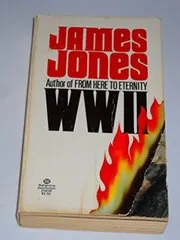
WW II
by James Jones
1975
Jones surveys World War II through concise prose vignettes that move across its major theaters and human costs. The original illustrated volume pairs his soldier-focused account with wartime art.
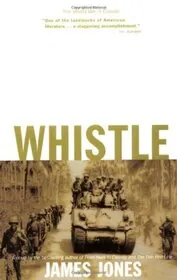
Whistle
by James Jones
1978
Four wounded South Pacific veterans arrive at an Army hospital in Tennessee, where pain, treatment, friendship, and fear of the future shape their days. Jones's final novel completes his World War II Trilogy.
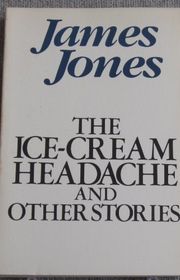
The Ice-Cream Headache & Other Stories
by James Jones
1983
This collection of thirteen stories ranges from Depression-era Midwestern childhood to Army life, marriage, and adulthood. Jones includes notes on the pieces, offering a compact look at the subjects that fed his longer fiction.
Great World War II Stories
by Irwin Shaw, JG Ballard, Nevil Shute, Ewen Montagu, James Jones, W. Stanley Moss, James A. Michener, Richard Hillary, Kurt Vonnegut, Evelyn Waugh, Norman Mailer, Charles James Rolo, Bruce Marshall, Paul Brickhill, Graham Brooks, Cornelius Ryan, R. J. Minney, Lindsay Baly, P. R. Reed, Guy Gibson, Nella Last, Joseph Heller, Martha Gellhorn, Raymond Paull, H. E. Bates, Ronald Seth, John Prebble, Nancy Wake, F. J. Salfeld, John Steinbeck, Nicholas Monsarrat, R. L. Crimp, James Aldridge, Robert J. Casey & John Hersey
1989
An anthology of significant short fiction about World War II. Michener provides the introduction and selects stories that capture the global scale and human cost of the conflict.

To Reach Eternity: The Letters of James Jones
by James Jones
1989
Jones's letters trace his path from wartime experience and early rejection to a demanding writing life. The correspondence reveals his working relationships with editors, fellow writers, friends, and family.

In Our Own Hands
by James Jones
1994
A history of student housing cooperatives at the University of Michigan, tracing how students organized shared homes and built a long-running cooperative community in Ann Arbor.
To the End of the War
by James Jones
2011
Drawn from Jones's early, unpublished novel, these interconnected pieces follow Johnny Carter, a wounded Pacific veteran struggling with Army authority, civilian hypocrisy, and his own anger after coming home.
Where to start with James Jones
For the full World War II arc: From Here to Eternity → The Thin Red Line → Whistle
For a postwar homecoming story: Some Came Running
For a shorter Pearl Harbor-era read: The Pistol
For Jones writing nonfiction about war: Viet Journal → WW II
James Jones sub-series and character series
The World War II Trilogy books in order
Explore this seriesThe World War II Trilogy books in chronological order
James Jones collections, short stories, and related book types
Collections
Non-Fiction Books
Standalone James Jones books
by Irwin Shaw, JG Ballard, Nevil Shute, Ewen Montagu, James Jones, W. Stanley Moss, James A. Michener, Richard Hillary, Kurt Vonnegut, Evelyn Waugh, Norman Mailer, Charles James Rolo, Bruce Marshall, Paul Brickhill, Graham Brooks, Cornelius Ryan, R. J. Minney, Lindsay Baly, P. R. Reed, Guy Gibson, Nella Last, Joseph Heller, Martha Gellhorn, Raymond Paull, H. E. Bates, Ronald Seth, John Prebble, Nancy Wake, F. J. Salfeld, John Steinbeck, Nicholas Monsarrat, R. L. Crimp, James Aldridge, Robert J. Casey & John Hersey
1989
Author bio
James Jones was born on November 6, 1921, in Robinson, Illinois, the small Midwestern town where he grew up. At seventeen, with college out of reach, he enlisted in the U.S. Army in 1939.
The Army gave him the material that would shape much of his writing. Jones served with the 25th Infantry Division at Schofield Barracks on Oahu, Hawaii, and witnessed the attack on Pearl Harbor in December 1941. He later fought on Guadalcanal, where he was wounded in the ankle.
He was discharged in July 1944 and came home carrying the memories of military life, combat, injury, and the uneasy return to civilian routines.
Back in Illinois, Jones worked seriously at becoming a writer. He joined the Handy Writers' Colony, a local workshop led by Lowney Handy, and spent years reading, revising, and trying to turn experience into fiction. An early novel did not find a publisher, but the work helped him find the people, places, arguments, and rhythms that would stay with him.
That work led to From Here to Eternity, published in 1951. Set in Hawaii just before Pearl Harbor, it follows enlisted men living under the pressure of Army rules, private loyalties, bad decisions, and looming war. The book won the National Book Award for Fiction and was adapted into the well-known 1953 film.
Everything changed with that first novel.
Jones returned to his Illinois roots in Some Came Running, about a war veteran and would-be writer who comes back to a hometown he cannot simply slip into again. The Pistol narrows the focus to one Army private during the attack on Pearl Harbor, while The Ice-Cream Headache & Other Stories shows his interest in childhood, marriage, sex, war, and the messy business of growing up.
His three World War II novels form the center of his work: From Here to Eternity, The Thin Red Line, and Whistle. They move from peacetime Army life in Hawaii to the Guadalcanal campaign and then to the long hospital recovery of wounded soldiers. Jones changes names and circumstances from book to book, but keeps returning to the same questions: what men owe one another, what institutions demand, and what war leaves behind.
He also wrote far from the battlefield. Go to the Widow-Maker follows a playwright drawn into dangerous diving in Jamaica. The Merry Month of May places an American expatriate family in Paris during the upheaval of May 1968, and A Touch of Danger is a private-eye story set among the Greek islands. In Viet Journal, Jones recorded a 1973 reporting trip through South Vietnam as U.S. involvement was winding down.
Jones married Gloria Mosolino, and the family spent many years living in Paris before returning to the United States. They had a daughter, Kaylie, who became a writer, and adopted a son, Jamie.
Jones died of congestive heart failure on May 9, 1977, at age fifty-five. He had not finished Whistle, but left extensive notes and recorded discussions that allowed Willie Morris to complete it. The novel appeared the next year, closing the World War II Trilogy Jones had planned for much of his career.












Edited by
Software engineer whose passion for tracking book recommendations from podcasts inspired the creation of MRB.
Lead investor at 3one4 Capital whose startup expertise and love for books helped shape MRB and its growth.
Comments
Did we miss something? Have feedback?
Help us improve this page by sharing your thoughts