
Dashiell Hammett Books in Order
Browse all Dashiell Hammett books in order, with quick summaries, series overviews, and guidance on the best place to start his crime fiction.
Last updated:
As an Amazon Associate, we earn from qualifying purchases (at no extra cost to you).
Dashiell Hammett books in publication order
27 books

Itchy / Itchy the Debonair
by Dashiell Hammett
1924
An early comic crime story about a small time crook who fancies himself a suave mastermind but keeps tripping over his own vanity, offering a lighter, satirical glimpse of the underworld that Hammett usually treats with deadpan seriousness.
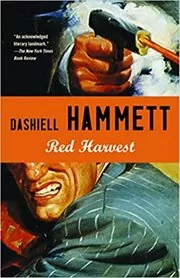
Red Harvest
by Dashiell Hammett
1929
An unnamed operative for the Continental Detective Agency arrives in a corrupt Western mining town and sets rival gangs, crooked cops, and greedy bosses against each other in a brutal clean up that leaves almost no one untouched.
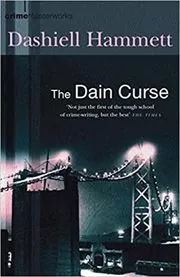
The Dain Curse
by Dashiell Hammett
1929
The Continental Op investigates a jewel theft for a fashionable San Francisco family and uncovers a tangle of murders, religious cults, and an heiress who seems to bring violent death to everyone around her, whether by fate or design.
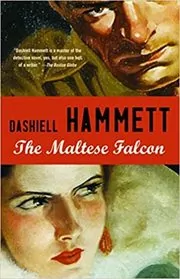
The Maltese Falcon
by Dashiell Hammett
1930
Hardboiled private eye Sam Spade is hired by a mysterious woman and quickly finds himself entangled in murder, double crosses, and a ruthless hunt for a priceless black statuette in the foggy streets of San Francisco.
Recommended by
1 person Jordan Peterson recommended this book
Jordan Peterson
Recommended on Jordan Peterson's website.
Jordan Peterson's recommendation of this book
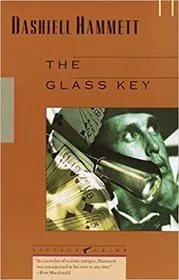
The Glass Key
by Dashiell Hammett
1931
Political fixer Ned Beaumont tries to protect his boss, a city kingmaker accused of murdering a senator’s son, while navigating mob threats, blackmail, and shifting loyalties in a bleak story of friendship, power, and betrayal.
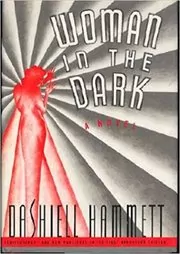
Woman In The Dark
by Dashiell Hammett
1933
In this lean noir tale, an ex convict hoping for a quiet life in the country offers shelter to a bruised society woman on the run from a wealthy bully, drawing them both into a violent and binding showdown.
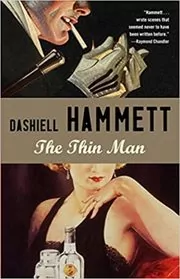
The Thin Man
by Dashiell Hammett
1934
Retired detective Nick Charles and his witty wife Nora are pulled back into sleuthing when an eccentric inventor disappears and his former mistress turns up dead, mixing Manhattan nightlife, sharp banter, and a twisting whodunit.
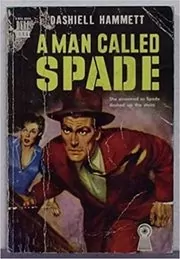
A Man Called Spade
by Dashiell Hammett
1944
Centered on the title novella, this volume follows Sam Spade as he investigates a murdered would be client in a city apartment, interviewing a roomful of uneasy suspects while the police hover and every answer raises fresh doubts.
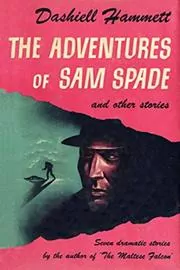
The Adventures of Sam Spade
by Dashiell Hammett
1944
This collection gathers Sam Spade short stories in which the sharp tongued San Francisco detective tackles locked room murders, missing men, and double dealing clients, expanding on the hardboiled world first built in the novel The Maltese Falcon.
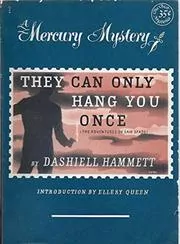
They Can Only Hang You Once
by Dashiell Hammett
1944
Sam Spade arrives at a wealthy family’s mansion under an alias and walks into a sudden shooting, an assault on a dying patriarch, and a tangle of greedy heirs, forcing him to unravel murder and an outrageous last will.
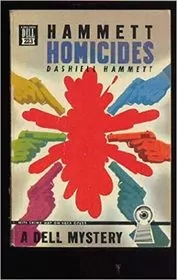
Hammett Homicides
by Dashiell Hammett
1946
An anthology of Hammett’s crime tales, many featuring the Continental Op, where small town killings, crooked officials, and desperate grifters collide, showcasing how his short fiction delivers the same ruthless punch as the novels.

Dead Yellow Woman
by Dashiell Hammett
1947
This collection brings together six hardboiled stories, several starring the Continental Op, set among San Francisco’s waterfronts, Chinatowns, and hotel rooms, where seemingly routine jobs erupt into gunfire, betrayal, and sudden, messy deaths.
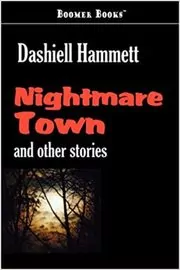
Nightmare Town
by Dashiell Hammett
1950
A wide ranging selection of Hammett stories, including the eerie title piece about a desert boomtown built entirely on fraud, along with sharp urban mysteries and character sketches that chart his evolution from pulp writer to crime classic.

Red Brain and Other Thrillers
by Dashiell Hammett
1961
Edited by Hammett, this anthology gathers pulp era horror and suspense stories by various writers, from uncanny hauntings to psychological chillers, reflecting his taste for tales where unease builds slowly and the final twist really bites.
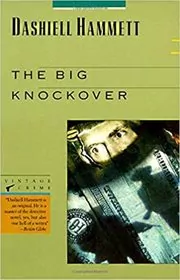
The Big Knockover
by Dashiell Hammett
1966
Here Hammett’s Continental Op stories take center stage, including an audacious tale of a massed gang robbing every bank in town, along with other gritty cases that pit the stubborn detective against mobsters, bank robbers, and corrupt bosses.
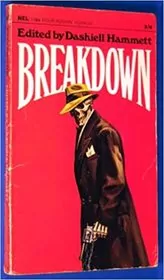
Breakdown and Other Thrillers
by Dashiell Hammett
1968
A companion to Hammett’s earlier horror anthology work, this book collects eerie and offbeat tales by multiple authors, chosen for their slow burning menace, sudden violence, and the sense that ordinary lives can tilt into nightmare.
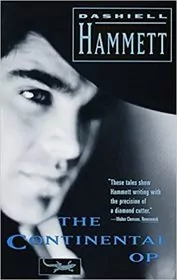
The Continental Op
by Dashiell Hammett
1974
A curated set of Continental Op stories that follow the nameless agency man through frame ups, labor wars, and small time rackets, showing how his stubborn professionalism survives even when the line between detective and criminal nearly disappears.
The Oxford Book of Detective Stories
by Patricia Craig, Émile Gaboriau, John Charles Dent, Arthur Conan Doyle, R Austin Freeman, Maurice Leblanc, Palle Rosenkrantz, William Briggs MacHarg, Jacques Futrelle, Harvey J. O'Higgins, Raymond Chandler, Erle Stanley Gardner, Agatha Christie, Dashiell Hammett, James Thurber, Jorge Luis Borges, Georges Simenon, Ellery Queen, 松本清張, Robert Van Gulik, Paolo Levi, Gwendoline Butler, Josef Škvorecký, Amanda Cross, Janwillem van de Wetering, Ted Wood, James Melville, Stuart M Kaminsky, Shizuko Natsuki, Sarah L. Caudwell, Sue Grafton, Vincent Banville, Ruth Dudley Edwards, Sara Paretsky, Pentti Kirstilä, Garry Disher, Peter Robinson & Ian Rankin
2000
Patricia Craig’s international detective-story anthology spans classic and modern crime fiction from Britain, the United States, Europe, Japan, and beyond. The selection includes police procedurals, amateur sleuths, women detectives, and locked-room puzzles, with a story by Garry Disher.
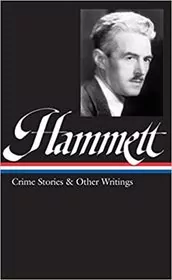
Dashiell Hammett: Crime Stories and Other Writings
by Dashiell Hammett
2001
This large volume gathers Hammett’s best short crime fiction along with essays and an early version of the novel The Thin Man, giving readers a panoramic view of his style from terse private eye yarns to wry reflections on his craft.
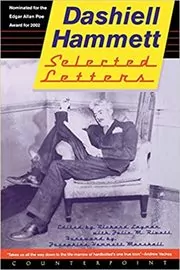
Selected Letters of Dashiell Hammett
by Dashiell Hammett
2002
Drawn from four decades of correspondence, these letters show Hammett as working writer, soldier, partner, and political activist, offering candid glimpses of his family life, Hollywood jobs, and running battles with illness and government scrutiny.

Dashiell Hammett: A Retrospective Anthology
by Dashiell Hammett
2004
Spanning his entire writing career, this anthology gathers thirty five stories featuring everything from early experiments to Continental Op cases and a Sam Spade tale, with editorial commentary tracing how Hammett’s prose and concerns evolved.
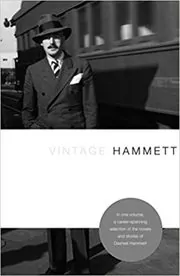
Vintage Hammett
by Dashiell Hammett
2005
An accessible sampler that pairs key scenes from the novels with classic short stories about Sam Spade, Nick and Nora Charles, and the Continental Op, ideal for readers who want a compact tour of Hammett’s main characters and voices.
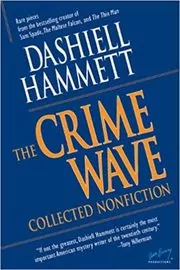
The Crime Wave
by Dashiell Hammett
2007
A collection of Hammett’s nonfiction, including his sharp newspaper column on real world crime, plus essays on writing, politics, advertising, and wartime service, showing the same dry wit and clear eye he brought to his fiction.
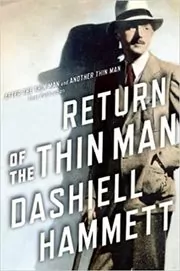
Return of the Thin Man
by Dashiell Hammett
2012
Based on Hammett’s story treatments for the films After the Thin Man and Another Thin Man, this book brings Nick and Nora Charles back for two more boozy, bantering murder cases, along with a fragment of an unproduced Thin Man sequel.
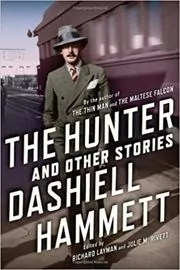
The Hunter
by Dashiell Hammett
2013
Often published as The Hunter and Other Stories, this collection gathers pieces from Hammett’s archives, from a dogged private eye chasing a seemingly trivial case to offbeat tales of romance, magic, and failed schemes written after his major novels.
Creeps by Night
by Dashiell Hammett
2020
First assembled under Hammett’s editorship, this landmark horror anthology offers modern tales of ghosts, nightmares, and psychological terror by a range of writers, framed by his introduction on what makes a good scary story.

The Continental Op Casebook, Vol. 1
by Dashiell Hammett
2025
This volume gathers nine early Continental Op stories, narrated in the first person by the tough, middle aged operative as he untangles blackmail, robbery, and murder for the San Francisco branch of the Continental Detective Agency.
Where to start with Dashiell Hammett
If you want his essential hardboiled novels: Red Harvest → The Maltese Falcon → The Glass Key → The Thin Man.
If you want more Sam Spade: The Maltese Falcon → The Adventures of Sam Spade → A Man Called Spade → They Can Only Hang You Once.
If you prefer the Continental Op: Red Harvest → The Dain Curse → The Continental Op → The Big Knockover.
If you love sharp short fiction: Nightmare Town → Vintage Hammett → Dashiell Hammett: Crime Stories and Other Writings → Lost Stories.
If you want a lighter, witty mystery: The Thin Man → Return of the Thin Man.
Dashiell Hammett sub-series and character series
Detective Sam Spade books in order
Explore this seriesDetective Sam Spade books in chronological order
Dashiell Hammett collections, short stories, and related book types
Short Stories/Novellas
Short Story Collections
Non-Fiction
Standalone Dashiell Hammett books
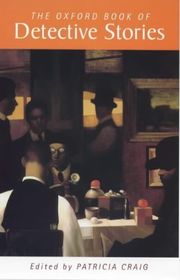
The Oxford Book of Detective Stories
by Patricia Craig, Émile Gaboriau, John Charles Dent, Arthur Conan Doyle, R Austin Freeman, Maurice Leblanc, Palle Rosenkrantz, William Briggs MacHarg, Jacques Futrelle, Harvey J. O'Higgins, Raymond Chandler, Erle Stanley Gardner, Agatha Christie, Dashiell Hammett, James Thurber, Jorge Luis Borges, Georges Simenon, Ellery Queen, 松本清張, Robert Van Gulik, Paolo Levi, Gwendoline Butler, Josef Škvorecký, Amanda Cross, Janwillem van de Wetering, Ted Wood, James Melville, Stuart M Kaminsky, Shizuko Natsuki, Sarah L. Caudwell, Sue Grafton, Vincent Banville, Ruth Dudley Edwards, Sara Paretsky, Pentti Kirstilä, Garry Disher, Peter Robinson & Ian Rankin
2000
Author bio
Dashiell Hammett was born Samuel Dashiell Hammett in 1894 on a small farm in St. Mary’s County, Maryland, and grew up mostly in Baltimore and Philadelphia. He left school in his early teens, worked as a messenger, newsboy, and clerk, and was supporting his family before he was old enough to vote.
In 1915 he took a job that would shape the rest of his life, working as an operative for the Pinkerton National Detective Agency. The work was often dull and sometimes dangerous, involving labor disputes, missing persons, and petty crime. Those years gave him a close look at how policemen, strikebreakers, and hired muscle really behaved, material he quietly stored away for later.
During the First World War he enlisted in the Army and was assigned to the medical corps. While in uniform he contracted the Spanish flu and then tuberculosis, spending long stretches in a military hospital in Washington state. There he met nurse Josephine Dolan, whom he married in 1921; the couple settled for a time in San Francisco and had two daughters, even as his chronic illness limited how much regular work he could hold.
Writing offered a way to earn money without heavy physical labor. Hammett sold his first stories in 1922 and soon found a home in the pulp magazine Black Mask. His early pieces introduced a short, unnamed private detective readers now call the Continental Op, a working agency man who reports on cases in blunt, first person prose. The stories stood out for their clipped dialogue, dense plotting, and the sense that violence and corruption were part of everyday life, not just puzzles to be tidily explained.
Out of that material came a remarkable run of novels. Red Harvest and The Dain Curse, both published in 1929, follow the Op through a corrupt mining town and a supposedly cursed family. In 1930 he introduced a new detective, Sam Spade, in The Maltese Falcon, a San Francisco story of a missing partner, a mysterious woman, and a priceless black statuette that seems to poison everyone who wants it.
Two more novels quickly followed. The Glass Key centers on Ned Beaumont, a gambler and political fixer forced to choose between loyalty to his corrupt boss and his own uneasy conscience. The Thin Man brings back a lighter tone, pairing retired detective Nick Charles with his wealthy, quick witted wife Nora as they drink, joke, and solve a murder in Prohibition era New York. Film versions of these books, especially the 1941 adaptation of The Maltese Falcon, helped fix Hammett’s characters and dialogue in the public imagination.
Readers are often struck by how modern these stories feel. Hammett’s detectives are not geniuses who stand above the world, but flawed professionals who drink too much, make mistakes, and still insist on some private standard of right and wrong. His cities are crowded with gangsters, crooked politicians, and people just trying to get by, and his prose leaves enough space between the lines for readers to feel the weight of what is not said.
By the mid 1930s Hammett had largely stopped publishing fiction. He spent time in Hollywood working on screen projects, became deeply involved in antifascist politics, and in 1937 joined the Communist Party. During the Second World War he enlisted again, despite his age and health, and spent several years in the Aleutian Islands editing an Army newspaper.
After the war his politics drew official attention. As a trustee of a bail fund for imprisoned activists he was called before a federal court in 1951 and chose jail rather than name names. In the McCarthy era that stance led to blacklisting and tax troubles that stripped away most of his income. His health, already fragile from tuberculosis and years of heavy smoking and drinking, declined steadily.
Hammett died in New York City in 1961 and was buried in Arlington National Cemetery. His published output is small, but the mix of toughness, moral ambiguity, and plainspoken style in his work changed crime fiction for good. Writers across genres still borrow his rhythms and his sense that a detective story can say as much about a society as it does about a single crime.










Edited by
Software engineer whose passion for tracking book recommendations from podcasts inspired the creation of MRB.
Lead investor at 3one4 Capital whose startup expertise and love for books helped shape MRB and its growth.
Comments
Did we miss something? Have feedback?
Help us improve this page by sharing your thoughts