
Charles Belfoure Books in Order
Browse Charles Belfoure books in order, with short summaries, reading order tips, and a clear guide to his historical thrillers and architecture books.
Last updated:
As an Amazon Associate, we earn from qualifying purchases (at no extra cost to you).
Charles Belfoure books in publication order
10 books
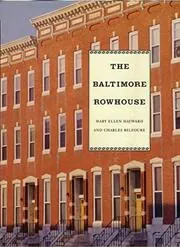
Baltimore Rowhouse
by Charles Belfoure
1997
A lively history of Baltimore's signature house type, from immigrant-era speculation to late twentieth-century renovation. Belfoure and Mary Ellen Hayward show how the rowhouse shaped the city's neighborhoods, class lines, and visual identity.
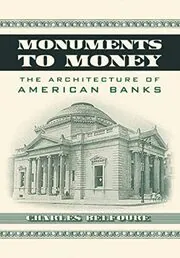
Monuments to Money
by Charles Belfoure
2005
Belfoure surveys American bank architecture from the nation's earliest banks to modern branches. He connects changing styles to financial history, showing how buildings meant to project trust, strength, and stability evolved over time.
Niernsee And Neilson, Architects Of Baltimore
by Charles Belfoure
2006
A history of Baltimore's first professional architecture firm, from early B&O Railroad work to major civic commissions. The book follows John Rudolph Niernsee and James Crawford Neilson and their mark on nineteenth-century Baltimore.
Edmund G. Lind
by Charles Belfoure
2009
This architectural biography follows Edmund G. Lind from England to Baltimore and the American South. Belfoure traces the life and work of the designer behind the Peabody Institute library and other major nineteenth-century commissions.
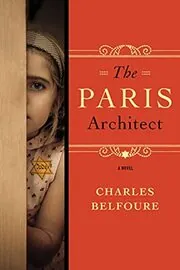
The Paris Architect
by Charles Belfoure
2013
In occupied Paris, architect Lucien Bernard agrees to design secret hiding places for Jews in exchange for much-needed money. What begins as a paid job becomes a dangerous test of nerve, conscience, and survival.
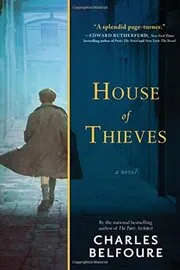
House of Thieves
by Charles Belfoure
2015
In 1886 New York, architect John Cross is blackmailed into planning robberies after his son racks up a crushing gambling debt. Each job pulls him deeper into the city's criminal underworld and farther from the life he's built.
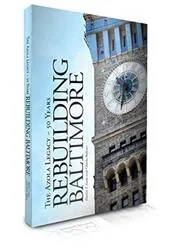
The Azola Legacy - 50 Years REBUILDING BALTIMORE
by Charles Belfoure
2018
Part company history, part Baltimore history, this illustrated book follows the Azola family's work across 26 restoration projects. It pairs renovation stories with craftsmanship, local history, and the surprises hidden inside old buildings.
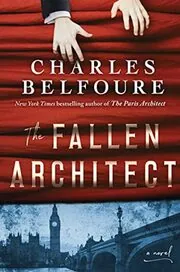
The Fallen Architect
by Charles Belfoure
2019
After a theater balcony collapse kills fourteen people, architect Douglas Layton is blamed and sent to prison. Under a new name, he becomes a scene painter and uncovers signs that the disaster may have been sabotage.
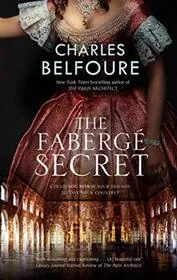
The Fabergé Secret
by Charles Belfoure
2020
In 1903 St Petersburg, court architect Prince Dimitri Markhov witnesses the brutality of a pogrom and begins to question everything he serves. His growing bond with Dr Katya Golitsyn pulls him toward love, danger, and revolution.

Monsters With Human Faces
by Charles Belfoure
2022
World-famous architect Jeffery Travers is kidnapped and forced to help an ISIS cell breach the U.S. Embassy in Tashkent. With his daughter threatened and American agencies convinced he's turned traitor, he has to outthink everyone to stop a bombing.
Where to start with Charles Belfoure
If you want the most popular starting point: The Paris Architect → House of Thieves
If you like architect-led historical suspense: House of Thieves → The Fallen Architect
If you want Imperial Russia and upheaval: The Fabergé Secret
If you want the contemporary thriller: Monsters With Human Faces
If you want his architecture nonfiction first: The Baltimore Rowhouse → Monuments to Money
Charles Belfoure collections, short stories, and related book types
Non-Fiction
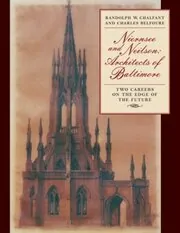
Niernsee And Neilson, Architects Of Baltimore
by Charles Belfoure
2006Two Careers On The Edge Of The Future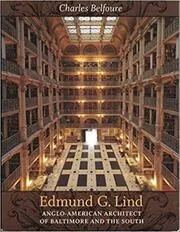
Standalone Charles Belfoure books
Author bio
Charles Belfoure was born in Baltimore in 1954 and grew up in Woodlawn, in the city's western suburbs. He studied architecture at Pratt Institute, earning his bachelor's degree in 1983, and later went to Columbia University for a master's in real estate development, completed in 1993.
Long before he published fiction, Belfoure had built a full professional life around old buildings. He specialized in historic preservation, worked as an architect and consultant, taught at Pratt and Goucher College, and wrote freelance pieces for The New York Times and The Baltimore Sun. He also published architectural histories and received research support from the Graham Foundation and the James Marston Fitch Charitable Foundation.
Writing came later.
He has said the real turning point was writing his graduate thesis at Columbia. It was the first long piece of writing he had taken on, and it showed him that shaping a story on the page could be as satisfying as shaping a building on paper. He didn't come out of a creative writing program, and that gave him some hesitation at first, but he eventually leaned into the fact that he was coming to fiction from another trade.
That outsider route helped define his novels. Belfoure wanted architecture to do more than decorate the background, so he started building plots around architects, plans, hidden rooms, and the moral problems that come with designing spaces for other people. For The Paris Architect, he drew on the old idea of Elizabethan priest holes, then carried that logic into Nazi-occupied Paris. The novel became his breakout book, a New York Times bestseller, and a finalist for the International Dublin Literary Award.
The story also had a personal undertow. Belfoure's mother, Kristine Vetulani-Belfoure, was a Polish immigrant, teacher, translator, and survivor of Nazi forced labor, and he spoke about how acts of kindness helped her survive the war. That family history gives The Paris Architect more weight than a clever premise alone.
He kept going, but he didn't stay in one city or one period. House of Thieves moves to 1886 New York, where society architect John Cross is blackmailed into planning robberies to save his son. The Fallen Architect heads to Edwardian England and follows Douglas Layton, a ruined architect trying to clear his name after a deadly theater collapse. In The Fabergé Secret, Belfoure turns to Imperial Russia, mixing court life, pogroms, romance, and political awakening through the eyes of Prince Dimitri Markhov and Dr Katya Golitsyn. He even took the architect-in-trouble idea into the present with Monsters With Human Faces, a contemporary thriller about an architect blackmailed by terrorists.
Across the fiction, certain patterns keep returning. Belfoure likes cities with strong social rules, characters with divided loyalties, and buildings that hide more than they show. Even his nonfiction books, including The Baltimore Rowhouse, Monuments to Money, Edmund G. Lind, and Niernsee And Neilson, Architects Of Baltimore, come from the same basic fascination: the idea that design shapes behavior, status, memory, and daily life.
He has long lived in Westminster, Maryland.
His work still runs on two tracks. One is preserving old buildings. The other is turning architecture, history, and concealed spaces into stories.








Edited by
Software engineer whose passion for tracking book recommendations from podcasts inspired the creation of MRB.
Lead investor at 3one4 Capital whose startup expertise and love for books helped shape MRB and its growth.
Comments
Did we miss something? Have feedback?
Help us improve this page by sharing your thoughts