
Alan Moore Books in Order
Explore Alan Moore books in order, with short summaries, standout series, reading paths, and where to start across his comics, graphic novels, and prose.
Last updated:
As an Amazon Associate, we earn from qualifying purchases (at no extra cost to you).
Alan Moore books in publication order
83 books

Saga of the Swamp Thing, Book One
by Alan Moore
1983
Moore's landmark run starts with The Anatomy Lesson, which completely reshapes what Swamp Thing is. Horror, philosophy, and strange beauty all take root at once.

Swamp Thing
by Alan Moore
1983
Moore's early Swamp Thing work begins turning a monster comic into something weirder and more thoughtful. Horror, identity, and the natural world start to take over the page.

Monster
by Alan Moore
1984
This collection digs further into the transformation of Swamp Thing from bog monster to something far stranger. The result is rich horror with emotion, philosophy, and a steadily widening myth.

Saga of the Swamp Thing, Book Three
by Alan Moore
1985
As Swamp Thing's world widens, new supernatural threats pull him toward a much larger occult landscape. This volume deepens the mythology and brings a sly magician named John Constantine into the frame.

Saga of the Swamp Thing: Book Two
by Alan Moore
1985
Swamp Thing accepts that he is plant, not man, and the series grows stranger from there. Abby, aliens, desire, and body horror all feed into this fearless second volume.

Whatever Happened to the Man of Tomorrow?
by Alan Moore
1985
Moore's famous Superman farewell imagines one last, devastating battle for the Man of Steel and everyone around him. It works as both tribute and hard-edged ending.

Saga of the Swamp Thing, Book Four
by Alan Moore
1986
The American Gothic storyline expands here, sending Swamp Thing across a haunted America in search of Abby and harder truths. It is a road story, horror epic, and myth-maker all at once.

Saga of the Swamp Thing, Book Five
by Alan Moore
1987
Moore pushes the series toward elemental mythology, invasion-scale danger, and increasingly strange forms of life. The book stays eerie and emotional even as its ideas become huge.

Saga of the Swamp Thing, Book Six
by Alan Moore
1987
The final Moore volume closes his run with apocalypse, intimacy, and a sense that Swamp Thing's world will keep growing after the last page. It is a strong, strange farewell.

Watchmen
by Alan Moore
1987
After a masked hero is murdered, Rorschach pulls his former allies into an investigation that opens onto a much larger conspiracy. It is a murder mystery, a Cold War thriller, and a deep rethink of superheroes.
Recommended by
3 people Seth Rogen recommended this book
Seth Rogen
"I've given [this book] to people." - Seth Rogen
Seth Rogen's recommendation of this book  Naval Ravikant recommended this book
Naval Ravikant
One of Naval Ravikant's answers to "top 10 graphic novels?"
Naval Ravikant's recommendation of this book  Evan Goldberg recommended this book
Evan Goldberg
"I often give [this book] to people." - Evan Goldberg
Evan Goldberg's recommendation of this book

Batman: The Killing Joke
by Alan Moore
1988
The Joker launches a brutal attack meant to prove that anyone can be broken by one bad day. It is short, sharp, and one of the darkest Batman stories of the era.
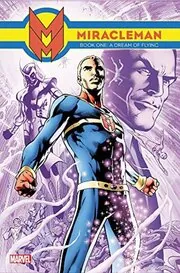
A Dream of Flying
by Alan Moore
1990
Mike Moran is a middle-aged reporter plagued by migraines and dreams of flight, until one forgotten word changes everything. This opening arc turns an old-fashioned superhero premise into something eerie, modern, and unstable.

Miracleman
by Alan Moore
1990
This collection reintroduces Mike Moran and the terrifying adult logic of Miracleman's return. What begins like a lost superhero revival quickly becomes something far stranger and more modern.
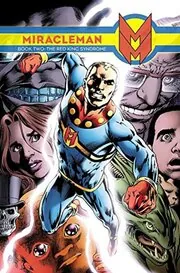
The Red King Syndrome
by Alan Moore
1990
Now fully awake to his past, Miracleman digs into the truth behind his origin and the forces that made him. The story grows darker, stranger, and much more dangerous.

V for Vendetta
by Alan Moore
1990
In a fascist future England, a masked anarchist begins a campaign against the state while a young woman is pulled into his orbit. Moore and David Lloyd build a bleak, political story about power and resistance.
Recommended by
2 people- Naval Ravikant recommended this book
Naval Ravikant
"Genius, a cogent defense of anarchy." - Naval Ravikant
Naval Ravikant's recommendation of this book - Evan Goldberg recommended this book
Evan Goldberg
"I often give [this book] to people." - Evan Goldberg
Evan Goldberg's recommendation of this book

A Small Killing
by Alan Moore
1991
A successful ad man is haunted by a younger version of himself as he walks through a city filled with regret and memory. It is quiet, bitter, and more psychological than superheroic.
Miracleman, Book Three
by Alan Moore
1991
The final Moore collection pushes the series from superhero revision to near-divine upheaval. After catastrophe, Mike Moran and Miracleman face the terrifying question of what a god-built world would really look like.

The Bojeffries Saga
by Alan Moore
1994
The Bojeffries are a loving, chaotic monster family living in a very ordinary Northampton house. Moore mixes domestic comedy, horror tropes, and working-class absurdity to lovely effect.

Bloodfeud
by Alan Moore
1995
A string of killings and hallucinations pulls Spawn into a grim side story about obsession and the living hellsuit he wears. Moore treats the book as horror first, superhero comic second.

Captain Britain
by Alan Moore
1996
Moore's Captain Britain stories push the hero into stranger, darker science fiction territory. Alternate worlds, escalating threats, and big ideas give the material real momentum.

Voice of the Fire
by Alan Moore
1996
Twelve linked stories move across six thousand years of Northampton history. Moore turns one patch of ground into a wild, intimate novel about memory, violence, myth, and place.

From Hell
by Alan Moore
1999
This vast black-and-white epic revisits the Jack the Ripper murders through conspiracy, architecture, class, and paranoia. It is methodical, grim, and one of Moore's most demanding works.

Homecoming
by Alan Moore
1999
The WildC.A.T.s head for their ancestral world of Khera, hoping for answers and finding political intrigue instead. Moore turns the team book toward identity, history, and divided loyalties.

Promethea, Book 1
by Alan Moore
2000
College student Sophie Bangs researches the legend of Promethea and ends up becoming its latest incarnation. The opening book mixes superhero action with myth, magic, and stunning visual invention.
The League of Extraordinary Gentlemen, Vol. 1
by Alan Moore
2000
In 1898, Mina Murray assembles Allan Quatermain, Captain Nemo, Hyde, and the Invisible Man for a secret mission. Moore and Kevin O'Neill turn Victorian fiction into a witty, grimy team adventure.

Top 10
by Alan Moore
2000
Imagine a police precinct in a city where everyone is superhuman. Moore and Gene Ha turn that idea into a busy, funny, humane ensemble book packed with cases and background jokes.

Book 1
by Alan Moore
2001
Tom Strong's first trade introduces the science hero's world, from Millennium City to hidden realms and old enemies. It is bright, brisk pulp adventure powered by brains as much as fists.

Book 2
by Alan Moore
2001
The second Tom Strong collection widens the series with strange relatives, cosmic detours, and more family-scaled heroics. It keeps the book's affectionate pulp energy while making the world bigger.

Promethea, Book 2
by Alan Moore
2001
Sophie goes deeper into the history of earlier Prometheas and the strange logic of the Immateria. The book is part coming-of-age story, part guided tour through Moore's magical imagination.

Promethea, Book 3
by Alan Moore
2002
As Sophie's powers grow, so does the scale of the series' ideas. Myth, identity, and imagination start taking center stage without losing the book's adventurous pull.

Supreme: The Story of the Year
by Alan Moore
2002
Moore rebuilds Supreme from a generic strongman into a bright, self-aware meditation on superhero history. It is affectionate, clever, and openly interested in what old comics can still do.

Alan Moore's The Courtyard
by Alan Moore
2003
FBI profiler Aldo Sax follows ritual murders through language, pattern, and occult logic. The story is brief, nasty, and an important opening move in Moore's Lovecraft cycle.
Alan Moore's Writing for Comics
by Alan Moore
2003
Part essay, part craft guide, this short book lays out how Moore thinks about structure, pacing, panels, and the reader's eye. It is practical, sharp, and still useful for comics writers.

Hypothetical Lizard
by Alan Moore
2003
In a fantasy city built on trade and illusion, a young woman in a specialized brothel falls into a dangerous love story. The book is intimate, melancholy, and sharper than its setting first suggests.

Judgment Day
by Alan Moore
2003
Moore uses a superhero crossover to ask blunt questions about corruption, punishment, and what heroism should mean. It is messy on purpose, with big fights wrapped around a moral argument.

Mirror of Love
by Alan Moore
2003
This illustrated poem traces same-sex love and queer history across centuries in the form of a passionate address. It is direct, angry, tender, and openly political.

Promethea, Book 4
by Alan Moore
2003
This volume leans into visionary travel through magic, symbolism, and layered realities. It is one of the most formally adventurous stretches of a series already overflowing with ideas.

Terrific Tales, Book 1
by Alan Moore
2003
This companion anthology fills in the edges of Tom Strong's world with Young Tom, Tesla, King Solomon, and Jonni Future. It feels like a pulp magazine opened up and modernized.

Terrific Tales, Book 2
by Alan Moore
2003
The second Terrific Tales volume keeps roaming through side adventures, future exploits, and backstory. It is a fun expansion pack for readers who want more of the Strong family universe.
The League of Extraordinary Gentlemen, Vol. 2
by Alan Moore
2003
The League barely has time to recover before England faces invasion from Mars. Volume 2 widens the scale, mixing literary mash-up fun with war, panic, and end-of-era dread.

Book 3
by Alan Moore
2004
This volume brings back old allies and fresh complications as Tesla is kidnapped and Tom is pulled into new mysteries. The series keeps balancing family adventure with slippery science fiction.

Book 4
by Alan Moore
2005
The fourth collection opens up more of Tom Strong's family history while keeping the series quick on its feet. Hidden relatives, old friends, and new threats keep Millennium City lively.

Book Five
by Alan Moore
2005
Tom Strong tackles paranormal trouble in the upper atmosphere and stranger problems still closer to home. These issues lean into dream logic, one-off concepts, and the book's generous sense of invention.

Promethea, Book 5
by Alan Moore
2005
Promethea moves toward its endgame, with Sophie facing larger cosmic stakes and deeper truths about her role. The book feels both apocalyptic and oddly serene.
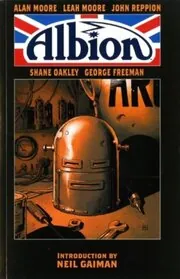
Albion
by Alan Moore
2006
Forgotten heroes and villains of British comics return in a mystery about secrecy, imprisonment, and national memory. It is a clever revival project with plenty of adventure and an affectionate eye for old characters.

Book Six
by Alan Moore
2006
The final collection closes the series on apocalyptic stakes, odd detours, and a welcome return from Moore and Chris Sprouse. It is a busy, affectionate farewell to one of Moore's brightest creations.

Future Shocks
by Alan Moore
2006
These early short comics show Moore honing his twist endings, high concepts, and dark humor in compact bursts. They are quick, clever, and a good look at the start of his voice.

Lost Girls
by Alan Moore
2006
Alice, Dorothy, and Wendy meet as adults at an Austrian hotel and retell their lives through erotic memory and fantasy. Moore and Melinda Gebbie use familiar heroines to explore sex, storytelling, and innocence.
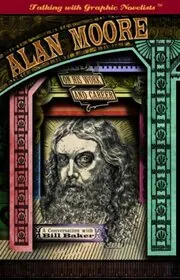
Alan Moore on His Work and Career
by Alan Moore
2007
A concise critical guide built around interviews and commentary on Moore's life and bibliography. It offers a readable overview of the themes, methods, and disputes that shaped his career.

25,000 Years of Erotic Freedom
by Alan Moore
2009
Moore and Melinda Gebbie survey the long history of erotic art, desire, censorship, and pornography. It is part cultural history, part argument about how societies imagine sex.

Spawn Origins, Volume 2
by Alan Moore
2009
Early Spawn stories build out Al Simmons' grim world, with guest turns by Alan Moore and Frank Miller. The volume mixes street violence, infernal lore, and some key early myth-making.

The Spirit
by Alan Moore
2009
Moore's take on Will Eisner's masked detective leans into pulp crime, odd humor, and formal play. It is a lively reminder of how well he can work inside another creator's sandbox.
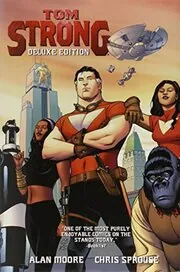
Tom Strong
by Alan Moore
2009
This opening collection introduces Tom Strong, his family, and Millennium City in a run of clever science-adventure tales. It is superhero comics filtered through pulp magazines, optimism, and big, playful ideas.

Alan Moore's Neonomicon
by Alan Moore
2010
FBI agents Brears and Lamper follow a case from The Courtyard into cults, hidden languages, and very physical cosmic horror. It is confrontational, explicit, and central to the path toward Providence.

Spawn Origins, Volume 8
by Alan Moore
2010
This later Spawn Origins volume collects high-energy stories from the series' early middle stretch, pushing Al Simmons through bigger fights and darker turns. It is lean, brutal, and very much built for momentum.

Tales of the Green Lantern Corps, Vol. 2
by Alan Moore
2010
This anthology gathers classic cosmic stories from across the Corps, including Alan Moore and Dave Gibbons material. Short, inventive tales make the universe feel far stranger and larger.
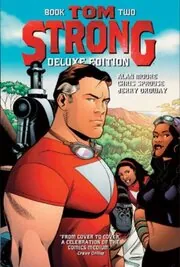
Tom Strong Vol. 2
by Alan Moore
2010
Tom Strong's second collection sends the science hero from volcanoes to outer space, with family, alternate worlds, and old pulp thrills close behind. It keeps the series' bright sense of wonder while widening the canvas.

Tom Strong and the Robots of Doom
by Alan Moore
2011
In a nightmare alternate world, Tom Strong must team up with another version of himself to fight robot tyranny and rewrite disaster. It is a darker spin on the series' usual bright pulp energy.

Crossed +100 Volume 1
by Alan Moore
2014
A century after the Crossed outbreak, archivist Future Taylor helps a fragile new society piece together the past. Alan Moore turns splatter horror into a tense, strange study of survival, language, and civilization.

Tom Strong And The Planet of Peril
by Alan Moore
2014
Tom Strong heads into another retro-styled science adventure full of danger, impossible landscapes, and classic cliffhanger energy. It is a straight-ahead pulp romp built on the world Moore created.

Providence #1
by Alan Moore
2015
In 1919, journalist Robert Black leaves New York to research occult outsiders for a novel. His first interviews open the door to hidden books, coded lives, and quiet cosmic dread.
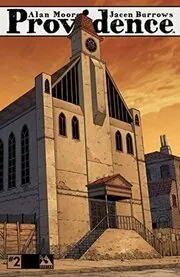
Providence #2
by Alan Moore
2015
Robert's trip into New England continues, and the local color quickly turns uncanny. Polite surfaces hide old beliefs, private obsessions, and a sense that someone is guiding his path.
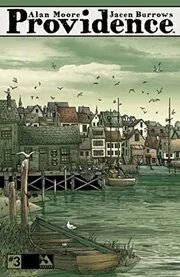
Providence #3
by Alan Moore
2015
As Robert gathers stories from strangers, the gaps between rumor and reality start to narrow. The series deepens its mood of travel writing, repression, and creeping horror.
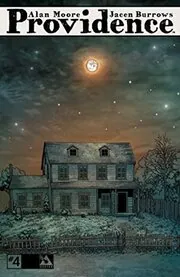
Providence #4
by Alan Moore
2015
A new stop on Robert's journey reveals a community shaped by old secrets and uneasy bloodlines. The horror stays patient, intimate, and increasingly hard to dismiss.

Providence #5
by Alan Moore
2015
Curiosity keeps Robert moving even as the people around him grow more troubling. Shame, desire, and manipulation become part of the terror in this quietly vicious chapter.
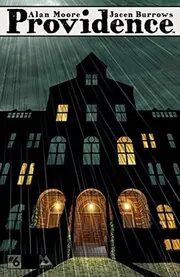
Providence #6
by Alan Moore
2015
Robert's research brings him to another corner of hidden New England, where the sea, the past, and forbidden knowledge all press closer. The mood is claustrophobic and deeply wrong.

Brighter Than You Think
by Alan Moore
2016
This collection gathers ten short Moore pieces, from sharp satire to occult biography, alongside critical essays. It is a compact look at how flexible his shorter comics work can be.

Jerusalem
by Alan Moore
2016
Set in and around Northampton's Boroughs, this huge novel moves across centuries, ghosts, working lives, visions, and everyday streets. It is dense, strange, and deeply rooted in place.
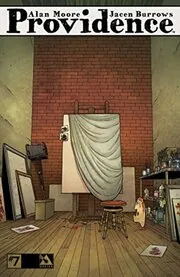
Providence #7
by Alan Moore
2016
Robert returns to New York, but home offers no safety. The investigation tightens around him as desire, secrecy, and hidden history start collapsing into one nightmare.
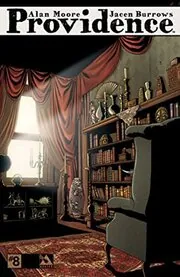
Providence #8
by Alan Moore
2016
As Robert keeps following the trail, the pattern behind his trip begins to emerge. Everyday rooms, casual conversations, and old documents all point toward something vast and inhuman.
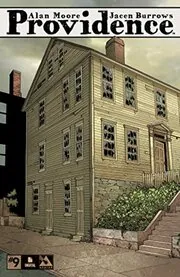
Providence #9
by Alan Moore
2016
Old books, coded histories, and mounting dread push Robert closer to the truth. What seemed like separate encounters now feels like part of one terrible design.
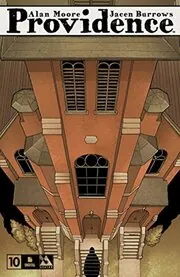
Providence #10
by Alan Moore
2016
Robert finally sees how his travels echo older stories and darker forces. The closer he gets to understanding the pattern, the less stable reality becomes.
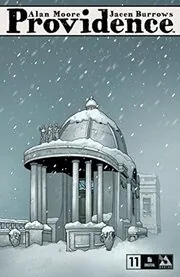
Providence #11
by Alan Moore
2016
Time and memory begin to fold in on themselves as Robert nears the heart of the mystery. This chapter is eerie, disorienting, and full of approaching doom.

Dreadful Beauty
by Alan Moore
2017
This companion art book showcases Jacen Burrows' work for Providence through covers, sketches, designs, and process material. It is a strong visual appendix for readers who want to linger in that world a little longer.
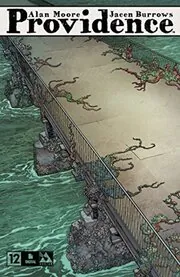
Providence #12
by Alan Moore
2017
The final issue pulls Robert Black's journey into a full cosmic reckoning. Moore and Burrows tie together the series' scattered clues and leave the reader with a bleak, unsettling new view of the whole story.

Watchmen Companion
by Alan Moore
2019
This companion gathers rare background material, game supplements, sourcebook pages, and other odds and ends built around Watchmen. It expands the setting without replacing the original story.

Illuminations
by Alan Moore
2022
Moore's first short story collection ranges from ghost stories and strange encounters to a long, bitter fantasia on the comics industry. The pieces are varied, ambitious, and full of unsettling imagination.

The Great When
by Alan Moore
2024
In postwar London, Dennis Knuckleyard comes across a book that belongs to the Great When, a shadow city where concepts walk and reality bends. It is crime story, urban fantasy, and occult adventure all at once.

The Moon and Serpent Bumper Book of Magic
by Alan Moore
2024
Created with Steve Moore, this oversized nonfiction work is a playful, serious guide to magic, occult history, symbols, and practice. It reads like a handbook, a joke book, and a manifesto at once.

Wild Things
by Alan Moore
2024
A sharp-edged WildStorm superhero story full of alien conflict, hard choices, and team tension. If you like the WildC.A.T.s at their most fast-moving and combative, this scratches that itch.

I Hear a New World
by Alan Moore
2026
Nine years after his first brush with Long London, Dennis Knuckleyard is dragged back when a hidden key wakes up dangerous forces. Riots, magic, and murder drive this bigger, stranger second novel.
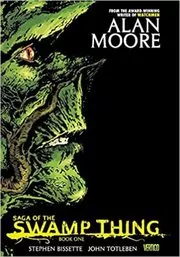
Saga of the Swamp Thing
by Alan Moore
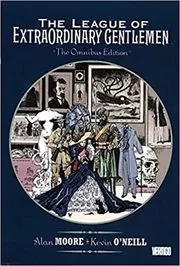
The League of Extraordinary Gentlemen
by Alan Moore
Where to start with Alan Moore
If you want the superhero landmark: Watchmen → Batman: The Killing Joke → Whatever Happened to the Man of Tomorrow?
If you want horror first: Saga of the Swamp Thing, Book One → Saga of the Swamp Thing: Book Two → Saga of the Swamp Thing, Book Three
If you want Victorian darkness: From Hell → The League of Extraordinary Gentlemen, Vol. 1 → The League of Extraordinary Gentlemen, Vol. 2
If you want visionary fantasy: Promethea, Book 1 → Promethea, Book 2 → Promethea, Book 3
If you want prose fantasy: The Great When → I Hear a New World → Jerusalem
Alan Moore sub-series and character series
- Albion books in order
- Crossed + 100 books in order
- Green Lantern Corps books in order
- Miracleman books in order
- Promethea books in order
- Providence (Alan Moore) books in order
- Spawn Origins books in order
- Spawn Universe books in order
- Swamp Thing books in order
- The League of Extraordinary Gentlemen books in order
- The Long London Quintet books in order
- Tom Strong books in order
- Watchmen books in order
- WildC.A.T.s books in order
Green Lantern Corps books in order
Explore this seriesGreen Lantern Corps books in chronological order
Providence (Alan Moore) books in order
Explore this seriesProvidence (Alan Moore) books in chronological order
The League of Extraordinary Gentlemen books in order
Explore this series
The League of Extraordinary Gentlemen, Vol. 1
by Alan Moore
2000The League of Extraordinary Gentlemen, Book 1
The League of Extraordinary Gentlemen, Vol. 2
by Alan Moore
2003The League of Extraordinary Gentlemen, Book 2
The League of Extraordinary Gentlemen books in chronological order
The League of Extraordinary Gentlemen, Vol. 1
by Alan Moore
2000The League of Extraordinary Gentlemen, Book 1The League of Extraordinary Gentlemen, Vol. 2
by Alan Moore
2003The League of Extraordinary Gentlemen, Book 2
The Long London Quintet books in order
Explore this seriesThe Long London Quintet books in chronological order
Alan Moore collections, short stories, and related book types
Non-Fiction
Short Story Collections
Graphic Novels
Standalone Alan Moore books
Author bio
Alan Moore was born in Northampton, England, on November 18, 1953, and he has spent most of his life in and around that town. He grew up in the Boroughs, a working-class part of Northampton, in a family shaped by ordinary jobs and tight budgets. That sense of place stayed with him. Long before it turned up in his fiction, Northampton was already the ground under almost everything he thought about.
He was reading early and reading widely. Comics mattered, of course, but so did library books, pulp stories, history, folklore, and anything else that felt vivid or strange. A lot of Moore's later work still carries that mix, the feeling that superhero comics, old myths, dirty local streets, and big philosophical questions all belong in the same conversation.
Before he became a famous comics writer, he worked through fanzines, small press projects, and underground papers. He drew as well as wrote, used pseudonyms, and slowly built a reputation in British comics. Work for titles like 2000 AD and Doctor Who Weekly helped sharpen the skills that would define him later: tight structure, strong voice, and an ability to make even a short piece feel larger than the page count suggests.
The first big turning point came with Marvelman and V for Vendetta in the British anthology Warrior. Those books already show a lot of what readers still come to Moore for, political tension, formal ambition, dark humor, and characters who feel painfully human even when the setup is wildly fantastical. They were early signs that he was not interested in treating comics as disposable.
Then came his move into American comics, especially Swamp Thing for DC. That run reshaped the character and helped show what mainstream comics could hold when a writer pushed harder on mood, theme, and structure. From there came Watchmen, Batman: The Killing Joke, and Whatever Happened to the Man of Tomorrow?, books that are still starting points for a lot of readers.
That changed everything.
Still, Moore never stayed in one lane for long. From Hell turned the Jack the Ripper case into a huge work of historical horror and paranoia. The League of Extraordinary Gentlemen mashed together literary characters and imperial adventure stories. Promethea used a superhero framework to explore imagination, symbolism, and magic. Readers who like Moore usually like the same set of qualities across all of them: density, invention, formal play, anger at power, and a real interest in how stories shape the world.
He also moved far beyond comics. Voice of the Fire and Jerusalem both return to Northampton and treat the town as a place thick with memory, class, ghosts, labor, and myth. More recently, The Great When and I Hear a New World opened up his Long London sequence, where ordinary postwar London sits beside a hidden magical city full of living ideas and dangerous objects.
Northampton never really left the picture.
Moore has been open for years about his interest in magic and occult practice, and that current runs through much of his later work, especially Promethea and The Moon and Serpent Bumper Book of Magic. Some of his books have been adapted into films, including From Hell, The League of Extraordinary Gentlemen, V for Vendetta, and Watchmen, though his relationship with adaptation and the wider comics industry has often been a tense one.
He still lives in Northampton. That feels right. For all the gods, monsters, masked vigilantes, and alternate Londons in his work, Moore keeps coming back to the same things: streets, memory, imagination, and the strange force ordinary places can gather over time.
Edited by
Software engineer whose passion for tracking book recommendations from podcasts inspired the creation of MRB.
Lead investor at 3one4 Capital whose startup expertise and love for books helped shape MRB and its growth.
Comments
Did we miss something? Have feedback?
Help us improve this page by sharing your thoughts