
22 Best Anger Management Books
The best anger management books, ranked by how many expert sources recommend each one, with notes on workbooks, relationships, mindfulness and children.
Our take
Anger management books address different problems: recognizing early warning signs, changing thoughts that fuel an outburst, speaking more clearly in conflict or understanding why resentment keeps returning. Some offer worksheets and a structured program. Others examine relationship patterns or approach anger through mindfulness and spiritual practice. Choosing a book that matches the situation and the kind of work you're willing to do matters more than finding one explanation for every angry feeling.
Anger Management for Everyone provides a broad skills-based starting point, while The Cognitive Behavioral Workbook for Anger concentrates on beliefs, judgments and practice. The Dance of Anger looks closely at recurring relationship patterns. Thich Nhat Hanh's Anger and The Cow in the Parking Lot offer contemplative alternatives. For children, What to Do When Your Temper Flares is designed for shared work with a caregiver. Why Does He Do That? has a different purpose: understanding abusive control, which should not be reduced to ordinary frustration or a partner's communication problem. Start with a practical workbook for skills, or a relationship-focused book if repeated interactions are your main concern.
22 books · 9 sources · Last updated
As an Amazon Associate, we earn from qualifying purchases (at no extra cost to you).
How to choose from this list
Skip to the full rankingIf you want a general skills program: Anger Management for Everyone → The Cognitive Behavioral Workbook for Anger
If anger keeps recurring in relationships: The Dance of Anger → Letting Go of Anger
If you want a contemplative approach: The Cow in the Parking Lot → Anger
If you're dealing with explosive episodes: Rage → Angry All the Time
If you're helping a child: What to Do When Your Temper Flares
If you're trying to understand abusive control: Why Does He Do That?
The 22 books, ranked
Ranked by how many expert sources name each book. Ties go to the book more people recommend.
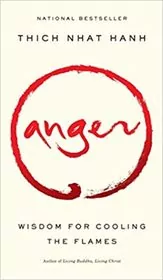
For readers drawn to mindful breathing, compassionate listening and a Buddhist understanding of difficult emotions. Its gentle approach encourages a different relationship with anger, though it offers spiritual practice rather than a structured cognitive behavioral program.
What it's about
Thich Nhat Hanh offers Buddhist practices for recognizing and transforming anger. Mindful breathing, careful listening, and compassionate attention become ways to understand difficult emotions, respond to conflict, and improve relationships without suppressing what one feels.
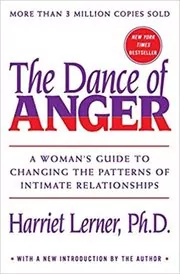
The Dance of Anger
A Woman's Guide To Changing The Patterns Of Intimate Relationships
For readers who repeatedly feel powerless or unheard in close relationships. Lerner makes anger a starting point for changing interaction patterns, though the focus on women's experiences and family dynamics is narrower than a general skills workbook.
What it's about
Harriet Lerner examines anger as a signal of problems within intimate relationships. She helps readers identify its sources and recognize recurring patterns, proposing ways to express feelings constructively and change interactions that leave people powerless.
Also recommended by
1 person Brené Brown recommended this book
Brené Brown
"Helpful for couples in that 'I’m screaming and he’s/she’s shutting down' cycle." - Brené Brown
Brené Brown's recommendation of this book
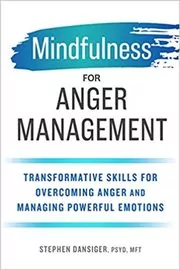
Mindfulness for Anger Management
Transformative Skills for Overcoming Anger and Managing Powerful Emotions
For readers who want to build awareness before reacting to strong emotions. Its workbook format makes mindfulness more concrete through repeated practice, though readers seeking immediate explanations alone may find the ongoing exercises a substantial commitment.
What it's about
Stephen Dansiger applies mindfulness practices to understanding anger and responding to powerful emotions. This workbook combines explanations and exercises for individual or group use, examining triggers, the influence of trauma, and ways to build awareness before reacting.
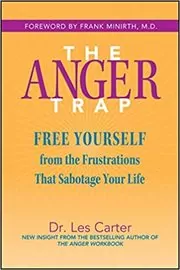
For readers whose anger appears as criticism, impatience or persistent resentment as much as shouting. Carter draws attention to quieter recurring patterns, though the blend of counseling and spiritual ideas differs from a purely secular skills manual.
What it's about
Les Carter explores how anger can appear as criticism, impatience, and frustration as well as open rage. Drawing on counseling experience and spiritual ideas, he examines underlying pain and insecurity and offers approaches for changing recurring patterns in relationships.
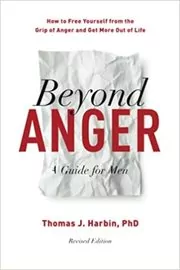
For men who want to examine how chronic anger affects work and relationships. Harbin connects explanation with exercises and personal responsibility, though the gender-specific framing may fit less well than a general workbook for some readers.
What it's about
Thomas Harbin addresses chronic anger in men and its effects on family, friends, and work. Explanations and exercises help readers recognize when anger develops, examine the habits that sustain it, and practice alternative responses in their daily relationships.
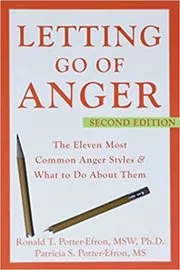
Letting Go of Anger
The Eleven Most Common Anger Styles and What to Do About Them
For readers who struggle to recognize their own way of expressing anger. The eleven-style framework offers a useful vocabulary for overlooked habits, though fitting a pattern is only a starting point for changing it in real situations.
What it's about
Ronald and Patricia Potter-Efron describe eleven common styles of expressing anger, including patterns people may overlook in themselves. Examples and guidance help readers examine habitual reactions, consider their effects, and explore ways to communicate anger more constructively in different situations.
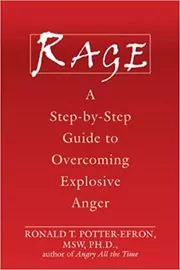
For readers whose anger arrives as explosive episodes rather than steady irritation. Its four-pattern framework helps distinguish different triggers and responses, though the categories are a practical lens rather than an individualized assessment of what's happening.
What it's about
Ronald Potter-Efron examines explosive anger through four patterns associated with threat, helplessness, abandonment, and shame. The guide explains how these triggers can lead to rage and offers a step-by-step framework for recognizing episodes and developing different responses.
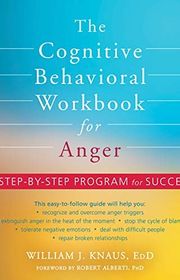
The Cognitive Behavioral Workbook for Anger
For readers who want to examine the beliefs and judgments that intensify anger. Knaus pairs cognitive behavioral ideas with exercises and self-assessments, though the focus on deliberate thought work requires patience and regular written practice.
What it's about
William J. Knaus combines cognitive behavioral therapy and rational emotive behavior therapy in a workbook about destructive anger. Exercises and self-assessments help readers identify provoking thoughts, question unhelpful beliefs and develop different responses to frustrating situations.
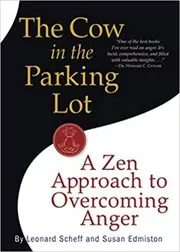
For readers who want an accessible change of perspective on everyday frustrations. The workshop-based examples make Buddhist ideas approachable without extensive background, though the informal style offers less systematic tracking than the more structured workbooks.
What it's about
Leonard Scheff and Susan Edmiston use Buddhist ideas to examine how expectations and unmet demands contribute to anger. Based on Scheff's workshop, the interactive guide offers examples and exercises for recognizing triggers, changing perspective, and responding differently to frustrating situations.
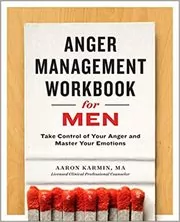
Anger Management Workbook for Men
Take Control of Your Anger and Master Your Emotions
For men who prefer writing things down and practicing specific skills. Its assessments and cognitive behavioral exercises turn reflection into a routine, though working through the pages requires more active effort than reading an explanatory guide.
What it's about
Aaron Karmin offers men an interactive workbook for examining anger triggers and patterns. Assessments, exercises, and examples draw on cognitive behavioral approaches, with strategies for challenging angry thoughts, managing stress, and communicating frustration more clearly in relationships and daily life.
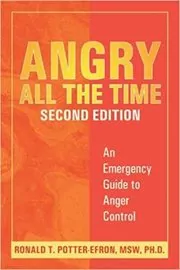
For readers whose persistent anger has already damaged work or relationships. The direct, structured approach emphasizes changing escalating thoughts and behavior, though the urgent tone and exercises demand a willingness to examine personal habits closely.
What it's about
Ronald Potter-Efron offers a structured approach for people whose persistent anger is damaging their lives and relationships. He examines how anger escalates and presents ways to identify its causes, change provoking thoughts, and communicate needs without threats or blame.
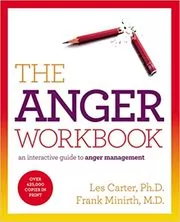
For readers who want a staged program with space to examine learned habits and underlying feelings. The interactive format supports sustained reflection, though its Christian perspective may fit differently depending on the reader's beliefs and expectations.
What it's about
Les Carter and Frank Minirth present a thirteen-step interactive program for examining anger. Exercises address its visible and subtle forms, the emotions that feed it, and learned patterns of thinking and relating, incorporating the authors' counseling experience and Christian perspective.
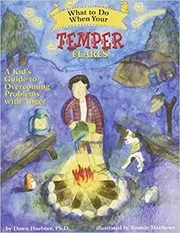
For caregivers helping a child learn what to do with angry feelings. Drawing and writing activities make the ideas approachable than adult explanations, though the child will benefit from an adult working alongside them rather than handing over the book.
What it's about
Dawn Huebner introduces children to anger-management concepts through accessible metaphors and interactive activities. Prompts to draw and write accompany practical strategies for cooling angry thoughts and managing actions, with guidance that parents and caregivers can use alongside the child.
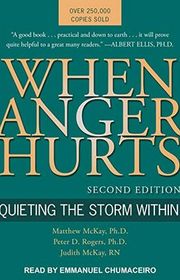
When Anger Hurts
For readers who want to connect angry thinking with its interpersonal and physical costs. The second edition includes everyday situations such as road rage and parenting, though its broad program asks for more sustained work than a brief communication booklet.
What it's about
Matthew McKay, Peter D. Rogers and Judith McKay explain how habitual thoughts contribute to anger. The second edition offers ways to challenge those thoughts, recognize warning signs and manage stress, with material on relationships, parenting and road rage.
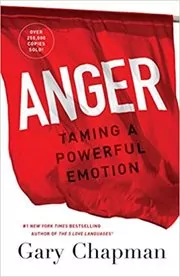
For readers who want relationship-centered advice that considers resentment, grudges and family conflict together. Chapman's examples make everyday applications easy to recognize, though the broad counseling approach provides less detailed practice than a dedicated exercise workbook.
What it's about
Gary Chapman examines how anger affects relationships and distinguishes constructive responses from destructive ones. Drawing on counseling examples, he addresses resentment, grudges, conflict with children, and ways to express this powerful emotion without harming others.
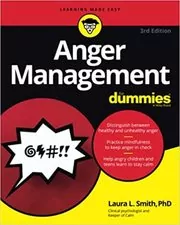
Anger Management For Dummies
For readers who want a broad, easy-to-consult introduction before choosing a specialized approach. The familiar reference format covers emotions, stress and everyday situations, though its breadth gives individual relationship problems less depth than the focused books.
What it's about
Laura Smith introduces tools for understanding anger and changing responses to its triggers. Explanations, skills, and exercises explore links with stress, fear, and other emotions, while addressing anger in everyday settings and challenges involving children, teenagers, and aggressive behavior.
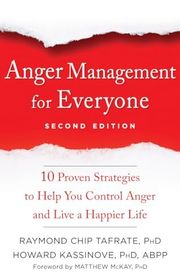
Anger Management for Everyone
For adults who want a broad skills program without gender-specific framing. Its cognitive behavioral approach includes relaxation, mindfulness and interpersonal practice, though the range of strategies works best when readers try them repeatedly rather than only read about them.
What it's about
Raymond Chip Tafrate and Howard Kassinove present strategies for understanding and responding to anger. The revised second edition combines cognitive behavioral methods with relaxation, mindfulness and interpersonal skills, including attention to everyday conditions such as hunger and sleep.
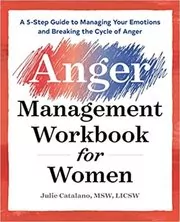
The Anger Management Workbook for Women
A 5-Step Guide to Managing Your Emotions and Breaking the Cycle of Anger
For women who want practical exercises without treating anger itself as a personal failure. The five-step structure includes assertive communication and guilt, though its targeted framing may feel less relevant than a general guide to some readers.
What it's about
Julie Catalano presents a five-step framework for women seeking to understand and manage their anger. Worksheets, quizzes, personal stories, and practical exercises explore emotional reactions, behavior patterns, assertive communication, and maintaining progress while addressing feelings of guilt or shame.
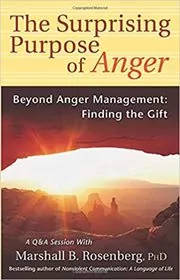
For readers who want a short introduction to expressing unmet needs without blame. Rosenberg's communication lens gives conflict a concrete focus, though this brief booklet has less room for practice than the full anger-management workbooks.
What it's about
Marshall Rosenberg applies Nonviolent Communication to anger, arguing that judgment can obscure unmet needs. This booklet explains how identifying those needs and developing constructive ways to meet them can change a person's response to conflict.
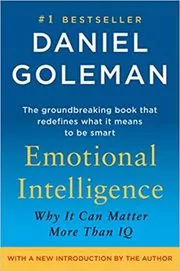
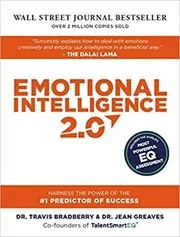
For readers who want anger placed within a wider account of emotional awareness and relationships. Goleman's broader perspective connects personal, educational and workplace concerns, though it provides less targeted practice than the anger-specific guides here.
What it's about
Daniel Goleman explores how understanding and managing emotions affects people's lives and relationships. He broadens the discussion of intelligence beyond IQ, considering the role of emotional abilities in personal development, education, and work.
Also recommended by
4 people Drew Houston recommended this book
Drew Houston
"It’s nonfiction, but it spelled out something that I just didn’t know you could kind of break down in a logical way. And, suddenly, I had this understanding about the world that I didn’t have before." - Drew Houston
Drew Houston's recommendation of this book  Jack Kornfield recommended this book
Jack Kornfield
Jack Kornfield mentioned this book on "The Tim Ferriss Show" podcast.
Jack Kornfield's recommendation of this book  Sharon Salzberg recommended this book
Sharon Salzberg
Sharon Salzberg mentioned this book on "The Tim Ferriss Show" podcast.
Sharon Salzberg's recommendation of this book  Patrick Bet-David recommended this book
Patrick Bet-David
Patrick Bet-David recommended this book on his website.
Patrick Bet-David's recommendation of this book
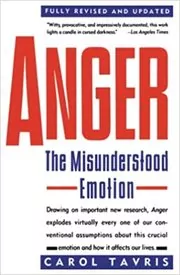
For readers who want to question familiar assumptions about expressing and suppressing anger. Tavris offers a research-oriented discussion rather than a simple vent-or-contain rule, though this older account is less suited to someone seeking a daily exercise plan.
What it's about
Carol Tavris examines the origins, uses, and misunderstandings of anger. Drawing on psychological research, she challenges assumptions about expression and suppression while discussing circumstances in which anger can be constructive and approaches to recurring interpersonal conflicts.
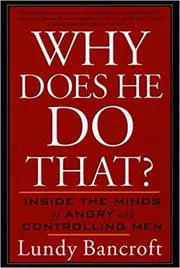
For readers trying to understand an angry partner's controlling or abusive behavior. Bancroft emphasizes patterns of power and responsibility, though its purpose is recognizing abuse rather than teaching a partner to manage the abusive person's feelings.
What it's about
Lundy Bancroft draws on his work with abusive men to examine controlling behavior in relationships. He discusses warning signs, abusive thinking, common misconceptions, and barriers to change, while offering women information about recognizing abuse and considering their safety.
Sources
- 1
Book List | Anger & Forgiveness
gwscsw.org
- 2
Anger Management Books
cciph.ca
- 3
21 Best Anger Management Books
choosingtherapy.com
- 4
Anger Management Books
goodreads.com
- 5
Suggest me a book to deal with pent up anger
reddit.com
- 6
Please suggest me some books.
reddit.com
- 7
Understanding, Assessing and Treating Anger
mentalhealthacademy.com.au
- 8
9 Excellent Anger Management Books of All-Time
hookedtobooks.com
- 9
Anger / Contention
counselinglibrary.org
Edited by
Software engineer whose passion for tracking book recommendations from podcasts inspired the creation of MRB.
Lead investor at 3one4 Capital whose startup expertise and love for books helped shape MRB and its growth.
Comments
Did we miss something? Have feedback?
Help us improve this page by sharing your thoughts